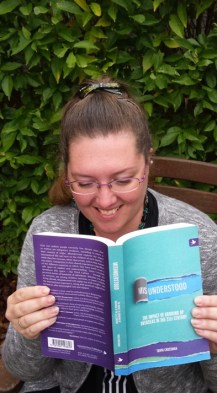
Recommended reading: April 9th, 2018

rec-read-thumb.JPG

Now that I’m getting back into the swing of thinking and writing in the TCK/expat space, I’m also doing more reading around the internets. Here’s some of the best stuff I’ve read lately.

Alone in a Crowd (Again) — The Second Wave of Expat Isolation
The Culture Blend
Such an important post by the always great Jerry Jones. I’ve seen this pattern in my own expat life and in so many friends’ experiences. There’s great advice here for the expat who feels alone after all their friends have left. Again. “The inevitable cycles of a cross-cultural life naturally bring seasons of deep connection and unexpected isolation — if you’re feeling stuck in that — try something unnatural. Intentionality moves the needle.”

Unresolved Grief – Hidden Losses of a Third Culture Kid
Jezmeralda
Poignant reflections on the hidden griefs that come with international life, especially as a child. “My lifestyle brings the wildest opportunities; nonetheless, unresolved grief has been one of my main challenges along the way.” I particularly appreciate that she addresses the difficulty of processing grief when “there are no recognized ways to mourn these hidden losses – primarily because most people don’t see them.”

Taking the Hypocrisy out of Home Ministry Assignment
A Life Overseas
This is an important discussion for the mission world, by fantastic MK advocate Michéle Phoenix. She tackles the pressure many missionaries feel to present a perfect face when visiting on home assignment – and the negative consequences this has for their TCKs.

An Overseas Assignment: Are You Doing the Right Thing By Your Kids?
Globally Grounded
Great piece by Jane Barron from Globally Grounded discussing lessons she’s learned from various greats as well as her own experience. She goes through three important things for expat parents to know/do in order to strengthen their families. The short answer to the titular question is that creating a strong family is what is best for your kids, wherever you are. A strong and healthy family unit who communicate well support kids through the difficulties of life – whether at home or abroad.

The Other Expats: Chukwudi Barrah – Kuala Lumpur, Malaysia
The Black Expat
Great interview with Nigerian expat Chukwudi Barrah in Malaysia, who started a platform for the “Other Expats”. I really appreciated his insights, and saw similarities with things African friends have experienced in China. It’s a good read, and always so important to remember that there are many different expat experiences out there.

The Hierarchy of World Language – My experiences from the expat trail
And Then We Moved To
An old post, but new to me. Linguistics is one of my fascination topics, and I love this post from the perspective of a multilingual expat family and how EIGHT different languages are part of their shared global experience. Mariam mentions the “majority language outside, minority language inside” rule which I’ve come across in other multilingual families and find a really helpful tool. She also learned German in a direct method classroom (where only the target language is spoken) which is something I found daunting but extremely when helpful learning Mandarin in China.

Even if you’ve forgotten the language you spoke as a child, it still stays with you
Quartz
Another post on language, this time from a few months back. The piece talks about first language attrition – losing full command of your mother tongue. The discussion ranges from the emotional consequences, to what’s happening in the brain, and the journey to recapture a language you were once fluent in.

Amphibians, Chameleons, and Cross Cultural Kids
Communicating Across Boundaries
A lovely little piece by the ever wonderful Marilyn Gardner, reflecting on “amphibians” and cross cultural kids: “Cross cultural kids can be active negotiators – taking both sides of a story and finding space for agreement. It can be a lonely space, but it’s a vital one.”

How knowledge about different cultures is shaking the foundations of psychology
The Conversation
Interesting piece pointing out the impact of culture on psychological studies, and our understanding of human psychology. “Clearly culture has a massive effect on how we view ourselves and how we are perceived by others… The question is to what extent it will inform psychology as a discipline going forward – some see it as an extra dimension of it while others view it as an integral and central part of theory making.”

The problem of picking prestigious universities

I shared a Time article on the Misunderstood facebook page last week, and decided it was worth taking time to write about why I think this is so important for TCKs.

It has a bold headline: “It’s time to tell your kids it doesn’t matter where they go to college“. Author William Stixrud makes the excellent point that there are many paths to success, and that telling kids this does not mean they will slack off.

The problem with the stories we’re telling our kids is that they foster fear and competition. This false paradigm affects high-achieving kids, for whom a rigid view of the path to success creates unnecessary anxiety, and low-achieving kids, many of whom conclude at a young age that they will never be successful, and adopt a “why try at all?” attitude. Many of these young people engage in one of the most debilitating forms of self-talk, telling themselves either, “I have to, but I can’t,” or “I have to, but I hate it.”

In Misunderstood I included sections about pressure to excel and fear of failure – two related attitudes that came up in many of the interviews I conducted with TCKs worldwide. I referred to the work of psychology professor Martin Covington. He describes four common attitudes toward success and failure which students commonly exhibit: success-oriented, failure-avoidant, failure-accepting, and overstrivers. The above quote seems to describe failure-accepting and overstriver students.

The “overstriver” attitude was overrepresented in the TCKs I interviewed. Overstrivers are motivated by fear – that one failure will be the end of everything. This attitude means a string of successes becomes a weight, rather than an encouragement. The more they succeed, the more they must work to ensure they keep up this standard.

The decision of where to attend university feels overwhelming for many TCKs; they feel their whole future hangs on this decision, and they don’t want to get it wrong. But there are many paths to success – and almost all involve failures along the way. That’s how we learn!

Giving TCKs a realistic picture of an the post-high all options available to them is very beneficial – but rare. Instead, most get the sense that they must get into the most objectively prestigious college possible. Different communities (and families) may have different ideas of what is considered prestigious (certain countries, certain religious connections, etc.) but students have an inherent sense of where they ‘should’ go. A 17 year old TCK I interviewed expressed it this way:

I watched my sister drawn to big name schools as she graduated. All her friends went to Yale, Pepperdine and NYU, but she got a wonderful scholarship to a wonderful school which nobody had ever heard of in Qatar. She felt as if she was letting herself down by going to this lesser known school even though she fell in love with it. I am experiencing this now as I formulate my list of colleges to apply to. I have found myself with an elitist mindset when picking schools.

Misunderstood, page 285

This mentality drives students to look for schools which others will approve of, rather than schools that will best fit their individual needs and desires. This is an extension of a common childhood experience. Many TCKs grow up driven by the need to do what makes others happy, often at the expense of learning what they themselves truly feel and want.

Honestly, I’m not sure it’s a right/wrong sort of decision. No matter what choice they make there will be opportunities to learn and to grow as a person. And they can always change majors, courses, and even schools later on. Many do just that!

To break this cycle, it is important for parents, teachers, and other adults in TCKs’ lives, to clearly articulate that there are many good choices available to them. That they will find a way to forward later no matter what path they take now. That they will be loved no matter what they choose. That it is their character that makes us proud, not merely their accomplishments.

Or, as William Stixrud says, : “It’s time to tell your kids it doesn’t matter where they go to college“.

Click here to read more posts about Third Culture Kids, transition, and expatriate experiences.

Students sitting in lecture theatre making notes

One thing expat parents can do to help their TCKs

The last year has been crazy for me – a mountain of life direction changes and seemingly endless overlapping transitions. But more on that another time.

After all this, I’m finally starting to get my head back into the TCK space. To stretch my writing muscles and, to mix my metaphors, get the engine turning over.

Last week I wrote a guest post for mission blog A Life Overseas. I really appreciate what they do, and that much of their content is helpful for expats generally (and those who support them) rather than just missionaries. I’m planning to do a few guest posts a year for them.

My most recent post was titled “Making home an emotional oasis for your TCKs”. It was inspired by one of the questions I hear most often: “what one thing would you recommend parents do to help their TCKs?”

I suppose it should come as no surprise that the question I’m most asked is a request for a summary!

The short answer is that parents can do something no one else can: make home a safe space where TCKs can express all their cross-cultural influences: their languages, loves, and confusions. This isn’t easy, but it’s powerful – both for TCKs and also for their parents.

Read the full article on A Life Overseas:

Making home an emotional oasis for your TCKs

Patriotism and TCKs

47-dessert

My second year in China I was invited to a 4th of July party where a friend made a cake decorated much like this one from Spicy Southern Kitchen

Tomorrow is the 4th of July, which means the American corner of my social media accounts is awash in red-white-blue, fireworks, and food. And, of course, patriotism. Patriotism can be a touchy subject for TCKs. It came up many times during the interviews I did for Misunderstood, with TCKs recounting stories of tension or conflict they experienced.


A few months ago I had a guest post up on Travel Lite discussing the issue of patriotism, the emotional conflict it poses for many TCKs, and my suggestion of a more inclusive view of patriotism. I shared it elsewhere at the time but forgot to post it here!

“Whenever patriotism means loving one specific country, the multiple loves of cross-cultural living can pose problems and lead to conflict – whether that conflict is an argument with a family member, a misunderstanding with friends, or a sense of emotional upset in my own heart.”

Read the full blog post here

Travel Lite later ran a separate piece by David Campbell, an ATCK reflecting on his own experience with patriotism. While recognising the inherent tension TCKs may feel between their international experience and patriotism directed toward one country, he eloquently explains the benefits he sees in TCKs developing a deeper connection to their passport countries.

“Learning to love your country of citizenship is not always easy or simple, but it is worthwhile. Deep interaction with a nation’s history and culture can help you to better appreciate the ways that other cultures differ from one another. And your own cross-cultural experiences can give you valuable insight into the problems that your country faces. Thus, my hope for all my TCK friends is that they develop a sense of connection, not only to a local community and the global community, but also to a national community.”

Read the full blog post here

I really appreciate what Davis shares here. Yes – TCKs can learn to create a sense of home, to put down roots, to choose to connect to a place. There is a section of Misunderstood devoted to exploring this idea, with suggestions on how to work through this process, and why it’s worth the effort.

A TCK who spent their formative years abroad is never going to have the same connection to their passport country as a peer who has always lived there, but that doesn’t mean they can’t invest in and develop a geniunely meaningful connection of their own – at any age.

The TCKs who feel the most at ease with patriotism – their own and others – are generally those who have successfully integrated the different cultural influences in their lives. They are able to balance their loves for multiple places, or deliberately invest in a strong connection to one place. They choose to celebrate a place without denying the other places that are part of their story.

So, this 4th of July, I hope that all the TCKs who have a connection to the US – through passports, geography, or loved ones – are able to celebrate their connection tension-free.

TCK Summit: Cultivating the Mind

Recently I recorded a ten minute talk for The Change School‘s TCK Summit. The TCK Summit is a series of short talks hosted on youtube discussing different aspects of cross-cultural life, especially as it affects TCKs.

September’s TCK Summit talks centre on the theme of “Cultivating The Mind”.

One area of focus for The Change School is lifelong learning. Another is “developing a Global Mindset” so part of what I talk about is what this has looked liked for me.

The core of my talk is about connection to multiple cultures, and why this requires cultivation of mind. There is stress attached to navigating differing cultural expectations, which can dim mental clarity. This is something that came out in a number of my interviews for Misunderstood – TCKs faced with the need to make a decision about the future often experienced anxiety they needed tools to work through.

“The influence of multiple cultures can be quite stressful at times. If you are influenced by two cultural systems that means double the information to take in, double the social rules to learn, double the means of communication to master, double the values to internalise… Knowing yourself deeply, consciously processing emotion, acknowledging difficulties, creating mental space – these are all strategies that make it easier for each of us to grow through our engagement with multiple cultures rather than become overwhelmed by all the noise.”

You can watch my talk on youtube now!

When homeschooling feels lonely

Today I have a guest post up on Velvet Ashes, an online community for women serving overseas. In my post I share some of what I learned from homeschooled TCKs while researching for Misunderstood. There are a few stats and quotes from the book, as I discuss how loneliness can negatively affect homeschooled TCKs – and how parents can help.

As I have mentored and interviewed TCKs, I have seen over and over that parents have the power to dramatically impact their child’s experience.

Homeschooling may be academically daunting at times, but a parent’s engaged and supportive presence makes a huge difference.

Homeschooling may be socially isolating at times, but parents can lead the way in providing access to and encouraging engagement with peers.

I’d love to hear your thoughts, so please head over to Velvet Ashes to read the full article and comment there.

va-homeschool

Recommended reading: August 19, 2016

Welcome! Here are a few posts I’ve read recently which shed interesting light on the expat/TCK world…

Can you be homesick when you are homeless?
The wondering wandering woman
A peace corps volunteer and ATCK eloquently reflects on the elusive nature of “home” for a TCK, and what how homesickness works when you don’t have a clear sense of where “home” is. I was particularly touched by her expression of the place TCKs have in the Third Culture: “I cannot simply say, “I am from here and this is who and what I am” but when I meet someone who is also a Third Culture Kid, I can look at them and say “I am like you” and that is something remarkable enough in itself.

Global Nomad Parent Challenge #4: Fostering Resilience Part II of IV
4 Gingers On The Go
I couldn’t go past the latest from Anna, whom I linked to in my first recommended reading post. This post is about coping strategies. It includes fantastic practical advice for parents on how to help children develop healthy coping strategies. This is hugely important for developing resilience in children, especially for families on the move.

The Nomadic Child – Cheryl Achieng Okuthe
The Diaspora Baby
I only recently came across this beautiful post from July. In it guest author Cheryl’s reflects on growing up between transitions and cultures. She graciously holds both the difficulties of her upbringing and the advantages she gained from it – both valid, neither dismissed. Many of her words reflect those I’ve heard from dozens of TCKs – very much worth a read.

Heading Home
4 Kids, 20 Suitcases and a Beagle
I love this reflection on the many places that can be “home” at the one time. I appreciate the phrase Kirsty uses to describe this – her “geographical schizophrenia” – and that she recognises her kids have a different relationship to “home” than she does. As her daughter said, “Mum, home isn’t a place. It’s a feeling”.

When is it a diaspora?
Public Radio International
There are a lot of words related to international movement of people, and often there is confusion surrounding the different meanings of each. This is a great piece explaining the real meaning of “diaspora” and its historical significance.

Want more recommended reading? See previous posts:
Recommended reading, August 2
Recommended reading, August 9


Parallel Lives: TCKs, Parents and the Culture Gap

I wrote a guest post for A Life Overseas called Parallel Lives: TCKs, Parents and the Culture Gap which is now up. In this piece I explain a little of why an expat child’s experience abroad is different to an adult’s. A TCK’s view of the world is deeply affected by their international experiences, giving them a different perspective to that of a parent who first went overseas as an adult. I go on to illustrate three areas in which the experiences of expat parents and their children are significantly different: Connection, Identity, and Choice.

Here’s a sneak peek for you:

Your TCK children will not have the same emotional connection to the people, places and activities of your country (and your childhood) that you do. Things that mean the world to you may not mean much to them. They may dislike your comfort foods, find your favourite sport boring, or be unmoved by things which bring you to tears. They may intellectually understand that these things are supposed to matter, but not feel a connection to them. If they fear disapproval, they may learn to “fake it”. Giving your TCKs space to feel differently, even if it is sad or disappointing to you, is vital to maintaining open communication and strong understanding between you.

Read the full post on A Life Overseas

Wondering what a TCK is? Find out here

Misunderstood is now available!

reading-tAfter 11 years spent mentoring TCKs and nearly four years spent collecting their stories I am beyond excited to announce that Misunderstood is NOW ON SALE!!

I am so proud of this book. I know it might sound strange to say that about my own work, but I really am. Not of me, mind you (though I feel pleased with the work I’ve managed to do). What I’m proud of is all the stories collected and collated in it, proud to have created something I believe does those stories justice.

I interviewed over 270 TCKs during the process of writing and editing Misunderstood. More than 100 of them are quoted in the book, sharing their stories of Third Culture life, of adapting to new environments, of processing the emotional ramifications of international lives. I am so proud of all the TCKs who bravely shared their hearts, putting sometimes difficult emotions into words, so other could benefit.

I spoke with many parents of TCKs as well. These types of conversations are what spurred the writing of the book in the first place, and helped adjust the narrative of the book as I wrote. I am so thankful to the many parents who shared their hopes and fears with me so openly, that the questions they and so many have held in their hearts might find their way onto the pages of Misunderstood. Part of the pride I feel is that, with their help (and the help of Summertime‘s wonderful team), Misunderstood addresses worries many expat parents carry.

Through the process of writing Misunderstood I have seen it shape me – making me into a more compassionate person. I find myself more convinced than ever of the wisdom to be found through asking questions and listening to the answers. I have also had the privilege of seeing young TCKs affected by the book as it took shape. The raw and emotional responses of many test readers (young TCKs who read a chapter or short section I was working on to give feedback) humbled me, and made me determined to do this well. I am proud to present to you a book that can impact people.

That is why I’m feeling proud today. Years of work, and the contributions of so many people, have become a physical book in my hands. Misunderstood is a book that honours the stories of TCKs, encourages expat parents, and offers helpful insights to anyone connected to international life.

I am delighted to share it with you now, and I look forward to hearing your thoughts.

An international Olympic experience

Eight years ago I was living just outside Beijing during the 2008 Olympics. I went into the city at least once a week so I had the fun experience of crossing checkpoints and showing my passport every single time I made the 1+ hour trip. Despite this, I loved being there during the Games, especially attending several Paralympic events. But the best part was the international atmosphere.

bj_aoyun.jpg

Beijing 2008 – Olympic track and field in the “Bird’s Nest” stadium, and cheering for Australia in the Wheelchair Rugby

I had many friends from different countries and the Olympics was such a fun time to celebrate our different cultural identities and heritages together! I watched the opening ceremony on a big projector screen with probably a hundred other expats, about a 15 minute drive from the huge stadium itself. When things were slow we took turns singing our national anthems – so many interesting songs I’d never heard before! And strangely enough, one of the most exciting parts of the night was watching the teams march into the stadium. Most countries got a cheer, because there would be someone from that country or who had lived in that country or who had a close friend or family member from there or living there. It was a tangible display of the global interconnectedness we experienced as an expat community.

I know a lot of TCKs who love the Olympics because it is a chance to celebrate all the countries to which they feel an affinity. The countries they have lived in, the countries they have visited, the countries of which they are citizens and the countries their friends and loved ones are connected to. It is particularly special when countries which are smaller and generally rate less of a mention in international media get their moment in the spotlight.

I see the team from Guyana and think “I have friends from there!”
I see the team from Laos and think “my friend lives there!”
I see the team from Liberia and think “my friend grew up there!”
I see the team from Vanuatu and I think “I’ve spent time there!”

The beauty of the Third Culture is that it is made up of people from many different countries, cultures, languages, and backgrounds. The Olympics is a rare time when TCKs see something that looks like their world right there on the TV. Not only that, but it is seen and recognised by many people around them.

At its best (when we put corruption, organisational failures and our own cynicism aside) the Olympics brings together people from many countries and honours them all. For a few weeks every four years, the people of the Third Culture get to share their multi-country connections and celebrate people from different countries.

I hope you are enjoying the Olympics, no matter where you are, and no matter what team(s) you are cheering for!

Click here to read more posts about Third Culture Kids, transition, and expatriate experiences.