The problem of picking prestigious universities

I shared a Time article on the Misunderstood facebook page last week, and decided it was worth taking time to write about why I think this is so important for TCKs.

It has a bold headline: “It’s time to tell your kids it doesn’t matter where they go to college“. Author William Stixrud makes the excellent point that there are many paths to success, and that telling kids this does not mean they will slack off.

The problem with the stories we’re telling our kids is that they foster fear and competition. This false paradigm affects high-achieving kids, for whom a rigid view of the path to success creates unnecessary anxiety, and low-achieving kids, many of whom conclude at a young age that they will never be successful, and adopt a “why try at all?” attitude. Many of these young people engage in one of the most debilitating forms of self-talk, telling themselves either, “I have to, but I can’t,” or “I have to, but I hate it.”

In Misunderstood I included sections about pressure to excel and fear of failure – two related attitudes that came up in many of the interviews I conducted with TCKs worldwide. I referred to the work of psychology professor Martin Covington. He describes four common attitudes toward success and failure which students commonly exhibit: success-oriented, failure-avoidant, failure-accepting, and overstrivers. The above quote seems to describe failure-accepting and overstriver students.

The “overstriver” attitude was overrepresented in the TCKs I interviewed. Overstrivers are motivated by fear – that one failure will be the end of everything. This attitude means a string of successes becomes a weight, rather than an encouragement. The more they succeed, the more they must work to ensure they keep up this standard.

The decision of where to attend university feels overwhelming for many TCKs; they feel their whole future hangs on this decision, and they don’t want to get it wrong. But there are many paths to success – and almost all involve failures along the way. That’s how we learn!

Giving TCKs a realistic picture of an the post-high all options available to them is very beneficial – but rare. Instead, most get the sense that they must get into the most objectively prestigious college possible. Different communities (and families) may have different ideas of what is considered prestigious (certain countries, certain religious connections, etc.) but students have an inherent sense of where they ‘should’ go. A 17 year old TCK I interviewed expressed it this way:

I watched my sister drawn to big name schools as she graduated. All her friends went to Yale, Pepperdine and NYU, but she got a wonderful scholarship to a wonderful school which nobody had ever heard of in Qatar. She felt as if she was letting herself down by going to this lesser known school even though she fell in love with it. I am experiencing this now as I formulate my list of colleges to apply to. I have found myself with an elitist mindset when picking schools.

Misunderstood, page 285

This mentality drives students to look for schools which others will approve of, rather than schools that will best fit their individual needs and desires. This is an extension of a common childhood experience. Many TCKs grow up driven by the need to do what makes others happy, often at the expense of learning what they themselves truly feel and want.

Honestly, I’m not sure it’s a right/wrong sort of decision. No matter what choice they make there will be opportunities to learn and to grow as a person. And they can always change majors, courses, and even schools later on. Many do just that!

To break this cycle, it is important for parents, teachers, and other adults in TCKs’ lives, to clearly articulate that there are many good choices available to them. That they will find a way to forward later no matter what path they take now. That they will be loved no matter what they choose. That it is their character that makes us proud, not merely their accomplishments.

Or, as William Stixrud says, : “It’s time to tell your kids it doesn’t matter where they go to college“.

Click here to read more posts about Third Culture Kids, transition, and expatriate experiences.

Students sitting in lecture theatre making notes

Featured on Expat Files – my Classroom of Diversity

This week I’m featured on expat author Cinda Mackinnon’s blog, as the 19th instalment in her “Expat Files”.

I wrote about one key way that expat life has affected me. Living in diverse communities in my early twenties influenced my understanding of several things, among them: my concept on beauty, my values, and my path forward in life.

I had a literal “classroom of diversity” (my class at a Chinese university – with students from Columbia, Indonesia, Germany, South Korea, Thailand and the United States). I also had a wider classroom of experience that shaped me in many ways.

Read the full article here:

The Classroom of Diversity: Expat File #19

The unending season of transition

Miusunderstood was published in August 2016. The two years leading up to its publication were a crazy torrent of transitions – moving from Beijing, to Phnom Penh, to Sydney. Leaving the job I’d been in for four year to begin three years of graduate study. Going from expat to local – and my first time living in my passport country as an adult. Riding the rollercoaster of repatriation while studying an intensive full time program, living in community with a lot of new people, and completing my book. If you ever need proof that I’m crazy, that last sentence is basically it.

When the book came out, I thought I would finally relax. I could focus on study, get involved more in my local area, actually finish settling into my new life in Australia. Little did I know what the next 18 months held for me…

Shortly before Misunderstood was released, I visited Beijing for a week – a last minute, hardly planned trip. I expected Beijing to feel different, that it wouldn’t feel so much like home any more, that I would be able to let go. I had no intention of moving back to Beijing. I had a list of reasons I thought made it very unlikely, and possibily unwise. But as soon as I arrived I felt like I was home. I felt comfortable in a way I hadn’t in the nearly two years since I’d left. I was taken by surprise at my deep and almost visceral reaction. It wasn’t about the community I’d left, though I loved reconnecting with friends there. It was my connection to Beijing itself – its sights, smells, and other peculiarities. Instead of letting go of the place that had been important to me, I found it grabbing hold of me. I was completely unprepared for the strength of those emotions.

bejiing-sights-2017b

Amazing how simple scenes can have an emotional impact…

Another surprise was reconnecting with an old friend – someone I’d once been very close to, but hadn’t spoken to in years. I remember talking to him about the way I was reacting to Beijing, how I suddenly didn’t want to leave – and might have had trouble getting on the plane back to Australia if I didn’t have a good friend’s wedding to attend when I got there! But that I still considered this a “farewell tour” of sorts. I had no idea when I might be back again, but was fairly certain I wouldn’t live there again, certainly not any time soon.

Fast forward 21 months: we’re now married and living in Beijing.

Every time I think I have it down, the crazy twists and turns of life, the knowledge that the unexpected is the most likely to happen – nope! I’m still hopelessly unprepared for all the changes thrown at me.

After Misunderstood was published, I began an unexpected career as an international speaker. In the past year I’ve spoken to groups in Australia, China, Ireland, France, and in a few days I’m leaving for Tanzania and Sudan. This all happened while finishing my degree, including working on a thesis with more original TCK research. Somewhere in the middle of that I got engaged, adding international wedding planning and an international move to my list of transitions to plan and process.

Now, just to really throw me off course, I visited Beijing again. This time, instead of feeling at home, I felt off centre. In the year between visits I had finally started to feel at home in Australia, and now felt out-of-step with Beijing. More friends had moved away, and I stayed in a part of the city that was new to me. It was disappointing, and unsettling, but at least gave me warning of the magnitude of the transition I was embarking on. Leaving Australia was difficult, and arriving in Beijing felt uncomfortable. I never second guessed my choice, and I am feeling much more at home here now, but it wasn’t easy.

There has been so much change in my life in the past few months. I’ve stayed in 12 different places in the past 4 months, always moving my suitcases with me. Africa will be my 5th continent in 3.5 months – although this time I have a home to come back to afterward! Everything I’ve ever written and presented on transition (and change, loss, grief, and repatration) has become sharper and clearer for me. Keynoting a transition conference for high school seniors soon to graduate (and, for many, repatriate) while going through all these transitions myself was poignant – requiring me to stop, reflect, and address what I too was experiencing.

Transition isn’t fun, but it is part of the price we pay in order to move forward, to grow, to become.

Given where I am now, despite the bumps and uncertainties, it is most definitely a price worth paying.

Click here to read more posts about Third Culture Kids, transition, and expatriate experiences.
One thing expat parents can do to help their TCKs

The last year has been crazy for me – a mountain of life direction changes and seemingly endless overlapping transitions. But more on that another time.

After all this, I’m finally starting to get my head back into the TCK space. To stretch my writing muscles and, to mix my metaphors, get the engine turning over.

Last week I wrote a guest post for mission blog A Life Overseas. I really appreciate what they do, and that much of their content is helpful for expats generally (and those who support them) rather than just missionaries. I’m planning to do a few guest posts a year for them.

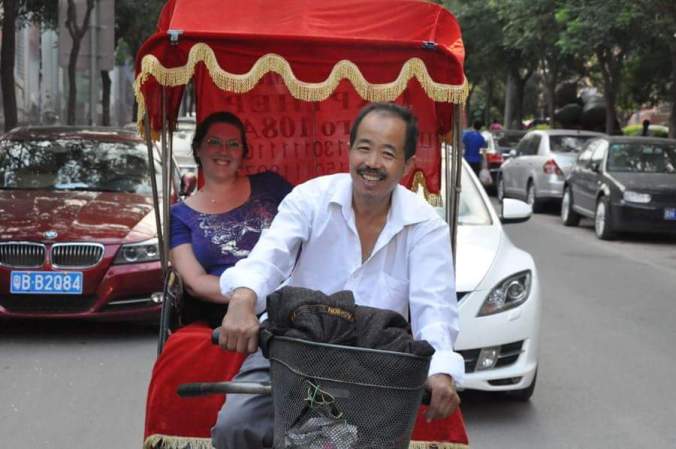
My most recent post was titled “Making home an emotional oasis for your TCKs”. It was inspired by one of the questions I hear most often: “what one thing would you recommend parents do to help their TCKs?”

I suppose it should come as no surprise that the question I’m most asked is a request for a summary!

The short answer is that parents can do something no one else can: make home a safe space where TCKs can express all their cross-cultural influences: their languages, loves, and confusions. This isn’t easy, but it’s powerful – both for TCKs and also for their parents.

Read the full article on A Life Overseas:

Making home an emotional oasis for your TCKs

Initial reflections on FIGT 2017

The Misunderstood blog has been very much on the backburner the last six months. I poured a lot of energy into it around the book’s release, which put me behind in my studies. I’ve been working hard to catch up and keep up – and 2017 has been jam-packed so far!

Attending the Families In Global Transition 2017 conference in The Hague (Netherlands) a few weeks ago reminded me that supporting TCKs and expatriate families is what I really care about, the field I want to work in. So despite the busyness of student life, I’m hoping to get into the expat headspace more often from here on out.

figtlogo

FIGT 2017 was an amazing three-day experience. It was my first time attending the conference, and I met a lot of incredible people with whom I had inspiring conversations. Some were people I had already “met” online – I had read their books and blogs, they had contributed to Misunderstood, or written reviews of it. I felt very lucky to have the opportunity to turn online connections into Real Life connections.

(I hung out on twitter a lot throughout the conference, reflecting on key moments as they occurred to me and to others in attendance.)

I was stunned to discover that some of the very authors I consider giants in my field (such as Ruth van Reken and Linda Janssen) were actively looking to meet me! One of several surreal moments was being asked to sign a copy of Misunderstood for Valerie Besanceney – an author I greatly respect and whose books I regularly recommend. There were also people at the conference I met for the first time and who turned out to have already bought and read my book, or had been hearing about it and bought a copy while at the conference. It was quite astonishing to me!

Also astonishing – my book selling out! Misunderstood was stocked in the conference bookstore, and the recommendation was to bring up to 10 copies. Those sold out in the first day, so I went through my suitcase and brought along the six copies I had with me – which sold out on the second day.

Beyond the Misunderstood connections, FIGT was a wonderfully enriching experience. I had the privilege of listening to a range of researchers discuss fascinating research they are conducting regarding various issues connected to expatriate life.

I was so encouraged by the work of SPAN to build networks of international schools who actively work to smooth transitions for students as their families move – to create safe passage. (Safe Passage is, not-so-coincidentally, the title of another book I regularly recommend, by another author I was delighted to meet in person – Doug Ota).

I had conversations which strengthened my convictions as to the importance of my work with TCKs and expat families, and conversations with prompted me to think further and in new directions. I listened to thoughtful talks unpacking different aspects of expat life – sometimes affirming things I have experienced and believe, other times challenging me to consider a new point of view.

There were three ideas which impacted me most deeply – which inspired me to think in new or deeper ways. The first was expat empty nesters; the second was dual careers for expat spouses; the third was the experience of being a twenty-something TCK. I’m still processing the things I heard and learned and the new ideas that have sprung from my time at FIGT, but I hope to write a little more about these things as I continue to reflect.

Right now I’m still in Europe, and over the next week I’ll have two opportunities to meet and share with groups of expat parents. I’ll be sharing with them some of what I’ve learned in 12 years spent working with TCKs, some stats and stories from Misunderstood, and taking time to listen to their stories and talk through their questions. I am really looking forward to both times.

After that I’ll be headed back to Sydney – and a pile of study to catch up on! But hopefully I won’t be quite so silent here anymore.

Recommended reading: August 19, 2016

Welcome! Here are a few posts I’ve read recently which shed interesting light on the expat/TCK world…

Can you be homesick when you are homeless?
The wondering wandering woman
A peace corps volunteer and ATCK eloquently reflects on the elusive nature of “home” for a TCK, and what how homesickness works when you don’t have a clear sense of where “home” is. I was particularly touched by her expression of the place TCKs have in the Third Culture: “I cannot simply say, “I am from here and this is who and what I am” but when I meet someone who is also a Third Culture Kid, I can look at them and say “I am like you” and that is something remarkable enough in itself.

Global Nomad Parent Challenge #4: Fostering Resilience Part II of IV
4 Gingers On The Go
I couldn’t go past the latest from Anna, whom I linked to in my first recommended reading post. This post is about coping strategies. It includes fantastic practical advice for parents on how to help children develop healthy coping strategies. This is hugely important for developing resilience in children, especially for families on the move.

The Nomadic Child – Cheryl Achieng Okuthe
The Diaspora Baby
I only recently came across this beautiful post from July. In it guest author Cheryl’s reflects on growing up between transitions and cultures. She graciously holds both the difficulties of her upbringing and the advantages she gained from it – both valid, neither dismissed. Many of her words reflect those I’ve heard from dozens of TCKs – very much worth a read.

Heading Home
4 Kids, 20 Suitcases and a Beagle
I love this reflection on the many places that can be “home” at the one time. I appreciate the phrase Kirsty uses to describe this – her “geographical schizophrenia” – and that she recognises her kids have a different relationship to “home” than she does. As her daughter said, “Mum, home isn’t a place. It’s a feeling”.

When is it a diaspora?
Public Radio International
There are a lot of words related to international movement of people, and often there is confusion surrounding the different meanings of each. This is a great piece explaining the real meaning of “diaspora” and its historical significance.

Want more recommended reading? See previous posts:
Recommended reading, August 2
Recommended reading, August 9


Parallel Lives: TCKs, Parents and the Culture Gap

I wrote a guest post for A Life Overseas called Parallel Lives: TCKs, Parents and the Culture Gap which is now up. In this piece I explain a little of why an expat child’s experience abroad is different to an adult’s. A TCK’s view of the world is deeply affected by their international experiences, giving them a different perspective to that of a parent who first went overseas as an adult. I go on to illustrate three areas in which the experiences of expat parents and their children are significantly different: Connection, Identity, and Choice.

Here’s a sneak peek for you:

Your TCK children will not have the same emotional connection to the people, places and activities of your country (and your childhood) that you do. Things that mean the world to you may not mean much to them. They may dislike your comfort foods, find your favourite sport boring, or be unmoved by things which bring you to tears. They may intellectually understand that these things are supposed to matter, but not feel a connection to them. If they fear disapproval, they may learn to “fake it”. Giving your TCKs space to feel differently, even if it is sad or disappointing to you, is vital to maintaining open communication and strong understanding between you.

Read the full post on A Life Overseas

Wondering what a TCK is? Find out here

An international Olympic experience

Eight years ago I was living just outside Beijing during the 2008 Olympics. I went into the city at least once a week so I had the fun experience of crossing checkpoints and showing my passport every single time I made the 1+ hour trip. Despite this, I loved being there during the Games, especially attending several Paralympic events. But the best part was the international atmosphere.

bj_aoyun.jpg

Beijing 2008 – Olympic track and field in the “Bird’s Nest” stadium, and cheering for Australia in the Wheelchair Rugby

I had many friends from different countries and the Olympics was such a fun time to celebrate our different cultural identities and heritages together! I watched the opening ceremony on a big projector screen with probably a hundred other expats, about a 15 minute drive from the huge stadium itself. When things were slow we took turns singing our national anthems – so many interesting songs I’d never heard before! And strangely enough, one of the most exciting parts of the night was watching the teams march into the stadium. Most countries got a cheer, because there would be someone from that country or who had lived in that country or who had a close friend or family member from there or living there. It was a tangible display of the global interconnectedness we experienced as an expat community.

I know a lot of TCKs who love the Olympics because it is a chance to celebrate all the countries to which they feel an affinity. The countries they have lived in, the countries they have visited, the countries of which they are citizens and the countries their friends and loved ones are connected to. It is particularly special when countries which are smaller and generally rate less of a mention in international media get their moment in the spotlight.

I see the team from Guyana and think “I have friends from there!”
I see the team from Laos and think “my friend lives there!”
I see the team from Liberia and think “my friend grew up there!”
I see the team from Vanuatu and I think “I’ve spent time there!”

The beauty of the Third Culture is that it is made up of people from many different countries, cultures, languages, and backgrounds. The Olympics is a rare time when TCKs see something that looks like their world right there on the TV. Not only that, but it is seen and recognised by many people around them.

At its best (when we put corruption, organisational failures and our own cynicism aside) the Olympics brings together people from many countries and honours them all. For a few weeks every four years, the people of the Third Culture get to share their multi-country connections and celebrate people from different countries.

I hope you are enjoying the Olympics, no matter where you are, and no matter what team(s) you are cheering for!

Click here to read more posts about Third Culture Kids, transition, and expatriate experiences.
Recommended reading: August 9, 2016

Last week I shared a few articles about TCKs and expat life which I’d found interesting. Here is my second instalment, with some more recent posts you might enjoy.

Life Abroad: The Hole in the Expat Bubble
Haps Magazine Korea
Lovely exploration about what an “expat bubble” is.  John discusses why expat bubbles form and ways they can help expatriates new and old. A really refreshing read, especially for expats who have been made to feel guilty for relying on a bubble at some point.

Multifacted Blackness
The Black Expat
Really great post about the author’s experience as an African TCK learning what “blackness” meant outside Africa. Lambert makes a particularly interesting point, that “the construct of blackness is best experienced when contrasted against the backdrop of the racial diversity of the rest of the world.” It is so important that we each listen to voices with different experiences to our own, and today I am thankful for this particular voice.

Six Disturbing Experiences When Going Back Home For A Holiday
Expatriate Connection
While there are a bunch of great insights here what really got me thinking is the idea that while we stay in touch with people long distance, we generally do so one-to-one, rather than in a group setting. I can see of several interesting implications of this – still thinking it through!

Too Many Transitions Can Traumatize Our Kids
Christianity Today
A personal reflection on the author’s experience of frequent childhood moves. Discusses the connection between childhood transition and anxiety, and includes some advice for parents to help soothe an anxious child through transition.

I didn’t want to be an expat
Life with Baby Kick

In this post blogger Laura explains how she didn’t want to move abroad, and the bad attitude she began her international life with. But there’s a happy ending! She made friends and came to love her expatriate life, enough that she is embarking on a new adventure.

Finally, here are two short posts reflecting on juggling multiple cultural connections. It’s always an honour to see into another person’s experience, and I appreciate both of these windows:
The thing about third culture kids – 3ck thoughts and things
Third Culture Kid – Christy Tungyan

Living in between countries

An updated version of this post has been published on tanyacrossman.com

**

Part of the Third Culture Kid experience is living “in between”. 62% of young TCKs I surveyed (those under age 30) said that feeling “in between” was a significant childhood experience. There are several ways in which TCKs live “in between”. In this post I will explore ways in which TCKs live in between countries.

This is easily understood on the surface. A TCK is a citizen of one country, but lives in another. (Or is a citizen of multiple countries, or has lived in multiple other countries.) The complexity comes in how the TCK feels about and relates to these countries – never being completely and comprehensively in any one of them.

Connected to the passport country
A TCK has a relationship with his passport country – he has a legal connection to the place which issues his passport. Often it is also the place where many family members and family friends live permanently. For many expat families the passport country is a “home base,” somewhere they frequently visit. Many TCKs also feel they “represent” their passport country while abroad – that people meeting TCKs overseas get an impression of their passport countries through them.

Connected to the host country
Many TCKs also feel that they “represent” their host countries while travelling. Sometimes people see them as the “expert” on that country (and language/culture) regardless of how immersed the TCK was – or wasn’t! In this situation a TCK may feel pressure to live up to these expectations. Other times people ignore or don’t recognise the TCK’s connection to the host country/culture. In this case, TCKs may feel pressure to promote the places they feel connected to.

In between countries
The reality is that most TCKs do not identify entirely with one country – they are influenced by, and attached to, multiple countries at once. The passport country may be where they are “from” and yet they may have spent far more time outside it than inside it. 58% of the 744 TCKs I surveyed for Misunderstood spent more than half their childhood years outside their passport countries; 30% spent less than three years there.

While a TCK may know she is a “foreigner” in her host country, she may feel even more “foreign” when visiting her passport country. In both scenarios the TCK is not quite 100% “from” the country in question. In both places the TCK is like a cultural ambassador for the other place.

Individual experiences
Every TCK is different – they have unique life journeys. Not all TCKs feel they are (or are expected to be) ambassadors of the countries to which they are connected. But the common experience of the Third Culture is that a TCK is connected to multiple places; in every TCK there is an aspect of being “in between” these countries. These connections make the TCK’s experience of the world different to that of a monocultural kid (one who spent their entire childhood connected to a single country).

Acceptance of the “in between” experience
There is nothing wrong with being a TCK; in fact, only 2% of the TCKs I surveyed said they would take back their international experience if they could. Connection to multiple places isn’t “bad” – but it is different. This means that there is an unspoken bond between TCKs – they understand, with no explanation needed, what it means to live in between countries.

This brings me to something anyone can do to build deeper friendships with TCKs: accept that a TCK has these additional country connections, even if you don’t fully understand how it works. No matter who you are, there is comfort in being with people who simply believe you, accept you, and desire to better understand you.

Click here to read more posts about Third Culture Kids, transition, and expatriate experiences.