Parallel Lives: TCKs, Parents and the Culture Gap

I wrote a guest post for A Life Overseas called Parallel Lives: TCKs, Parents and the Culture Gap which is now up. In this piece I explain a little of why an expat child’s experience abroad is different to an adult’s. A TCK’s view of the world is deeply affected by their international experiences, giving them a different perspective to that of a parent who first went overseas as an adult. I go on to illustrate three areas in which the experiences of expat parents and their children are significantly different: Connection, Identity, and Choice.

Here’s a sneak peek for you:

Your TCK children will not have the same emotional connection to the people, places and activities of your country (and your childhood) that you do. Things that mean the world to you may not mean much to them. They may dislike your comfort foods, find your favourite sport boring, or be unmoved by things which bring you to tears. They may intellectually understand that these things are supposed to matter, but not feel a connection to them. If they fear disapproval, they may learn to “fake it”. Giving your TCKs space to feel differently, even if it is sad or disappointing to you, is vital to maintaining open communication and strong understanding between you.

Read the full post on A Life Overseas

Wondering what a TCK is? Find out here

Misunderstood is now available!

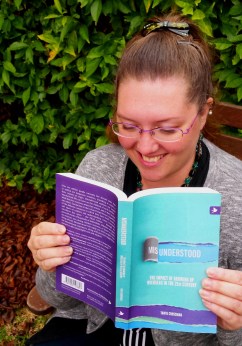
reading-tAfter 11 years spent mentoring TCKs and nearly four years spent collecting their stories I am beyond excited to announce that Misunderstood is NOW ON SALE!!

I am so proud of this book. I know it might sound strange to say that about my own work, but I really am. Not of me, mind you (though I feel pleased with the work I’ve managed to do). What I’m proud of is all the stories collected and collated in it, proud to have created something I believe does those stories justice.

I interviewed over 270 TCKs during the process of writing and editing Misunderstood. More than 100 of them are quoted in the book, sharing their stories of Third Culture life, of adapting to new environments, of processing the emotional ramifications of international lives. I am so proud of all the TCKs who bravely shared their hearts, putting sometimes difficult emotions into words, so other could benefit.

I spoke with many parents of TCKs as well. These types of conversations are what spurred the writing of the book in the first place, and helped adjust the narrative of the book as I wrote. I am so thankful to the many parents who shared their hopes and fears with me so openly, that the questions they and so many have held in their hearts might find their way onto the pages of Misunderstood. Part of the pride I feel is that, with their help (and the help of Summertime‘s wonderful team), Misunderstood addresses worries many expat parents carry.

Through the process of writing Misunderstood I have seen it shape me – making me into a more compassionate person. I find myself more convinced than ever of the wisdom to be found through asking questions and listening to the answers. I have also had the privilege of seeing young TCKs affected by the book as it took shape. The raw and emotional responses of many test readers (young TCKs who read a chapter or short section I was working on to give feedback) humbled me, and made me determined to do this well. I am proud to present to you a book that can impact people.

That is why I’m feeling proud today. Years of work, and the contributions of so many people, have become a physical book in my hands. Misunderstood is a book that honours the stories of TCKs, encourages expat parents, and offers helpful insights to anyone connected to international life.

I am delighted to share it with you now, and I look forward to hearing your thoughts.

An international Olympic experience

Eight years ago I was living just outside Beijing during the 2008 Olympics. I went into the city at least once a week so I had the fun experience of crossing checkpoints and showing my passport every single time I made the 1+ hour trip. Despite this, I loved being there during the Games, especially attending several Paralympic events. But the best part was the international atmosphere.

bj_aoyun.jpg

Beijing 2008 – Olympic track and field in the “Bird’s Nest” stadium, and cheering for Australia in the Wheelchair Rugby

I had many friends from different countries and the Olympics was such a fun time to celebrate our different cultural identities and heritages together! I watched the opening ceremony on a big projector screen with probably a hundred other expats, about a 15 minute drive from the huge stadium itself. When things were slow we took turns singing our national anthems – so many interesting songs I’d never heard before! And strangely enough, one of the most exciting parts of the night was watching the teams march into the stadium. Most countries got a cheer, because there would be someone from that country or who had lived in that country or who had a close friend or family member from there or living there. It was a tangible display of the global interconnectedness we experienced as an expat community.

I know a lot of TCKs who love the Olympics because it is a chance to celebrate all the countries to which they feel an affinity. The countries they have lived in, the countries they have visited, the countries of which they are citizens and the countries their friends and loved ones are connected to. It is particularly special when countries which are smaller and generally rate less of a mention in international media get their moment in the spotlight.

I see the team from Guyana and think “I have friends from there!”
I see the team from Laos and think “my friend lives there!”
I see the team from Liberia and think “my friend grew up there!”
I see the team from Vanuatu and I think “I’ve spent time there!”

The beauty of the Third Culture is that it is made up of people from many different countries, cultures, languages, and backgrounds. The Olympics is a rare time when TCKs see something that looks like their world right there on the TV. Not only that, but it is seen and recognised by many people around them.

At its best (when we put corruption, organisational failures and our own cynicism aside) the Olympics brings together people from many countries and honours them all. For a few weeks every four years, the people of the Third Culture get to share their multi-country connections and celebrate people from different countries.

I hope you are enjoying the Olympics, no matter where you are, and no matter what team(s) you are cheering for!

Click here to read more posts about Third Culture Kids, transition, and expatriate experiences.

Interview on DrieCulturen

I did an interview with Janneke at DrieCulturen which is online today. In it I talk about writing Misunderstood, my experience living overseas as a teenanger, and where “home” is:

As you probably know I love books and especially on the topic of growing up abroad. I am pleased to announce that a new book on the topic is about to be released and the author Tanya Crossman has agreed to answer some questions specially for you. Thank you Tanya! By the way if you want to know what children or young people say about growing up abroad then you have to read this book. Now over to Tanya.

1) Please tell us about your book “Misunderstood”. Tell us about how you were inspired to write the book?
I spent a decade mentoring TCKs (third culture kids), listening to them and learning how they felt about life. Parents began to ask my advice, and I saw lightbulb moments as they saw their children’s situation in a new light. When asked for resources I pointed to lots of great books, but couldn’t find anything that did what I did…

Read the full interview on DrieCulturen Misundertood 3D COVER

Recommended reading: August 9, 2016

Last week I shared a few articles about TCKs and expat life which I’d found interesting. Here is my second instalment, with some more recent posts you might enjoy.

Life Abroad: The Hole in the Expat Bubble
Haps Magazine Korea
Lovely exploration about what an “expat bubble” is.  John discusses why expat bubbles form and ways they can help expatriates new and old. A really refreshing read, especially for expats who have been made to feel guilty for relying on a bubble at some point.

Multifacted Blackness
The Black Expat
Really great post about the author’s experience as an African TCK learning what “blackness” meant outside Africa. Lambert makes a particularly interesting point, that “the construct of blackness is best experienced when contrasted against the backdrop of the racial diversity of the rest of the world.” It is so important that we each listen to voices with different experiences to our own, and today I am thankful for this particular voice.

Six Disturbing Experiences When Going Back Home For A Holiday
Expatriate Connection
While there are a bunch of great insights here what really got me thinking is the idea that while we stay in touch with people long distance, we generally do so one-to-one, rather than in a group setting. I can see of several interesting implications of this – still thinking it through!

Too Many Transitions Can Traumatize Our Kids
Christianity Today
A personal reflection on the author’s experience of frequent childhood moves. Discusses the connection between childhood transition and anxiety, and includes some advice for parents to help soothe an anxious child through transition.

I didn’t want to be an expat
Life with Baby Kick

In this post blogger Laura explains how she didn’t want to move abroad, and the bad attitude she began her international life with. But there’s a happy ending! She made friends and came to love her expatriate life, enough that she is embarking on a new adventure.

Finally, here are two short posts reflecting on juggling multiple cultural connections. It’s always an honour to see into another person’s experience, and I appreciate both of these windows:
The thing about third culture kids – 3ck thoughts and things
Third Culture Kid – Christy Tungyan

Living in between countries

An updated version of this post has been published on tanyacrossman.com

**

Part of the Third Culture Kid experience is living “in between”. 62% of young TCKs I surveyed (those under age 30) said that feeling “in between” was a significant childhood experience. There are several ways in which TCKs live “in between”. In this post I will explore ways in which TCKs live in between countries.

This is easily understood on the surface. A TCK is a citizen of one country, but lives in another. (Or is a citizen of multiple countries, or has lived in multiple other countries.) The complexity comes in how the TCK feels about and relates to these countries – never being completely and comprehensively in any one of them.

Connected to the passport country
A TCK has a relationship with his passport country – he has a legal connection to the place which issues his passport. Often it is also the place where many family members and family friends live permanently. For many expat families the passport country is a “home base,” somewhere they frequently visit. Many TCKs also feel they “represent” their passport country while abroad – that people meeting TCKs overseas get an impression of their passport countries through them.

Connected to the host country
Many TCKs also feel that they “represent” their host countries while travelling. Sometimes people see them as the “expert” on that country (and language/culture) regardless of how immersed the TCK was – or wasn’t! In this situation a TCK may feel pressure to live up to these expectations. Other times people ignore or don’t recognise the TCK’s connection to the host country/culture. In this case, TCKs may feel pressure to promote the places they feel connected to.

In between countries
The reality is that most TCKs do not identify entirely with one country – they are influenced by, and attached to, multiple countries at once. The passport country may be where they are “from” and yet they may have spent far more time outside it than inside it. 58% of the 744 TCKs I surveyed for Misunderstood spent more than half their childhood years outside their passport countries; 30% spent less than three years there.

While a TCK may know she is a “foreigner” in her host country, she may feel even more “foreign” when visiting her passport country. In both scenarios the TCK is not quite 100% “from” the country in question. In both places the TCK is like a cultural ambassador for the other place.

Individual experiences
Every TCK is different – they have unique life journeys. Not all TCKs feel they are (or are expected to be) ambassadors of the countries to which they are connected. But the common experience of the Third Culture is that a TCK is connected to multiple places; in every TCK there is an aspect of being “in between” these countries. These connections make the TCK’s experience of the world different to that of a monocultural kid (one who spent their entire childhood connected to a single country).

Acceptance of the “in between” experience
There is nothing wrong with being a TCK; in fact, only 2% of the TCKs I surveyed said they would take back their international experience if they could. Connection to multiple places isn’t “bad” – but it is different. This means that there is an unspoken bond between TCKs – they understand, with no explanation needed, what it means to live in between countries.

This brings me to something anyone can do to build deeper friendships with TCKs: accept that a TCK has these additional country connections, even if you don’t fully understand how it works. No matter who you are, there is comfort in being with people who simply believe you, accept you, and desire to better understand you.

Click here to read more posts about Third Culture Kids, transition, and expatriate experiences.
Recommended reading: August 2, 2016

Every week I read articles about TCK and expatriate related topics, and often I think “I’d love to write about this!” but know I’ll never have time to get to all of them. So! I’ve put together a “recommended reading” post with short introductions to some articles I have appreciated lately. I plan to do this every week or so – and here is the first installment!

Third Culture Kids Parent Challenge #3: Mourning
4 Gingers on the Go
Lots of fantastic advice here for parents of TCKs! When you see a child is upset, about a move or another change, the natural reaction is to want to cheer them up – but this doesn’t help the child process the situation. In this great post Anna (a psychologist and parent of TCKs) gives clear practical suggestions for how to helpfully enter into a child’s grief.

Torn Between Two Countries 
California Globetrotter
A beautiful, emotionally honest piece about how the heart copes with being “torn between two countries”.  Lorelai lightly holds the seeming contradiction that is loving two places, realising that since both have a claim on her heart, she does not feel completely at home in either. She doesn’t come up with a neat solution, but sits in the tension that is so familiar to TCKs and expats all over the world.

“Crawl in a hole” and other great advice for new expats
The Culture Blend
Fabulous backhanded advice for how to get started in a new culture – for example “be ignorant” and “don’t be helpful”. A memorable post about embracing with humility the ignorance that comes with being new – and letting it become a guide rather than a liability.

10 Things I Learned From My First Year Teaching Abroad 
Frankie goes to Milano
While it’s great to get advice from “old-timers” (as above) it’s also important to listen to the voices of new expats, to hear their stories and learn from their experiences. This post is a lovely example of reflecting on living in a new culture and how it offers lessons worth learning.

The do’s and dont’s of cross-cultural parenting 
 Sassy Mama Dubai
A really helpful discussion of some of the practical realities of raising children as a cross-cultural couple. There is great advice even for parents who would consider themselves as coming from the same culture. I particularly appreciate the last tip: “Don’t expect the culture in which you live in, not to affect your parenting”.

Dealing with Expat Divorce
Diary of a Move
This is the fourth (and final) installment of an excellent series of posts about divorce in an expat context, including a long list of resources. (The posts are based on a presentation Katia Vlachos gave at FIGT 2016.) Living between countries and cultures adds all sorts of extra complexity to an already devastating situation, especially when children are involved. It is great to see this topic getting much needed attention. (Also see parts one, two and three on Huffington Post.)

The Balancing Act of MK Education
A Life Overseas
A good overview of education options for Christian missionary families, with pros and cons for each option. Amy then goes through a few general considerations, which boil down to: know your unique situation, be involved in your child’s education, and relax. She also points out the importance of effective support for children with learning differences.

17 Maps That Will Change The Way You Look At The World Forever 
Buzzfeed
Not strictly in the expat realm, but something I think many expats would find interesting! I love maps, and this post uses map overlays to explain how map projections warp the size and shape of countries at certain latitudes – something that fascinates me.

Want more recommended reading? Check out my next reading list!

What is a Third Culture Kid?

An updated version of this post has been published on tanyacrossman.com

**

“Third Culture Kid” (often abbreviated to TCK) is a term that was first coined by Dr. Ruth Hill Useem while studying children of American families living in India in the 1950s. These children were not Indian, though they lived in India. They were American – though they weren’t experiencing that country. This childhood experience was neither that of an Indian child nor that of an American child. It was somewhere in between – in a Third Culture.

“Third Culture” doesn’t mean a combination of two cultures to form a third. Many TCKs are connected to more than two or three cultures. The three cultures of a TCK are instead three types of cultures. (TCK Consultant Libby Stephens helped clarify my understanding of this – her blog post on this topic is definitely worth a read.)

The first type of culture is the Legal Culture. These are cultures to which a person is legally connected – a passport, or permanent residency. This is a place I have a legal right to be in – I don’t need a visa, or a permit. I have a piece of paper that says I belong.

The second category of cultures are Geographic Cultures. These are cultures a person is connected to geographically – by living there. It is the places where I have physically lived (and emotionally engaged) whether or not I had citizenship. (A person’s legal culture might also be a geographic culture, but not necessarily.)

The Third Culture is a Relational Culture – woven together from overlapping experiences of life lived in between. It embraces people who share a childhood not geographically but experientially. It may be different in nature to legal and geographic cultures, but it is just as much a source of identity.

The Third Culture is not about where you are from, or where you have lived. It is about what you have experienced. There is comfort and understanding in having a shared culture, especially when you feel out-of-step with both your Legal and Geographic cultures.

Growing up in your legal culture means a comprehensive connection – you are legally attached to the place to which you are emotionally attached. Third Culture Kids don’t generally have this comprehensive connection. Instead, it is in the Third Culture they find the comfort and connection of shared experience. For them, the Third Culture is a place of belonging.

The Third Culture is the childhood home of those who did not experience comprehensive connection to a single place as children.

The Third Culture is neither a legal nor a geographic entity – but it is real.

TCKs are people who grew up in this “place” – the Third Culture.

Click here to read more about the Three Culture of a Third Culture Kid in a post I wrote for China Source.

Welcome!

reading.jpgWelcome!

My name is Tanya Crossman and I am the author of Misunderstood: The Impact of Growing Up Overseas in the 21st Century. On this blog I discuss different aspects of international life, with a focus on children and young people: how they feel about, and are shaped by, their global experiences.

Perhaps you have come here hoping to learn more about raising children internationally, or teaching such children. Perhaps you were raised overseas yourself. Perhaps you have read Misunderstood and want to know more. In each case, a good place to start is my post on Third Culture Kids, which lays a foundation for a lot of what is discussed here. You can also check out articles arranged by topic, or take a look at the most popular posts.

However you found your way to this blog, I’m glad you’re here. I would love to hear from you, hear your story, and your questions. We’re all learning, and we all have something helpful to contribute. Please add your voice to the conversation!

Tanya Crossman
Beijing, 2019