Recommended reading: September 3rd, 2018

My latest collection of recommended posts about expatriate life and Third Culture Kids. This week includes topics such as transition, self care, identity, and ordinary expat life.

Dear Parents Launching Your Third Culture Kids
Djibouti Jones
A beautiful piece from the always lovely Rachel, this time describing the emotional storm of dropping her twin TCKs off at university – and leaving them there.
You feel alone. You look at the other parents, the ones who live in the same city or the same state or the same country and you are jealous or angry or feeling protective. You think no one understands all the questions and losses and griefs and fears racing through your mind and heart. You’re confused because no one told you raising TCKs would end up here, would end up with you on the other side of the ocean finally appreciating what you’ve put your own parents through all these years abroad. No one told you this would be harder than moving abroad in the first place.”

Never just a curry
Jo Parfitt
I love this! Food is so powerful – a memory trigger, a comfort, and so relational. In this post, Jo traces her family’s history of curry, across countries and continents – to the excitement of a new discovery.
For most of our 30 years of marriage, ask us what our favourite food is and we’d say Arabic without pausing for thought. But this week it hit me. It’s time we changed our answer – to Indian curry even though we have never lived there. I have not even visited. Curry has been a red thread through our lives abroad.

Football, Children, and Culture: Not Just a Game
Multicultural Kid Blogs
In this post a mother of TCKs talks about creating memories for her sons that connect them to the country that formed her, a country they have not lived in. A lovely read.
There are so many memories wrapped up in Watford football matches for me. And as I sit next to each of my sons on the terraces where those memories were made I am carefully unwrapping some of them and passing them to my sons for safe keeping. At the same time, my dad and I are making childhood memories for my sons – ones they will never forget. . . It’s hard for my children to imagine I had a life elsewhere before I ‘turned Dutch’. These trips are a small window into that life. They see the town I used to live in, they see a part of the life I had before I moved to the Netherlands and became their mother. They get a glimpse of the culture that has formed me, and them too.

6 Essential Practices for Hard-to-Reach Stressors
World Tree Coaching
Another great post from Jodi, this time exploring background stress and what we can do about it. This all rings very true for me at the moment! Life overseas pretty much IS background stress. There are so many little things that are different or difficult, so many small uncertanties and stressors, and they all add up. Background stress is one of those things we slowly adjust to until we’re drowning and don’t quite know why. The self reflection required to keep on top of this, to recognise the background stress of life in a different setting, takes a lot of conscious effort.
To deal with the challenges that hit at our egos, our values and our sense of purpose – it’s important to develop habits of self-reflection and insight. Taking the time to look more closely at who we are and how we fit in the world can be difficult. Sometimes the effort can feel daunting. We may not be sure we’ll like what we find there. On the other hand, deep down most of us know it’s important to do this type of inner work so that we can grow and develop into our full selves. One way to cultivate a more reflective state is to develop practices that naturally foster paying attention to our experiences. These skills can help us turn towards what’s going on inside and around us, giving us more information about the source of background stress.

Staying Healthy Overseas: Emotional and Mental Wellness
Taking Route
This is another good post in the same vein – looking after ourselves well enough to not only get through life but actually enjoy it, expat bumps and all.
It is easy to get burnt out while living overseas. I know that, you know that, but are we doing enough to make sure we don’t get burnt out? The answer for me is almost always “no.”…This article is not really a guide on how to do wellness overseas as much as it is a letter to myself to prioritize my emotional and mental wellness while living abroad.”

Redefining French Identity
The Parent Voice
This is a really interesting post – a story and reflections on identity, translated into English alongside the original French. Anissa talks about her experience of identity – two passports, from Canada and Tunisia, and being born in France but never having had French citizenship. She talks about the chameleon and the salamander as metaphors for changeable identity. For her the chameleon adapts by blending in, whereas the salamander cuts away pieces. She also talks about active vs passive – when I make the choice to adapt myself, rather than changing in response to the perceptions of others.

Simple pleasures: grocery shopping
Stories from Tanya
And finally, I’m sharing something from my other (more ordinary) blog, where I recently started writing again after a two year hiatus. I realised that this particular post is the sort of thing I would share as recommended reading if I read it elsewhere, so I figured I’d add it to the list this week! In it I deconstruct a trip to my local Chinese market, and why the experience was relaxing for me. It touches on transition, language, culture, and stopping to appreciate the lovely in ordinary life.
I don’t like standing out as a stranger, but I don’t mind so much when it happens less randomly. If I’m interacting with someone for a separate reason, and they remark on my foreign-ness and command of Mandarin, that doesn’t irritate me. Most of the time, I enjoy these little interactions. The person is not encroaching on my existence, they are sharing it for the moment that we are involved in a task together. . .I succeeded in being a local member of my community, for a few minutes on a sunny Monday morning.

Recommended reading: August 27th, 2018

My latest collection of recommended reading – recent blog posts about TCKs and expatriate life I appreciated and commend to you.

Goodbye 250
Communicating Across Boundaries
With the gracious writing I now associate with Marilyn, she says farewell to something ordinary. This is an important skill when it comes to leaving well. Recognising that the ordinary, the mundane, is what makes up our lives! Routines happen when I do the same thing over and over – which means those ordinary things take up a lot of time and space in my life, over time. They become my life. Familiarity can be a sweet thing indeed, and one worth savouring, and deliberately farewelling.
And today is my last work day. The last day that I sit in my cubicle, answer emails from my official email account, and answer the phone in my official capacity. Soon I will leave Boston and Cambridge. A plane will take me thousands of miles away to a small apartment on the other side of the world. I will leave a place I love to go to a place I have begun to love. Who is so fortunate? I ask myself this question every day. And when people ask me where I’m from, I will say with some pride, and no hesitation “I’m from Boston.” Those are sweet words indeed.

The Countdown to Good-bye
Raising TCKs
Lovely piece by a mother preparing to drop her son off at boarding school, and processing the fear and grief that goes with that.
For me my fear was losing my son to someone else. As soon as I wrote it out, peace broke through like a river (that song has never made sense to me until just now). And now I need to remind myself that I’m not losing my son. He’s just growing up. I can grieve that – but I also need to rejoice in the fact that he is growing up and becoming his own man.

Pardon Me, Can You Point Me to the Toilet?
Wine and Cheese (Doodles)
Great post about the differences of dialect – the different vocabulary we use in different English-speaking countries, in this case. More than that, how repeated exposure changes the way you speak, and eventually, the way you think. I’ve experienced this myself – so many words jumbled in my head, and I know one is the Australian and another the American but stuffed if I know which is which!
I think it’s because the auto-go-to for your brain alters. And not just for things like toilet vs. bathroom. It’s being overwhelmed in Target because of the sheer size and choice. It’s feeling strangled in the city of your heart because you’ve been outside of its embrace for too long. Its getting lost in places you should know, gone long enough that the breadcrumb trail has dried up and blown away, long enough that the muscle memory has atrophied and you panic you’re going need to use the GPS to find your way home.

Third Culture Kids and Safe Places: Community
Life Story
Another great piece in this series (though I’m late in sharing it!) Here Rachel talks through a bit of why community matters, why we struggle to build it, and how to move forward. She covers the importance of choice, and investment – as well as the need for intimacy, to know ourselves well and “being willing to share that self with others“.

How to Explain Work Travel to Your Child
Shanghai Mamas
Business trips are a common feature of expat life for many families. This is a good little article with tips for dealing with work travel and kids – how to explain it, say goodbye, and connect while away.

Adapting to Change Can Be HARD
Thrive Global
Great little post on dealing with change (transition) and a few simple tips to keep in mind when it’s hard. Very similar to what I’ve written about change and transition before, and how in a season of transition we lose our “automatics”.
If change happens so frequently, why is it so difficult? For one thing, humans are creatures of habit. Much of what we do daily – from putting on our clothes to driving a car – happens without us even thinking about it. Our brains don’t need to do a lot of work to carry out repetitive behaviors that have formed into habits – our unconscious brain takes over. But changing those routines is a different story. It requires focus and attention, and it makes our brain work overtime to adapt; we have to be intentional and make conscious choices.

Finding Fun on the Field
Velvet Ashes
Fun story about finding fun in a cross cultural setting! I’ll admit I’m still struggling to find the fun/relaxation in my latest home. So this is a good reminder to me – and I hope to others as well!
Fun is a short-term pleasure, with long-term effects. Maybe it’s reading a book in the hammock, or going out for a good coffee with a friend. It could be hosting a party, or walking along the beach at sunset. Having fun allows us to lift our eyes, even just for a moment, from the heavy toil we might be in and see a bigger picture.”

Recommended reading: August 20th, 2018

My latest collection of recommended posts about expatriate life and Third Culture Kids – this week blending stories of practicalities and emotions.

Sentimental means “settled” and I don’t like that
TCK Training
In this lovely little piece Lauren reflects on receiving inherited furniture – and realising that, for the first time in her life, she owns physical objects she can’t pack into a suitcase. That’s a big deal for an ATCK! She comes to a work-in-process conclusion:
“I am learning to be content rooting myself for a while. Learning to invest in friendships and to plant trees – both of which need time settled in one place to see grow. . .I am learning to value the sentimental- even when it doesn’t fit in my suitcase.”

Too stupid to order ice cream in the US?
Share the Love
I love this little piece about buying ice cream, and the differences between doing so in the US and Europe. It’s a great illustration of the sorts of little things that change when one moves. Simple things like ice cream require adjustment and understanding! The sheer number of things that require thought in a new place can be overwhelming (something I’ve written about before).

Life’s humble hunt – part 1
Life’s humble hunt – part 2
The Black Expat
This series of two posts tells the story of TCK Adrienne, as she met and married the untravelled Terek, and embarked on overseas adventures together – eventually adding the complication of an MS diagnosis, and now raising their own TCKs in Malawi. I particularly appreciated this observation, about the nature of childhood (not knowing anything else) and recognising different values in the culture around you.
Since our children are [young] they don’t know any different so they have nothing to compare it to. They don’t know what’s going on in the States or that they’re American. They’re really just free children. And I don’t know what to compare it to either, because they’re our only children and they were only eight months and twenty-one months when we moved. There are things we enjoy about being here that I think will help shape them into patient people. Our adrenaline rushes all the time as Americans. Or at least in my family. Here, the things that ordinarily would upset us, don’t upset someone. They just have a different type of calm. I’ve noticed that here in Africa. I’m hoping our children pick up on a lot of that.

The Guilt Of Distance
I Am A Triangle
Living abroad comes with many advantages, but there is also a price to pay (something I’ve written about before). This is a post that opens up feeling many expats would rather leave closed away – the guilt of being away from people we love. This post discusses the pain and guilt of seeing parents age, from a distance. It raises questions the author has no answers for – questions which perhaps don’t have answers, or at least not easy ones. Sometimes it’s helpful to just sit with these feelings, whether or not answers come.

I am peculiar here, might as well embrace it
A Life Overseas
I love this post, with its quirky stories of being the ‘peculiar’ foreigner in a remote village. I love author Anisha’s desire to blend in, to be part of the community, and also her pragmatic acceptance that this will never completely happen in her situation. It’s an important balance, I think.
I’d like to think I’ve got the hang of living here, but the reality is I probably truly understand about 20% of the cultural happenings around me. The society here is so complex, and I am so bizarre to them. . .Peculiarity is something I can embrace because it’s what I really am. Of course I am hopeful the longer I live here the more I’ll understand the intricacies of this culture. But why fool myself? Someone will probably always want to sneak a peek in my fridge.

‘What’s up with that white voice?’: The tricky art of linguistic code-switching
Chicago Tribune
This article looks at “code switching” – adjusting the way one speaks – from a minority culture to majority culture manner of speech. Code switching is something quite familiar to many TCKs. I have heard many stories of sub-conscious code switching, and of this creating conflict with others who don’t understand why this happens. An interesting piece to better understand why we change ourselves to match others, and the toll this takes.

Do writers need a nationality?
Elsewhere: A Journal of Place
This is a really interesting read. Author Vesna Main reflects on what it means to be identified by nationality. A review of her work labelled her with her country of birth, although she has lived elsewhere for 40 years and writes in a different language. Her musings on belonging, and belonging rooted in something other than place, are fascinating.
“So, what is it, I wondered, that is supposed to make me a Croatian writer? What is it that makes most people insist on a label of nationality? Is it simply a shorthand to enable communication? Or is it an expression of a belief that everyone ought to belong to a nation and that those who do not are somehow morally deficient and untrustworthy?. . .My fellow nationals are other writers, some published, some toiling in patient obscurity. I have chosen to belong with them. And if you ask me whether I miss this country of writers on the days when life intervenes, yes, absolutely, I do. I am ‘normal’, after all.”

Unrequited love of place

In a recent recommending reading post I linked to Mariam’s “break up letter” to Dubai, the city her family just moved on from. There were some things she wrote at the end of her letter that I found particularly poignant and worth some further reflection:

Dear Dubai, my bags are packed, my goodbyes are done. My memories are now strewn all over your glittering skyline. Your streets will forever feel like home, your parks and beaches are the background of my kid’s childhood photos. How many times over the past four years have I posted pictures of you and me together on Instagram and used the popular hashtag “#mydubai”? But then wondered, are you really mine? Can you ever truly be mine?

Today I wonder, why does it hurt so much to leave a city that was never mine to begin with?

Falling in love with you Dubai, is like falling in love with someone who says “I’m not looking for any commitment. Nothing serious, please.” Once an expat in Dubai, always an expat in Dubai, because there is no path to long-term citizenship in the UAE.

This is why I have to break up with you Dubai. Trust me, it’s for the best. I need to move on. Some relationships are short like yours and mine, but it doesn’t make them any less meaningful. Better to do this sooner rather than later, when it will hurt even more.

This captures beautifully the tension felt by many expatriates, and especially by many TCKs. Relationships are not unilateral. There is a two-way street. Can a place ever be truly mine unless it embraces me, too?

An immigrant is a person who has this two-way relationship with a country. They have chosen the country, and the country has chosen them. There is acceptance in both directions.

Expatriates do not have this.

An expatriate is someone without a long-term commitment. For some, it is because they do not want a long-term commitment. They want to go back ‘home’ after their time is done. For others, the country they live in does not want a long-term commitment. There is no path to citizenship, no way to legally become a local. This is where the “unrequited love” of the post title comes from. There are many expatriates around the world who have fallen in love with a country that will never fully embrace them.

That’s my situation, in China. I love this place, I really do. But I can never become Chinese. Not legally, and not in the eyes of Chinese people. I must live with the uncertainty of a constantly changing visa situation, and never having permission to remain more than one year at a time.

Many TCKs live with this. The place of childhood becomes inaccessible. There is no legal rights to belong. There is no recognition of their connection. The place they love, and were raised in, does not acknowledge them.

Perhaps a better relational analogy for the TCK experience is foster care. Temporary guardians, not permanent family. Some foster situations are joyful and warm, others are difficult and even traumatic. Some can lead to permanent adoptive situations; I’ve interviewed a number of TCKs who were able to gain citizenship in the country they grew up in as expatriates. But for many, that is not an option – even for those who wish it was.

There is a particular pain that goes with unrequited love of place. To feel at home in, identify with, love, a particular place – but have no security there. A place that says, as Mariam put it: “I’m not looking for any commitment. Nothing serious, please.”

Amy Medina wrote about this feeling in a post I included in a different recommended reading list. She called it “forbidden roots” – creating those connections in a place you know won’t be forever. She also used relational terminology to describe it, writing: “It’s like coming to the realization that I’ve fallen in love with something that I can’t keep.

It’s hard to keep giving yourself to a place that won’t ever love you back, so to speak. To invest in a place that won’t invest in you. Mariam wrote of the choice to leave, before it hurts too much. Amy wrote of the choice to invest, knowing it will hurt much.

But here’s the crunch for TCKs, again – the lack of choice. This unrequited love of place is the result of choices made on their behalf. But as with anyone, in any life situation, all we can do is choose how we respond to what life has brought us. We can choose where to invest ourselves, our lives, our love – in this moment, and from now on.

Click here to read my Lightning Session on our relationships with places, which expands on this idea.

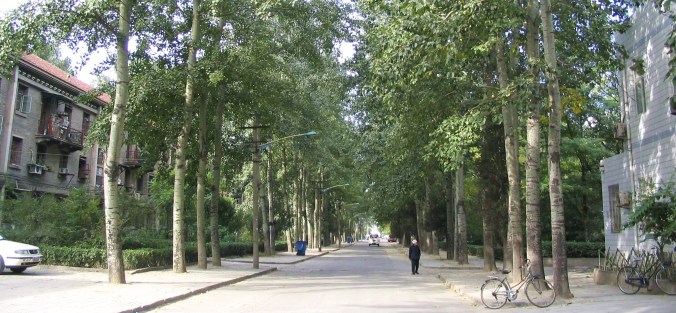
erlizhuang.JPG

This quiet back road was part of my regular commute during my first year in Beijing (back in 2004).

Recommended reading: August 13th, 2018

This week’s recommended reading has an education focus. School is a huge part of any child’s life – and no less so for Third Culture Kids. Moving around the world into a new school – a new school system, with different expectations and perhaps even a different language – is a big challenge to overcome! It’s really important for those of us supporting and caring for TCKs (and their parents) to think about how education plays out in the lives of international families. This is a loose collection of recent articles discussing different elements of education – transition, language, culture, and alternative ways of learning.

Bilingualism and Homework, part 2
Expats since birth
This fantastic post was written by Ute Limacher-Riebold, who always has great tips for international families. She discusses something that comes up in a lot of international families: what to do when your children attend school in a language you aren’t fluent in? What is most valuable about this post, however, is the range of really great practical advice for parents in this situation. In particular, how to learn the language of study and exams, for both parents and students.
“What for a native speaker is “common sense” might not be for someone who speaks this language only at school (or at work for that matter…). Here are some sites where you can find an overview of recurrent terms that are used in English exams…”

How to cope with sending your child to a school that isn’t diverse
Multicultural Kid Blogs
This one isn’t about expat kids necessarily, but about parenting a child who is a minority in their school – something that can happen whether at home or abroad. There is great practical advice for parents here, on how to support a child through an experience that has the potential to be stressful.
When your kids are in school, one of the most important things you can do every day is to talk to them. Sometimes simply asking how their day went is not enough. When your child is attending a school that isn’t diverse, it’s important to make sure they are having a good experience.

4 Tips for a Stellar Start for International Children Starting a New School
Multicultural Kid Blogs
And now, by their powers combin: a post by Ute, published on Multicultural Kids! This piece has solid advice on ways to help kids transition into a new school in a new location. Includes a lot of reference links to additional material, too.
If we have been through this kind of change before, we tend to assume that they [children] will all be fine (in time). I strongly advise not to do that. . .what was easy before might be an issue now. During a transition, our children tend not to make us worry and would do anything to see us happy.

A Parents Guide to Changing Schools
Mixed Up Mama
This is about changing schools generally, but I found there was a lot in here that is valuable for international moves, too. From acknowledging the emotional difficulty for parents watching a child struggle with adjustment, to logistics. I particularly appreciated this piece of advice: “Consult with your children but don’t let them decide.” I talk to parents about this a lot in regards to the decision to move. It is great to consult your kids, but don’t pretend they’re really making the decision – you will decide whether to move or not, even if that decision is impacted by your child’s opinions. Be the parent, make the decision, and acknowledge to your child that that is the situation.
Some of the reasons we couldn’t always share with her as they were about things she may not have always understood- long term vision, bigger picture as a family etc. Children think in terms of the short term and their immediate situation. We did share with her slowly some of the reasons but left it open for her to see some of the advantages herself as well. We talked with her at every step of the process getting her ready but ultimately it was our decision as parents.

Why teachers shouldn’t be afraid of other languages being spoken in the classroom
The Conversation
Clare Cunningham discusses her research on alternative lanugages in the classroom, from the perspective of English-language education in the UK. She brings up several interesting points (and links to her research) about reasons teachers may prefer a monolingual classroom. One teacher “spoke about what she called “the inappropriateness of language” – claiming that children only use other languages when they want to be rude or exclude others.” This has certainly been an argument in some schools I’ve known who maintain an “English-only” school environment. A related argument is that allowing other languages excludes children who cannot participate in that language. Clare also notes promising changes as schools and teachers are “striving to overcome their worries about multilingual spaces and making excellent use of online resources for curriculum based work in a range of languages – as well as providing tailored teaching materials for children that need them.

Supporting Education From The Outside In
LinkedIn 
This fantastic article links the power of art and storytelling to fostering emotional wellness in cross-cultural children. This is something I wrote about in Misunderstood, and is something others have tackled as well. Author Michelle is Board President for Cultured Kid, an organisation working on curriculum that uses art and storytelling to support CCKs in their identity struggles while simultaneously developing greater cultural undestanding and empathy in their mono-cultural peers. I am really excited by this concept and hope to hear more about it in the future!
For the past year Cultured Kids has been working alongside education professionals, consultants, and students in public health and child development to tackle this single complex question: Is it possible to create a curriculum for schools that could support academic achievement in conjunction with promoting individual social emotional wellness within this sea of cultural complexity? We believe there is.

Why Worldschooling?
The Black Expat
Interesting perspective on alternative schooling. Worldschooling uses the world around us to direct amd encourage learning. Author Karen and her partner are both trained teachers, and have used their experience along with a worldschooling mindset to educate their son while travelling abroad.

What is worldschooling?
World School Family Summit
With my interest piqued, I went and found this recent article describing worldschooling a little more, including descriptions of different ways this works for different families. In this post, TCKs are considered worldschoolers even when they attend traditional schools (international or local) as they are still outside their ‘home’ culture and its educational system.

Expat education and separated parents
Expat Child
This is a short article, more of an overview, and is based in the UK system. That said, it raising several really important questions regarding co-parenting an education, especially when an international move is part of the equation. For example:
When a child attends school in another country there can be many decisions requiring a parent’s consent which can be difficult to obtain when the parents are abroad and more so if communications between separated parents are difficult.

My difficult experiences of going home

There are two countries I’ve returned home to, twice each. The country of my childhood, and the country of my adulthood.

I grew up in my passport country, Australia. But I spent two years of high school living in Connecticut, in the US. Then I went home.

Ar 21 I moved out of my parents house straight to China, where a study year turned into 11 years abroad. Then I went home.

Two very different repatriation experiences. Both difficult, in different ways. The first time I was desperate to go home and be normal and fit in, and was desperately discouraged to find those two years had changed me – that I no longer fit in, that I still stood out. The second time I knew what to expect. I knew all the theory, I knew it wouldn’t be easy, that I wouldn’t feel totally at home. It was still more difficult than theory alone could express.

I thought that season of my life was over – but I was wrong. I made two very different visits to China during my three year stint in Australia, and then moved back here (to Beijing). In a way, it was going home. But it wasn’t what I expected.

It’s those more unusual homecomings I am pondering today.

My first return trip to Beijing was unexpected, mostly unplanned, and rather last minute. There was a sale on plane tickets and I moaned to a friend back in Beijing about how tempting it was. I really couldn’t afford a ticket, even a cheap one, even if I could justify the expense for one week (the longest time I had free between commitments). Then that friend bought me a ticket. Again, I knew a lot of theory, and I thought I knew what to expect. It had been two years. I had changed. Beijing had changed. It wouldn’t feel the same. I thought that perhaps this would be a helpful goodbye trip for me, a chance to farewell this place that was such a part of who I am, that I still missed. Looking at my life logically, at where I thought I was heading, it didn’t seem at all likely to me that I would live in China again. I hoped I would visit, but it was only a theoretical hope.

Instead, as I moved around Beijing the feeling of HOME hit me so hard that I felt it almost viscerally. I felt a deep sadness that it was no longer my place – it FELT like my place; every fibre of my being wanted to be there. I thought that since so much of my community wasn’t there any more that it wouldn’t feel the same. I discovered instead that I felt connected to the PLACE itself, not just the people with whom I had shared it. The sights, the sounds, the colours, the smells. I feared that had I not had a close friend’s wedding to attend in Australia I would have struggled to get on that plane and leave again.

I had grieved leaving Beijing two years earlier. So I thought. In hindsight, I think I did a good job of grieving the people I was leaving, and the life I was leaving, but I didn’t grieve the PLACE in the same way. Upon my return, all those connections to place were still there, waiting to come to life, to shower me in grief – the recognition that I had left the place that felt like mine.

A year later, I made another trip to Beijing. This time, everything was different. I had started dating someone who lived in Beijing. A few months earlier I had decided I would move to Beijing at the end of the year, when I graduated. And now I was coming to visit the man who was about to become my fiancé. A very, very different trip!

This time, Beijing felt very different. It did NOT feel like home. It felt familiar, but also foreign. In the year since my first trip, I’d finally settled into life in Australia, started to feel at ease there. I’d connected to THAT place – and now felt disconnected from THIS place. The connections I’d recognised and grieved a year earlier weren’t there anymore. There was nostalgia, and enjoyment of place, but none of that visceral sense of deep connection.

It didn’t help that I was staying in a very different part of the city. It was where my partner lived, but it was a place I didn’t know, a place that had never been mine. During the whole trip I felt very disconcerted. I was going to move there in six months – and suddenly I felt really apprehensive about that move. I wasn’t going to be coming home after all. I was going to have to start again in a place that used to be home.

Having that realisation 2.5 years after repatriating, only a few months after finally starting to feel at ease in my passport country, was devastating. I was going to have to start that same process all over again. At least this time I’d only been gone 3 years, not 11 – maybe that would help. At least this time I would be recognised as a foreigner – maybe that would help. I would be with my partner, but he wouldn’t be experiencing the same transition with me. It left me dreading the turmoil I could suddenly see coming my way.

Now, people ask me how long I’ve been back in Beijing and I find it hard to answer. 6 months? But I’ve travelled in and out a lot, and lived in three different apartments. 3 months in this apartment – but I was gone for most of the first month. It’s only in the last month or so I’ve started to feel able to begin the process of settling into a new life and routine here.

Right now the best I can manage most days is just getting by. Take small steps toward building a life here. Celebrate tiny achievements. Look for little moments that encourage me, that tell me it’s going to work out and one day I’m going to find my feet here, in this new life. Transition is hard. It’s exhausting. But it’s also worth it.


(This post was inspired by a prompt on Communicating Across Boundaries, in which Marilyn wrote about “Going Home”.)

Recommended Reading: July 16th, 2018

Welcome to this week’s edition of Recommended Reading! I don’t have a particular theme for this week. Instead, here’s a collection of posts I’ve read recently that I feel have something of value to offer expat and TCK communities around the world.

A Letter to the Stayers
Aylssa Cowell
I love this! We absolutely need to recognise the impact of STAYING in transient communities. Whenever I do transition seminars with students in international schools I ask how many times people have moved, how many schools they’ve attended – but I also ask how many close friends they’ve watched move away. Every time I ask that questions there are students who refuse to answer – too many to count. It’s a real and deeply difficult experience, and one that is often overlooked.
We don’t really talk about the emotional hardship, of the loss felt by those who stay. We know it is hard for those who leave. But for those who stay some of you will have lost 4, 5, 6, 7… countless people who were close to you. The school is the same but it’s not really the same. . .Look out for each other out there – if you are lucky enough to have your friends stay – look out for those who don’t. Invite them to sit with you. Say hello in the corridors. Ask them if they are okay. Our words are powerful and you should never underestimate the impact of a small gesture.

I Think It Is Okay to be an Alien
Velvet Ashes
What happens when you stand out in every situation, everywhere you’ve lived, your whole life? What happens when they places you consider home consider you an alien? Erika writes about making peace with her alien status. But I think what I appreciated most was how she so adroitly summed up the “misunderstood” feeling that undergirds much of my book:
As a third culture kid, I tried on many identities. Like most of my MK friends, I went through a “proud Canadian” phase, through a phase of “I’m from all of North America” and a “nothing but Mexican” phase. None of them worked. I found I could relate to people from all of these places, but none of them — not even family — could relate to all of me. And that made me alien.

My top tip for parenting through transition
Meet Jesus at uni
I was so touched by this piece! One mother articulates the guilt and struggle of seeing her young children wrestling to find a way through transition – again. “I do things to help them through transitions…Those things help, but they do not fix anything.” But then she remembers – “the normal initial adjustment period for humans after trauma or significant change is 6-8 weeks“. The best thing she can do is keep remembering that it’s going to get better – to relax and be patient and kind to herself and her kids as they adjust yet again. (Sounds like something I said recently!)
“This happens every time we do a transition. Between 4 and 6 weeks, things come to a head and I panic as I hurt for my little boys and the mama guilt overwhelms me. I wonder if the crisis versions of my sons are simply who they are now. But if I can remember that 8 weeks is our usual adjustment time, and if I can tolerate it until then, my little ones start to know themselves again. I just have to hang in there with them. And be ready to do it all again in the not-too-distant future.”

How Having A Name That No One Can Pronounce Taught Me Who I Really Am
Huffington Post
In last week’s recommended reading I included a piece in which the author reflected on wrestling with identity through her name – how it defined and separated her, especially when peers could not pronounce it. This piece shares a similar story: “I’ve always felt like a part of me was lost in translation. My name, so beautiful in my parents’ native Tamil, doesn’t quite fit my flattened American accent.” I really appreciate the telling of how her frustration shifted from one object to another over time. She ends by acknowledging the stress while embracing the different influences that make her who she is – name and all:
“Today, I still get a little shy before I introduce my name. I still stress out about the logistics.. But now, I️ understand that I’m not Indian or American, but both. I might be a product of my ancestors, but I am also the speaker of my own name“.

The New 11 Commandments of Relocating Overseas
International School Community
Good piece with solid advice for those who will be relocating abroad. There’s a lot of overlap with things I suggest in my Six Tips for a Good Transition. One piece of advice from this post I particularly appreciated was the suggestion of combining old and new – mixing new experiences with familiar comforts. What a great approach! “try to combine an appreciation of new cuisine and dishes with some of your old dietary staples.” My summary of these “11 commandments” is as follows: Be positive, be flexible, be teachable, be lighthearted, be understanding. Expect the adjustment to take a long time. Look for encouragement and comfort – both here and there. Lean on supports.

Forbidden Roots
A Life Overseas
I was deeply touched by this piece which boldly faces the problem that comes with putting down roots in an adopted home: one day, I will have to leave the place I have made my home.
I am not a citizen, or even an immigrant. My passport is still American blue; Tanzania is not my country…Yet the thought of leaving someday fills me with an intense grief, knowing that it will tear away part of my being. Not just a loss of place, but a loss of who I am. The experience has become real life. Which is a good thing, of course. It’s what every expat should want to attain. But it’s also a tragic thing. It’s like coming to the realization that I’ve fallen in love with something that I can’t keep.

Dig Deep and Shine On
I Am A Triangle
A hopeful and encouraging post about the ongoing need to build relationships when you live a life full of transition.
Eighteen months into my repatriation and new home, new perspective washes over me…I’m in a new place, making new friends (some are international friends) and loving new experiences. AND, it’s taken eighteen months! Over these past months to learn, grow and dig deep, I’ve made friends, added life experiences, and taken several trips. . .One of my people secrets is say “hello” to anyone within three feet of me. Some will return the “hello” and some may not. My personally coined mantra: people are faces until they’re your friends.

Sri Lankan expat enchanted by Ramadan in UAE
Gulf News
And finally, a little piece I appreciated, in which a Sri Lankan expat reflects on his first Ramadan in the UAE. Going from a muslim minority culture to a muslim majority culture made it a very different experience for him: “It gives a sense of togetherness as everyone becomes part of our fasting, iftar and suhour.

Recommended Reading: July 9th, 2018

Welcome to this week’s edition of Recommended Reading! I don’t have a particular theme for this week. Instead, here’s a collection of posts I’ve read recently that I feel have something of value to offer expat and TCK communities around the world.

10 Alternatives to ‘Where are you from?’
Multicultural Kid Blogs
I love this!! “Where are you from?” is one of those questions that just roll of our tongues when we meet people. It’s not an easy question, for a lot of expats, and especially for TCKs. Yet it still takes effort to rewire our brains (and mouths!) to ask different questions. Also, I’ve found when I take the initiative to ask different questions, I get asked those sorts of questions in return. And I find them much easier to answer myself! I’ll add my own favourite to this list: “Where were you living before this?” It has a concrete answers, rather than a subjective one, while still offering an invitation to share some of their story.

But What’s So Different about Being an Expat Family, Anyway?
Velvet Ashes
Yet another helpful reflection from Rachel as her TCKs prepare to leave for university in their passport country. Her daughter wonders aloud how her life is different to that of peers in her passport country. What I love most is that while Rachel expresses some of the differences she sees, she also knows she can’t answer this question for her kids. She rests on the values their family holds close, and trusts that her kids will work it out as they live and grow.
I can’t explain to my twins how their childhood has affected them. They’ll need to discover the answer to that question on their own. I couldn’t begin to articulate one. I have ideas, but sometimes the only way to answer our deep questions is to experience a contrast, to set our question and our experience against something new, opposing, different.

Expat Homesickness – 3 Ways to Deal with it and Heal from it
Talaera Thoughts
This is a great post in which Stephanie reflects openly on her experience of culture shock, homesickness, and resulting depression. (And reminded me a little of my own post on expat homesickness.) She gives some great advice. I was particularly touched by the gentleness of her first point – to be your own parent. By this she means to speak kind and comforting words over yourself. This is so important!
My mom would never tell me to just “suck it up”! She would give me permission to feel sad and depressed. This is a crucial step because I need to allow myself the feeling before I ever stand a chance of extracting myself from the pain. . .If your mom was mean, be a kind and gentle version of your mom because she is what you need right now.

See, Say, Spell, Repeat
Mudroom
What do you do when you feel caught between cultures, and your name reflects one of those cultures strongly? Prasanta discusses her journey of identity and what’s in a name.
I was raised in the U.S., but you aren’t sure of that by looking at me. . . since we think and speak alike, I wondered if it would help to have a name that does sound like you. I thought it would be taking down a barrier — a big one — between us. I couldn’t change my skin color, which was Big Barrier #1. But, I could change this. Maybe it would make a difference. Maybe it would make it easier for you to talk to me. And admittedly, I wanted to make it easier for myself as well.

Territory and Third Culture Kids – Building our Safe Places
Life Story
Rachel was advised to keep her cat inside for a month after moving before letting her outside in order to help her with the transition. Rachel expands this concept to wonder how taking the time to fix ourselves in a place might give TCKs (and other global nomads) a sense of security so many seem to lack. Such a fascinating idea!
It is only because Jack knew her own home so well, that she was able to return to it safely at the end of the day. It was only because she’d spent so much time in it that she was able to feel it as her safe place. . .having home to run to is precisely what made out there safe to explore. . .Safe places are shelters. Shelters are, by nature, boundaried in some way. There is an out there and an in here. We use them to retreat from the elements, and their borders give us rest.

Expat reunions are a thing of wonder
The Expat Partner’s Survival Guide
A lovely post on the unique beauty (and deep emotion) of expat reunions. When you have the opportunity to spend time with someone who lived that part of your life with you, who knows those places and people, who you don’t have to explain those things to – wow. What a blessing!
Saying goodbye is hard because you really have no idea when, or if, you will see them again. But when you do – and I do believe the ones that are really important to you will pop up again sooner or later – you instantly connect again over the experiences that only you shared. . .As we move on with our lives, the memories of our expat days fade. But friendships will often out-last those memories and when we get together the years fall away and we are back living together in those distant lands.

Travel Is No Cure for the Mind
Medium
This post is a modern adaptation of Seneca’s letter to Lucilius about travel. The main point is that novelty gives way to routine no matter where we are; the solution is not a new place, but a new mindset. I found it helpful in a few ways. When people ask about your “exciting” or “exotic” life, it can help to explain that actually, you live an ordinary routine just like them, only in a different place. Also, the mindset advice is so key to enjoying life abroad – especially for those who weren’t too keen on making a particular move. Gratitude and curiosity are powerful tools!

Recommended Reading: July 2nd, 2018

Welcome to this week’s edition of Recommended Reading! This week I’ve collected a few recent posts on the theme of leaving the expat life. It seems fitting for this time of year, and after collecting this list I realised that my recent posts on transition and how to do it well are a good accompaniment to the rest of the list, not to mention my reflection on high school graduation for TCKs.

Some of the posts on this list are about TCKs repatriating, either after finishing high school or with a family. Others are about expats generally. Some are about decision making, some offer practical advice, and some reflect on the emotion of it all. I’m so glad there are so many different voices out there for us all to listen to and learn from – we need all these perspectives!

When “Home” isn’t a Place– The Challenges of Repatriation for Expat Kids
Expat Kids Club
This piece provides a great foundation for considering the emotional impact of repatriation on TCKs. Kate reflects on six aspects: identity, role, change, culture, grief, and benefits. It’s hard to pick a single quote to share – it’s all good, solid stuff!

Arriving “Home”: an Expat Paradox
Taking Route
I love this thoughtful piece on all the little things that contribute to the beautiful mess that is returning “home” after time away.
The first few days are a firehose of new information, new places, new smells, new tastes — and varied emotion. It’s crying over things that broke in the suitcase and fretting over stuff you’re sure you packed somewhere. It’s being thrilled with a restaurant just down the street and being disappointed when something should taste familiar and doesn’t.

Leaving well when leaving well is not possible
The Culture Blend
I really appreciate this post. There is a lot of talk in the expat/TCK world about how to leave well. It’s something I write and talk about myself. But in this piece Jerry stops to reflect on a painful reality – sometimes leaving well is simply outside our control. This whole post is worth taking time to slowly read and reflect on. Here’s a couple of little gems:
Sometimes leaving is a mess, not a choice. . .Plans get made — sometimes they work. When they don’t, here are some things to consider. . .Leaving is a process — not a moment. . .PLANE RIDES DON’T end relationships. Soak in that for a moment.

Third Culture Kids, College, and Culture Shock
A Life Overseas
Rachel reflects on college visits with her twin TCKs who are now preparing to repatriate and begin their university studies. She talks through some culture shock moments – such as vocabulary, wardrobe choices, and what is considered interesting and important. The aspect I most appreciate about this post is the way Rachel points out that the misunderstandings and judging go both ways – and gently warns TCKs to watch out for their own attitudes.
Yes, some people think Kenya is a city near Africa. Even college-bound people. And correct, no one knows what a Djibouti is. Again, sorry. And again, try not to judge. Remember how you didn’t know what broomball was? . . .Everyone has a lot to learn and that’s a huge part of what college is for.

15 Things I Want Tell My Graduating Third Culture Kid Seniors
Djibouti Jones
And another post by Rachel, this time with thoughts and advice for her kids as she sends them off into new lives. Lots of good stuff in here, with thoughtfulness that shows an understanding of some of the difficult aspects – as well as the opportunities – of repatriating for university. For example:
Don’t be afraid to ask questions or to ask for help. People might think it is strange that you don’t know something they think is normal American life, but most of the time, they will also enjoy helping you and you never know what friendship might come of it. Be humble.

Culture shock in the same country
Bonnyville Nouvelle
This is a sweet little post about how transition stress goes with any big change – even moving to a new place within the same country! Author Robynne was an international orientation leader while at university, so she understood about culture shock etc. But she was surprised to find these lessons apply to HER as she processes a recent domestic move.
“I originally didn’t think the move would be that big of a deal for me, if I’m being completely honest. Unlike the international students at UOIT, I wasn’t leaving the country, I was just going over a couple of provinces, and driving through a couple of time zones. No big deal, right? Wrong. . .I realized that there was going to be an orientation period for me once I got out here, but I had no idea how much I would doubt myself during this transition.”

How To Welcome Her Back for the First Time
Velvet Ashes
Amy reflects on her first time visiting her family in her passport country after living abroad. Then she offers advice on welcoming well. There is a gentleness about this – the suggestions of leaving space, expecting change, accepting where the person is at. While this is a blog for missionaries, this post was full of helpful reflections for expats generally, as well as their passport country friends and family.
You all have changed. You all are changing. And you all are still the same because you are friends and family. This, of the first visit back, is rich with paradox.

The Last Week – A Graduation Story for the TCK
Communicating Across Boundaries
In this lovely vignette Marilyn reflects on her own high school graduation as a TCK. She introduces the piece with these poignant words:
We [Third Culture Kids] are not only leaving a school – we are leaving a home, a community, and a country. While most kids can go back home without a reason, the third culture kid cannot. The third culture kid does not only say goodbye to a school, they say goodbye to a life. Graduation for the TCK is a type of deportation.

Seven things expats should consider before moving back home
Expat.com
This is a simple but helpful piece with a list of things to consider when thinking about repatriation. There are no easy answers, but a solid guide to some of the things that may affect your life after repatriation, and how to take these into account when considering a move “home”.

Six Tips for a Good Transition

An updated version of this post has been published on tanyacrossman.com

**

Last week I wrote about change and transition. I explained that while change is an event, transition is a process – and a very difficult process at that. We lose all our automatics and have to re-learn how to live life in a new way.

In this post I’m going to share my six tips for a good transition. They aren’t difficult or complicated. Mostly they revolve around recognising that we need extra time and care during a time of transition. Unfortunately, this is something we struggle with! We want to do and be busy and fix things. But while we do need the forward momentum of this activity, if we only ever push through the chances are the stress we ignore will catch up with us eventually. Doing transition slowly, with care and kindness, is healthier in the long term.

Now, without further ado, here are my six tips!

Tip for Transition #1: Remember, transition is hard.

Recognise that transition is big, and hard. Understand that it will take time and energy to do well. And probably more of both than you’d like. If you find yourself struggling after a big change, that’s not just okay, it’s totally normal! It’s difficult to re-learn how to do normal things, and re-write all your brain’s automatic choices. The hardest part is that so much of what makes a big transition difficult is invisible. It’s all those little things, things that people around you don’t notice. Things that you yourself might not consciously recognise. Making lists of changes, thinking through all the ways life has changed, or will change, is helpful because it makes you more aware of what it is that you’re going through.

Tip for Transition #2: Be patient and kind to yourself.

When you understand that transition is hard, that it takes time and energy, it is easier to be patient with yourself as you go through it. When you look at the people around you and wonder why life seems harder for you – remember that, first, you don’t know what anyone else is dealing with inside, and second, that transition takes extra energy. You won’t have the capacity you’re used to – you’ll get less done, your brain will feel foggy, or you’ll feel emotional and overwhelmed. Maybe, like me, you’ll experience all of those things! And that’s okay. Be patient with yourself. You’ll be yourself again one day, it just takes time. Instead of getting frustrated with yourself, stop and recognise that you’re doing something difficult, and choose to be kind to yourself. And be patient with the process of settling into a new life, which will likely take a lot longer than you’d like.

Tip for Transition #3: Persevere – do hard things.

Once you get into a new routine, and fill your new life with new relationships and new activities, things will get easier. Yes, transition is hard. Yes, you need to be patient with yourself and kind to yourself. But you also need forward movement. Sometimes things happen naturally and automatically. Sometimes they don’t. In any case, it’s unusual for your new life to simply snap into place; it will probably take time, and effort, on your part. So persevere.

Start building the connections that will eventually form your support network. Accept invitations, go to events, ask that person if you can catch up for coffee. And when you feel discouraged, that you’re not getting anywhere, that nothing is like it was, remember to keep going. Things will get better eventually.

Tip for Transition #4: Leave space to be sad.

Change involves loss, and transition is the process of adjusting to change. That means transition also involves grief – processing losses such as a place, a community, a position in that community, particular people, your place in your family, your identity as a person who knows things, and so much more. It hurts to lose things. That’s natural, but it’s not fun. Understandably, a lot of us try to avoid unpleasant feelings like sadness and grief. But during a time of transition we benefit from space to be sad about what has been lost.

So yes, go out there and do hard things, create new routines and relationships – but alongside all that good hard work out there, leave space to do the hard work inside. (Similar to the “water work” I linked to in this week’s Recommended Reading.) Let yourself have a few pockets of time in which to stop, feel the sadness, and the tiredness. Acknowledge that those feelings exist, that they are real. Do whatever works for you to let those feelings out. It doesn’t matter what you do, what matters is that you create that space, that your feelings are expressed rather than suppressed.

Tip for Transition #5: Maintain old friendships.

This might seem counterintuitive. Aren’t we supposed to ‘move on’? Won’t hanging onto the past make it harder? Well, yes and no. During a big transition the need for support is higher than normal, but there may not be much support available in the new environment. Even if you make good friends quickly, it takes time to build up the level of closeness you enjoy with existing friends.One of the best ways to transition well, therefore, is to lean on your established relationships while you’re starting out.

It is so helpful to remember that there are people elsewhere in the world who really do know you and appreciate you and are there to support you – especially if you don’t have friends like that in your new location yet. An important thing to keep in mind, however, is that online relationships are qualitatively different to in-person relationships. Try to think of long-distance support as scaffolding that will hold you together while you build up the foundations of a new support network in your new location.

Tip for Transition #6: Seek professional support.

Flight crews run through a safety demonstration on every flight while the plane is still on the ground. They want to make sure people know what to do if there ever is an emergency, but they don’t wait for an emergency to occur before giving out that information. In the same way, I think it is really helpful to look into professional support services even if you don’t think you need them. Know what resources are out there and how to access them so that if a situation comes up, you already know what to do.

Often we think about medical resources – where is the hospital, finding a new doctor, looking into whatever specialists we may have need of. Some families are also proactive about looking into educational support. But the main support I urge families to look into are mental health services. This is something few of us think to consider until we are already in crisis. Also, as with most things, prevention is cheaper and easier than cure – so you may want to consider how support services like counselling could help you find and maintain balance that will prevent a crisis situation occuring. There are lots of good options for expatriate focussed professional counselling these days, including counsellors who do online session via video chat, which are really helpful for a lot of people.

So that’s my six tips for a good transition. The bottom line? Transition is hard! So give yourself a break, and take advantage of any help you can find to make the journey easier.

Click here to read more posts about Third Culture Kids, transition, and expatriate experiences.