Unrequited love of place

In a recent recommending reading post I linked to Mariam’s “break up letter” to Dubai, the city her family just moved on from. There were some things she wrote at the end of her letter that I found particularly poignant and worth some further reflection:

Dear Dubai, my bags are packed, my goodbyes are done. My memories are now strewn all over your glittering skyline. Your streets will forever feel like home, your parks and beaches are the background of my kid’s childhood photos. How many times over the past four years have I posted pictures of you and me together on Instagram and used the popular hashtag “#mydubai”? But then wondered, are you really mine? Can you ever truly be mine?

Today I wonder, why does it hurt so much to leave a city that was never mine to begin with?

Falling in love with you Dubai, is like falling in love with someone who says “I’m not looking for any commitment. Nothing serious, please.” Once an expat in Dubai, always an expat in Dubai, because there is no path to long-term citizenship in the UAE.

This is why I have to break up with you Dubai. Trust me, it’s for the best. I need to move on. Some relationships are short like yours and mine, but it doesn’t make them any less meaningful. Better to do this sooner rather than later, when it will hurt even more.

This captures beautifully the tension felt by many expatriates, and especially by many TCKs. Relationships are not unilateral. There is a two-way street. Can a place ever be truly mine unless it embraces me, too?

An immigrant is a person who has this two-way relationship with a country. They have chosen the country, and the country has chosen them. There is acceptance in both directions.

Expatriates do not have this.

An expatriate is someone without a long-term commitment. For some, it is because they do not want a long-term commitment. They want to go back ‘home’ after their time is done. For others, the country they live in does not want a long-term commitment. There is no path to citizenship, no way to legally become a local. This is where the “unrequited love” of the post title comes from. There are many expatriates around the world who have fallen in love with a country that will never fully embrace them.

That’s my situation, in China. I love this place, I really do. But I can never become Chinese. Not legally, and not in the eyes of Chinese people. I must live with the uncertainty of a constantly changing visa situation, and never having permission to remain more than one year at a time.

Many TCKs live with this. The place of childhood becomes inaccessible. There is no legal rights to belong. There is no recognition of their connection. The place they love, and were raised in, does not acknowledge them.

Perhaps a better relational analogy for the TCK experience is foster care. Temporary guardians, not permanent family. Some foster situations are joyful and warm, others are difficult and even traumatic. Some can lead to permanent adoptive situations; I’ve interviewed a number of TCKs who were able to gain citizenship in the country they grew up in as expatriates. But for many, that is not an option – even for those who wish it was.

There is a particular pain that goes with unrequited love of place. To feel at home in, identify with, love, a particular place – but have no security there. A place that says, as Mariam put it: “I’m not looking for any commitment. Nothing serious, please.”

Amy Medina wrote about this feeling in a post I included in a different recommended reading list. She called it “forbidden roots” – creating those connections in a place you know won’t be forever. She also used relational terminology to describe it, writing: “It’s like coming to the realization that I’ve fallen in love with something that I can’t keep.

It’s hard to keep giving yourself to a place that won’t ever love you back, so to speak. To invest in a place that won’t invest in you. Mariam wrote of the choice to leave, before it hurts too much. Amy wrote of the choice to invest, knowing it will hurt much.

But here’s the crunch for TCKs, again – the lack of choice. This unrequited love of place is the result of choices made on their behalf. But as with anyone, in any life situation, all we can do is choose how we respond to what life has brought us. We can choose where to invest ourselves, our lives, our love – in this moment, and from now on.
Click here to read my Lightning Session on our relationships with places, which expands on this idea.

erlizhuang.JPG

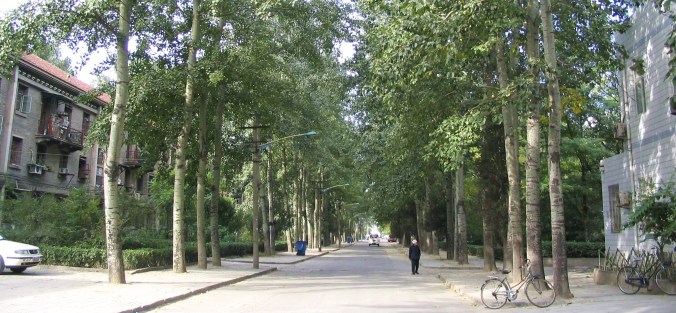
This quiet back road was part of my regular commute during my first year in Beijing (back in 2004).
Recommended reading: August 13th, 2018

This week’s recommended reading has an education focus. School is a huge part of any child’s life – and no less so for Third Culture Kids. Moving around the world into a new school – a new school system, with different expectations and perhaps even a different language – is a big challenge to overcome! It’s really important for those of us supporting and caring for TCKs (and their parents) to think about how education plays out in the lives of international families. This is a loose collection of recent articles discussing different elements of education – transition, language, culture, and alternative ways of learning.

Bilingualism and Homework, part 2
Expats since birth
This fantastic post was written by Ute Limacher-Riebold, who always has great tips for international families. She discusses something that comes up in a lot of international families: what to do when your children attend school in a language you aren’t fluent in? What is most valuable about this post, however, is the range of really great practical advice for parents in this situation. In particular, how to learn the language of study and exams, for both parents and students.
“What for a native speaker is “common sense” might not be for someone who speaks this language only at school (or at work for that matter…). Here are some sites where you can find an overview of recurrent terms that are used in English exams…”

How to cope with sending your child to a school that isn’t diverse
Multicultural Kid Blogs
This one isn’t about expat kids necessarily, but about parenting a child who is a minority in their school – something that can happen whether at home or abroad. There is great practical advice for parents here, on how to support a child through an experience that has the potential to be stressful.
When your kids are in school, one of the most important things you can do every day is to talk to them. Sometimes simply asking how their day went is not enough. When your child is attending a school that isn’t diverse, it’s important to make sure they are having a good experience.

4 Tips for a Stellar Start for International Children Starting a New School
Multicultural Kid Blogs
And now, by their powers combin: a post by Ute, published on Multicultural Kids! This piece has solid advice on ways to help kids transition into a new school in a new location. Includes a lot of reference links to additional material, too.
If we have been through this kind of change before, we tend to assume that they [children] will all be fine (in time). I strongly advise not to do that. . .what was easy before might be an issue now. During a transition, our children tend not to make us worry and would do anything to see us happy.

A Parents Guide to Changing Schools
Mixed Up Mama
This is about changing schools generally, but I found there was a lot in here that is valuable for international moves, too. From acknowledging the emotional difficulty for parents watching a child struggle with adjustment, to logistics. I particularly appreciated this piece of advice: “Consult with your children but don’t let them decide.” I talk to parents about this a lot in regards to the decision to move. It is great to consult your kids, but don’t pretend they’re really making the decision – you will decide whether to move or not, even if that decision is impacted by your child’s opinions. Be the parent, make the decision, and acknowledge to your child that that is the situation.
Some of the reasons we couldn’t always share with her as they were about things she may not have always understood- long term vision, bigger picture as a family etc. Children think in terms of the short term and their immediate situation. We did share with her slowly some of the reasons but left it open for her to see some of the advantages herself as well. We talked with her at every step of the process getting her ready but ultimately it was our decision as parents.

Why teachers shouldn’t be afraid of other languages being spoken in the classroom
The Conversation
Clare Cunningham discusses her research on alternative lanugages in the classroom, from the perspective of English-language education in the UK. She brings up several interesting points (and links to her research) about reasons teachers may prefer a monolingual classroom. One teacher “spoke about what she called “the inappropriateness of language” – claiming that children only use other languages when they want to be rude or exclude others.” This has certainly been an argument in some schools I’ve known who maintain an “English-only” school environment. A related argument is that allowing other languages excludes children who cannot participate in that language. Clare also notes promising changes as schools and teachers are “striving to overcome their worries about multilingual spaces and making excellent use of online resources for curriculum based work in a range of languages – as well as providing tailored teaching materials for children that need them.

Supporting Education From The Outside In
LinkedIn 
This fantastic article links the power of art and storytelling to fostering emotional wellness in cross-cultural children. This is something I wrote about in Misunderstood, and is something others have tackled as well. Author Michelle is Board President for Cultured Kid, an organisation working on curriculum that uses art and storytelling to support CCKs in their identity struggles while simultaneously developing greater cultural undestanding and empathy in their mono-cultural peers. I am really excited by this concept and hope to hear more about it in the future!
For the past year Cultured Kids has been working alongside education professionals, consultants, and students in public health and child development to tackle this single complex question: Is it possible to create a curriculum for schools that could support academic achievement in conjunction with promoting individual social emotional wellness within this sea of cultural complexity? We believe there is.

Why Worldschooling?
The Black Expat
Interesting perspective on alternative schooling. Worldschooling uses the world around us to direct amd encourage learning. Author Karen and her partner are both trained teachers, and have used their experience along with a worldschooling mindset to educate their son while travelling abroad.

What is worldschooling?
World School Family Summit
With my interest piqued, I went and found this recent article describing worldschooling a little more, including descriptions of different ways this works for different families. In this post, TCKs are considered worldschoolers even when they attend traditional schools (international or local) as they are still outside their ‘home’ culture and its educational system.

Expat education and separated parents
Expat Child
This is a short article, more of an overview, and is based in the UK system. That said, it raising several really important questions regarding co-parenting an education, especially when an international move is part of the equation. For example:
When a child attends school in another country there can be many decisions requiring a parent’s consent which can be difficult to obtain when the parents are abroad and more so if communications between separated parents are difficult.

Recommended reading: August 6th, 2018

My latest collection of recommended posts about expatriate life and Third Culture Kids.

Thoughts on Citizenship from Around the World
Velvet Ashes
Really interesting piece, which collects four vignettes from different women around the world reflecting on their experiences of citizenship – as affected by expatriate living, cross-cultural relationships, and adoption. I particularly like this little thought, which resonates with many conversations I’ve had during interviews:
I was becoming part of the fabric of life here in a way that just sticking to my role would never have achieved. And isn’t that part of being a citizen? Beyond passports and visas, I realized I started to feel like a citizen of this place when I began to be invested beyond my little niche.

The Labeling of Self
TCK Town
This is a fascinating, uncomfortable, important piece of reflection. It largely follows a conversation among a group of expatriates from various countries, as they negotiate ethnic labels and how they do or don’t self-identify, and who they do and don’t include in those identity umbrellas. It makes me stop and think. Something that international life has provoked for me is the way I have included people in umbrellas they don’t identify with, how easily I can make assumptions about others’ experiences. This piece sits in that discomfort, and invites readers to listen, and reflect on their own use of labels.
We all came out of the park with our egos a little bruised and worse for wear. Instead of peeking into our sandwiches, we had spent the hour delving into conceptions and misconceptions of labeling our identities.

Ex expats from NL: Dutch repatriates – how does it feel to be home?
Dutch News
An interesting piece on repatriates to the Netherlands, with quotes from several repats with different stories. They share different difficulties they’ve experienced, that will ring true with many expats/repats.
“People who’ve lived abroad for a long time, she explains, learn to look at the world from a different perspective. ‘You have seen a lot. That uproots you from your own country.’”

Phoenix Rising: Reflection on Expat Resilience and Health Crisis Abroad
I Am A Triangle
An interesting piece reflecting on a patient experiencing a health crisis while abroad. Carolyn uses one person’s experience as a springboard to consider the emotional resilience for expatriates generally. It is a longer piece, with several sections looking at different aspects of the experience of coping with this sort of situation. These include self-care, emotional support, multi-faceted healing, and adaptation.
Normal emotional and stresses that come with illness or injury are compounded by his being so far from loved ones and by his difficulty communicating with healthcare personnel. He misses his three children and the normal routines they share together. Creating a support system doesn’t happen organically for him in this setting. The language barrier prevents the casual rapport-building that would normally take place between strangers brought together by a common denominator. He misses the simplicity of these types of human connections and consciously searches out other English-speakers within the hospital.

Dear Dubai, Can We Please Part as Friends?
And Then We Moved To
Mariam pens a break-up letter to Dubai, her home of the past four years. It is sweet, thoughtful, emotional, and insightful. It starts like this:
Dear Dubai, If you and I were in a relationship on Facebook, I’d choose the relationship status “it’s complicated.” You know it and I know it. We have had a love/hate relationship since day one, and four years later, its still messy to describe my feelings for you or the way I affectionately refer to you…

Tips for Strengthening Families in Transition
Our Goodwin Journey
This post is written by a missionary and so there are a few assumptions from that perspective, but the general content is really helpful for all families experiencing transition. There are practical ideas, covering topics such as being proactive, dealing with emotions, and maintaining relational focus.
“For our family, we all sense the next transition and begin feeling the effects about 2 months prior to the move. We all feel the emotions building. We all experience the mixed mental challenges of being here and being there at the same time. So many decisions, goodbyes, frustrations, to-do lists and challenges come into play each day through a cross cultural move. Stress rises, tensions escalate and tears flow. Random meltdowns for kids and parents alike are normal for families in transition…But what can we all do to help families in transition get through the moving season in healthy, good ways?”

The Expat Blues
The Expat Mummy
One “trailing spouse” wife and mother reflects on the depression and purposelessness that can strike after moving to a(nother) new location. She knows the right things to do, sees the progress on paper, yet struggles with identity. This post doesn’t offer a lot of answers, but offers validation of the struggle. I really appreciate that.
“So why mock that ever so helpful list, after all the tried and tested remedy for loneliness is the same the world over and it’s not wrong. My problem with the list is that we aren’t always looking for advice, sometimes what a trailing spouse needs is recognition.”

The Three Cultures of a TCK

Last week I wrote a guest post for China Source, explaining the Three Cultures of a Third Culture Kid. I give a brief rundown of this in my general intro to TCKs, but my post for China Source expands on this, and includes a few quotes from Misunderstood.

I explain not only what the Three Cultures are, but why they matter – in particular, the separation of where I live, and where I am legally recognised.

The experience of growing up in places where I do not have legal recognition has an emotional impact. The country I legally belong to doesn’t completely feel like home, but I am not accepted by the country that does feel like home.

These relationships to countries are why the Third Culture matters.

“The third culture is the “childhood home” of TCKs. It is located not in geography, but in relationships. While the first and second cultures are primarily about place, the third culture is about experience: the experience of growing up between first and second cultures that do not perfectly align.”

I believe in the benefit of talking about Third Culture as a category of experience. There are hundreds of thousands of TCKs around the world, unique individuals who cannot be neatly described by a list of common characteristics. But they do share a particular type of experience, which impacts the way they see the world.

“Childhood for TCKs is rooted in communities that move on, in a mixture of cultures and places that is difficult to replicate. The constant transition of international life (whether I leave, or others leave me) has an impact, and there are unique experiences that go with expatriate living. These are the backdrop of an international childhood. These shared experiences of childhood are what the third culture is all about.”

Read the full post on China Source: The Three Cultures of a Third Culture Kid

Recommended reading: July 30th, 2018

Last week’s recommended reading had a TCK perspective theme – a collection of posts written by TCKs reflecting on their experiences. I’m continuing that theme this week, although this week I’m also including some posts about TCKs, written by those who care about them.

On Welcoming the Third Culture Kid
A Life Overseas
Fabulous post by the always wonderful Marilyn, offering lists of DOs and DON’Ts for how to support Third Culture Kids walking through repatriation. There is so much gold here! For example,
DO: “Let them talk about their past. They have left so much, let them talk about what they have left.”
DON’T: “Put a time limit on their adjustment and their grieving. We are all different. We grow and adjust at different rates. So don’t put time limits on the TCK. Allow them room even as you continue to love and challenge them.”

Third Culture Kid Diaries: Connecting with Locals and Making Friends
Restless Feet Adventures
This is a great post by a Taiwanese TCK sharing four tips for how to build relationships. Her reflections come two years into repatriation, and includes that perennial TCK problem – why is it so much harder to make friends at ‘home’ when I did it just fine elsewhere? Now – back to her four ways to connect with others, anywhere: shared experiences, similar interests, pop culture, and mutual friends.
“I realized I let my focus on the fact that I didn’t grow up in Taiwan overshadow all the other ways I made friends in the past…Sometimes I have to remind myself to go out and socialize with people because I’m so comfortable and enjoy doing things alone. But building and maintaining relationships is important to me so I just have to keep reminding myself to go out and do it!

A high-school reunion, international style
Monday Morning Emails
In this post Terry reflects on the reunion of six high school friends – living in different countries, holding different citizenships – including her son. It’s a great piece! Here’s a taste:
As I listened to a conversation that straddled countries as easily as ‘hopping on that plane’, it confirmed that despite the obvious challenges of a global life, it fosters engaged global citizens. We can be proud of this. As parents we often question this overseas life and the impact that it has on our children.

Finding common ground in Minnesota
TCK Town
One TCK shares about her friendship with another TCK. For me, this piece is about showing grace in the face of racism. By that I don’t mean staying silent – not at all! – but I mean not letting those negative experiences steal the possibility of good experiences. Being the best version of yourself, even when treated unjustly. Taking the first step to build connections with others, even when they wouldn’t do that for you.
“I’m so thankful for this friendship and all it has taught me. Without Samiya I would not know how amazing Somali tea is, I would not know the traditions of Ramadan or that Syria has some of the nicest people you will ever meet. There is joy in loving people who are different than you. If we can learn to love those who are different than us, we could see how rich and flavorful our lives can be.”

Continental Drift
Expitterpattica
A very sweet poem from an expat mum to her TCK children, as they approach a(nother) international move. It is a beautiful piece, and I’ll share a few lines from it with you here:
You don’t want to change, you don’t want to go,
you want to stay put, I know, my love, I know,
It’s OKAY to feel worried or nervous or fearful,
I feel all those things too and saying goodbye still makes me tearful,
But we have to let go, step into the unknown,
I promise Life will unfold and you’ll never be alone,

It’s that time of the year again… ‘Moving Season’
Little Miss Expat
One TCK interviews a good friend who moved a year ago. Some lovely responses here reflecting on both the positives and negatives of moving to a new international location. What I most appreciate, however, is the way she encourages “stayers” like herself to both recognise the difficult of the leaving season for themselves, but also to aim to support “leavers” well.
“Overall, I think it’s just super important to remember that life is what you make of it, you can’t control everything that happens to you, but you can control the way that you deal with it and what you make of the situation. People moving away is one of those situations which is sad, but also exciting as it’s the start of a new adventure for the person moving. And as the friend staying behind, you also have to support your friend with this new chapter in their life. Don’t view moving as something bad, shift your focus, and see it as the start of something exciting and different.”

Itchy feet
Third Culture Queer
I really appreciate this perspective, from a queer TCK who looks at the intersection of those two identities. This short post considers the “ichy feet” syndrome familiar to many internationals, but with the extra layer of difficulty that comes with a queer identity. I especially appreciate the conclusion, which holds truth for us all – both going and staying are choices, and both hold some sort of risk:
Being gay is illegal in many countries, and only a handful of places are vaguely okay on the whole trans and non-binary thing. Do I want to live somewhere I would not be able to be myself, where I would have to hide? . . .Whatever I decide, it is a risk. A risk I will have to censor myself. A risk I stay here stuck in a rut. A risk I don’t take control of my own life. But each risk has its payoffs, and I need to decide which I want to go for.”

Recommended reading: July 23rd, 2018

This week’s recommended reading has a special theme: TCK perspectives. All the posts I’m recommending this week were written by TCKs reflecting on their experiences – as missionary kids, military kids, diplomatic kids, from and in various countries. I haven’t written much by way of  “summaries” of each piece. Instead I strongly recommend you go and read them. Most are short, and the power of first-person narratives is worth the extra clicks – I promise.

Growing Up Behind a Brick Wall
Global Nomads World
Alexa writes about living in a diplomatic compound in Russia. She paints a vivid picture of childhood experiences that draws you into her world there. She concludes by describing the strange experience of returning later:
…the true essence of the place is never-changing. . .And yet not a single thing is the same – except for that essence. No one recognizes you. It’s like coming back home after college but instead of all your family friends saying, “it’s nice to see you!” they say “it’s nice to meet you.”

Little Soldier
TCK Town
In this poignant piece, “Military Brat” Shannon reflects on her understanding of and relationship to her mother’s profession as a soldier. She also says something I’ve heard from lots of different TCKs, not just military kids: “I had to be on my best behavior for my parents’ sake. This kind of responsibility makes every member of the community feel like part of a team.

A Third Culture Kid’s Soul
This is Katha: thoughts of a traveling mind
Katha writes about the tension of wanting to go-explore-encounter, but also to stay and be rooted at home.
“Two souls rage inside of me. Telling me to go. Begging me to return and stay. . .I leave pieces of myself behind whenever I have to say goodbye. And then I travel to find them again.”

Free Verse: human mess
Embassy Kid
This is a lovely short poem about a mix of cultures in a single life and the tension that creates.

What is Going Home?
My Island Journeys
This post starting with a prompt about “going home”. What follows is a lovely set of memories around an IKEA, and learning to hold onto and let go of “home” in different places.
For me, going home was permission. Permission to concretely remember a place, and therefore to concretely admit that I’d left it. Permission to grow up, now that I had clear memories of the place that I’d left in a fog of grown-up-too-soon grief.

Life as a ‘Third Culture Kid’
The Gryphon
This is an older piece, but valuable for including short perspectives from four young women, each with (different) European passports. One of many standout quotes:
I feel obliged to identify as a Belgian, given my nationality. However, having just lived in Belgium for a year and a half, I don’t feel that’s completely accurate.”

A TCK’s Struggle with Depression
TCK Training
Aneurin talks about his struggle with depression, and how this struggle has interacted with his TCK experiences. Of particular note is the way he describes swinging from feeling his TCK experience was all good, to all bad. It’s much harder to exist in the shades of grey between extremes, but such an important skill to learn for long term emotional health.
I now know that mental illnesses are common like a cold. I also know that TCK’s are more prone than monocultural people to suffer from them. These illnesses are often our body’s response to traumatic events. . .I think being a TCK is amazing, but it needs to be done well. There are many challenges that need to be navigated, things like the challenges of transition or unresolved grief. We are a remarkably resilient people group, but we always need to get help from others, particularly when it comes to mental illnesses.

Home and Rootlessness – TCK Art Gallery
Noggy Bloggy
Finally, this post is from Aneurin’s regular blog, and introduces a TCK Art Gallery. The post showcases three pieces picked out by Michele Phoenix as particular favourites of hers. The gallery itself features a wide range of visual art, photography, and also poetry. Lots of beautiful work worthy of time and reflection.

Recommended Reading: July 16th, 2018

Welcome to this week’s edition of Recommended Reading! I don’t have a particular theme for this week. Instead, here’s a collection of posts I’ve read recently that I feel have something of value to offer expat and TCK communities around the world.

A Letter to the Stayers
Aylssa Cowell
I love this! We absolutely need to recognise the impact of STAYING in transient communities. Whenever I do transition seminars with students in international schools I ask how many times people have moved, how many schools they’ve attended – but I also ask how many close friends they’ve watched move away. Every time I ask that questions there are students who refuse to answer – too many to count. It’s a real and deeply difficult experience, and one that is often overlooked.
We don’t really talk about the emotional hardship, of the loss felt by those who stay. We know it is hard for those who leave. But for those who stay some of you will have lost 4, 5, 6, 7… countless people who were close to you. The school is the same but it’s not really the same. . .Look out for each other out there – if you are lucky enough to have your friends stay – look out for those who don’t. Invite them to sit with you. Say hello in the corridors. Ask them if they are okay. Our words are powerful and you should never underestimate the impact of a small gesture.

I Think It Is Okay to be an Alien
Velvet Ashes
What happens when you stand out in every situation, everywhere you’ve lived, your whole life? What happens when they places you consider home consider you an alien? Erika writes about making peace with her alien status. But I think what I appreciated most was how she so adroitly summed up the “misunderstood” feeling that undergirds much of my book:
As a third culture kid, I tried on many identities. Like most of my MK friends, I went through a “proud Canadian” phase, through a phase of “I’m from all of North America” and a “nothing but Mexican” phase. None of them worked. I found I could relate to people from all of these places, but none of them — not even family — could relate to all of me. And that made me alien.

My top tip for parenting through transition
Meet Jesus at uni
I was so touched by this piece! One mother articulates the guilt and struggle of seeing her young children wrestling to find a way through transition – again. “I do things to help them through transitions…Those things help, but they do not fix anything.” But then she remembers – “the normal initial adjustment period for humans after trauma or significant change is 6-8 weeks“. The best thing she can do is keep remembering that it’s going to get better – to relax and be patient and kind to herself and her kids as they adjust yet again. (Sounds like something I said recently!)
“This happens every time we do a transition. Between 4 and 6 weeks, things come to a head and I panic as I hurt for my little boys and the mama guilt overwhelms me. I wonder if the crisis versions of my sons are simply who they are now. But if I can remember that 8 weeks is our usual adjustment time, and if I can tolerate it until then, my little ones start to know themselves again. I just have to hang in there with them. And be ready to do it all again in the not-too-distant future.”

How Having A Name That No One Can Pronounce Taught Me Who I Really Am
Huffington Post
In last week’s recommended reading I included a piece in which the author reflected on wrestling with identity through her name – how it defined and separated her, especially when peers could not pronounce it. This piece shares a similar story: “I’ve always felt like a part of me was lost in translation. My name, so beautiful in my parents’ native Tamil, doesn’t quite fit my flattened American accent.” I really appreciate the telling of how her frustration shifted from one object to another over time. She ends by acknowledging the stress while embracing the different influences that make her who she is – name and all:
“Today, I still get a little shy before I introduce my name. I still stress out about the logistics.. But now, I️ understand that I’m not Indian or American, but both. I might be a product of my ancestors, but I am also the speaker of my own name“.

The New 11 Commandments of Relocating Overseas
International School Community
Good piece with solid advice for those who will be relocating abroad. There’s a lot of overlap with things I suggest in my Six Tips for a Good Transition. One piece of advice from this post I particularly appreciated was the suggestion of combining old and new – mixing new experiences with familiar comforts. What a great approach! “try to combine an appreciation of new cuisine and dishes with some of your old dietary staples.” My summary of these “11 commandments” is as follows: Be positive, be flexible, be teachable, be lighthearted, be understanding. Expect the adjustment to take a long time. Look for encouragement and comfort – both here and there. Lean on supports.

Forbidden Roots
A Life Overseas
I was deeply touched by this piece which boldly faces the problem that comes with putting down roots in an adopted home: one day, I will have to leave the place I have made my home.
I am not a citizen, or even an immigrant. My passport is still American blue; Tanzania is not my country…Yet the thought of leaving someday fills me with an intense grief, knowing that it will tear away part of my being. Not just a loss of place, but a loss of who I am. The experience has become real life. Which is a good thing, of course. It’s what every expat should want to attain. But it’s also a tragic thing. It’s like coming to the realization that I’ve fallen in love with something that I can’t keep.

Dig Deep and Shine On
I Am A Triangle
A hopeful and encouraging post about the ongoing need to build relationships when you live a life full of transition.
Eighteen months into my repatriation and new home, new perspective washes over me…I’m in a new place, making new friends (some are international friends) and loving new experiences. AND, it’s taken eighteen months! Over these past months to learn, grow and dig deep, I’ve made friends, added life experiences, and taken several trips. . .One of my people secrets is say “hello” to anyone within three feet of me. Some will return the “hello” and some may not. My personally coined mantra: people are faces until they’re your friends.

Sri Lankan expat enchanted by Ramadan in UAE
Gulf News
And finally, a little piece I appreciated, in which a Sri Lankan expat reflects on his first Ramadan in the UAE. Going from a muslim minority culture to a muslim majority culture made it a very different experience for him: “It gives a sense of togetherness as everyone becomes part of our fasting, iftar and suhour.

A new project for twenty-something TCKs

I have a new project to announce – one I’m both excited about and quite intimidated by! I am beginning initial research into what I hope will become (in a few years) a new book: a guide to help twenty-something TCKs navigate through identity, decisions, and commitments.

It all started when I attended FIGT 2017 in The Hague, the Netherlands. I attended the Millennial Forum where I met some really great people and listened to young adult TCKs talk about different issues they encountered as they launched into adult life. On several occasions, as someone shared a particular situation, I was able to tell them that I’d heard similar thoughts and feelings from a number of TCKs I interviewed for Misunderstood. Toward the end of the evening someone said “there’s no literature for us, it stops at university”. And I thought to myself, someone should do something about that.

Slowly, it became a thought that wouldn’t let go. I kept thinking about the things that came up in interviews for Misunderstood, things that seemed illustrative of wider patterns, but which didn’t fit the book or I hadn’t researched in enough depth. I kept reflecting on questions that twenty-something TCKs had asked me during interviews. And that same thought kept returning: someone should really do something about this.

I’ve been mentoring and supporting young adult TCKs long distance for over a decade now. Sometimes it’s a conversation over messenger, sometimes a voice or video chat. There are some young people I’ve connected with semi-regularly for years. Some pop up from time to time seeking a little extra support during a rough spot. Others connect regularly for a few months when going through a difficult season. And at least once every other month, a twenty-something TCK will seek me out to talk through a particular question – something they’re struggling with or confused about, and think is related to their international upbringing. Often they express a sense that no one seems to understand what they’re feeling or why. They come to me with hope that I can shed some light, offer some understanding. Even when they have a loving community around them, there’s a felt need for something more: they seek information and understanding. I get to let them know they’re going through something really normal, something lots of young adult TCKs wrestle with. I get to see and hear relief from these twenty-something TCKs as their feelings are validated and their struggles understood.

I’m now convinced of the need for a book that does this. A book to offer that hope, validation, and understanding. A book to trace some of the paths that many ATCKs have walked through their twenties. A book that adds some signposts to the path, to say: “you are here”. You’re not lost, you’re not off on your own. You’re in a familiar and recognisable place. What you’re feeling and experiencing is normal, rational, understandable. People have been here before you, and there’s a way through.

My life has been somewhat full in the past year! But now that things have calmed down and I have some more headspace, I’m starting to move forward with this project. I have a general outline of the material I anticipate the book covering, and I’m working on putting together a survey. But as a first step, I want to talk to some twenty-something TCKs about what they want in a book like this. Sort of pre-interviews before I start, to give some shape to where I go from here.

So, if you’re a twenty-something TCK, and you have ideas of what you’d want in a book like this, let me know! If you know twenty-something TCKs, please tell them about this! If you have a few comments, feel free to add them to this post. And if you’re interested in talking further, let me know – I’d love to hear from you!

youngadultTCKs

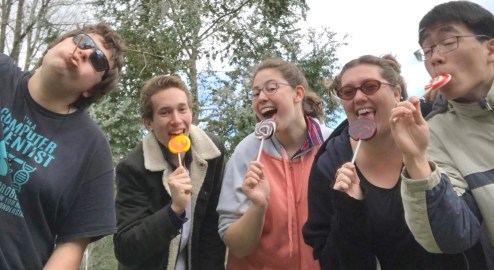
Hanging out with some awesome young adult TCKs last year. Matching lollipops because why not?

Recommended Reading: July 9th, 2018

Welcome to this week’s edition of Recommended Reading! I don’t have a particular theme for this week. Instead, here’s a collection of posts I’ve read recently that I feel have something of value to offer expat and TCK communities around the world.

10 Alternatives to ‘Where are you from?’
Multicultural Kid Blogs
I love this!! “Where are you from?” is one of those questions that just roll of our tongues when we meet people. It’s not an easy question, for a lot of expats, and especially for TCKs. Yet it still takes effort to rewire our brains (and mouths!) to ask different questions. Also, I’ve found when I take the initiative to ask different questions, I get asked those sorts of questions in return. And I find them much easier to answer myself! I’ll add my own favourite to this list: “Where were you living before this?” It has a concrete answers, rather than a subjective one, while still offering an invitation to share some of their story.

But What’s So Different about Being an Expat Family, Anyway?
Velvet Ashes
Yet another helpful reflection from Rachel as her TCKs prepare to leave for university in their passport country. Her daughter wonders aloud how her life is different to that of peers in her passport country. What I love most is that while Rachel expresses some of the differences she sees, she also knows she can’t answer this question for her kids. She rests on the values their family holds close, and trusts that her kids will work it out as they live and grow.
I can’t explain to my twins how their childhood has affected them. They’ll need to discover the answer to that question on their own. I couldn’t begin to articulate one. I have ideas, but sometimes the only way to answer our deep questions is to experience a contrast, to set our question and our experience against something new, opposing, different.

Expat Homesickness – 3 Ways to Deal with it and Heal from it
Talaera Thoughts
This is a great post in which Stephanie reflects openly on her experience of culture shock, homesickness, and resulting depression. (And reminded me a little of my own post on expat homesickness.) She gives some great advice. I was particularly touched by the gentleness of her first point – to be your own parent. By this she means to speak kind and comforting words over yourself. This is so important!
My mom would never tell me to just “suck it up”! She would give me permission to feel sad and depressed. This is a crucial step because I need to allow myself the feeling before I ever stand a chance of extracting myself from the pain. . .If your mom was mean, be a kind and gentle version of your mom because she is what you need right now.

See, Say, Spell, Repeat
Mudroom
What do you do when you feel caught between cultures, and your name reflects one of those cultures strongly? Prasanta discusses her journey of identity and what’s in a name.
I was raised in the U.S., but you aren’t sure of that by looking at me. . . since we think and speak alike, I wondered if it would help to have a name that does sound like you. I thought it would be taking down a barrier — a big one — between us. I couldn’t change my skin color, which was Big Barrier #1. But, I could change this. Maybe it would make a difference. Maybe it would make it easier for you to talk to me. And admittedly, I wanted to make it easier for myself as well.

Territory and Third Culture Kids – Building our Safe Places
Life Story
Rachel was advised to keep her cat inside for a month after moving before letting her outside in order to help her with the transition. Rachel expands this concept to wonder how taking the time to fix ourselves in a place might give TCKs (and other global nomads) a sense of security so many seem to lack. Such a fascinating idea!
It is only because Jack knew her own home so well, that she was able to return to it safely at the end of the day. It was only because she’d spent so much time in it that she was able to feel it as her safe place. . .having home to run to is precisely what made out there safe to explore. . .Safe places are shelters. Shelters are, by nature, boundaried in some way. There is an out there and an in here. We use them to retreat from the elements, and their borders give us rest.

Expat reunions are a thing of wonder
The Expat Partner’s Survival Guide
A lovely post on the unique beauty (and deep emotion) of expat reunions. When you have the opportunity to spend time with someone who lived that part of your life with you, who knows those places and people, who you don’t have to explain those things to – wow. What a blessing!
Saying goodbye is hard because you really have no idea when, or if, you will see them again. But when you do – and I do believe the ones that are really important to you will pop up again sooner or later – you instantly connect again over the experiences that only you shared. . .As we move on with our lives, the memories of our expat days fade. But friendships will often out-last those memories and when we get together the years fall away and we are back living together in those distant lands.

Travel Is No Cure for the Mind
Medium
This post is a modern adaptation of Seneca’s letter to Lucilius about travel. The main point is that novelty gives way to routine no matter where we are; the solution is not a new place, but a new mindset. I found it helpful in a few ways. When people ask about your “exciting” or “exotic” life, it can help to explain that actually, you live an ordinary routine just like them, only in a different place. Also, the mindset advice is so key to enjoying life abroad – especially for those who weren’t too keen on making a particular move. Gratitude and curiosity are powerful tools!

Citizenship in heaven for TCKs

Misunderstood is over 300 pages long and yet it is still missing a LOT of stories. I did nearly 300 interviews with TCKs as part of the research that went into it, and a few sentences from probably a third of those interviews were included as quotes in the finished book. That’s a lot of untold stories! There are lots of trails I was interested in following but which either didn’t fit the overall flow/narrative of the book, or weren’t well developed enough to include.

Last year I was able to follow one of those trails with new research. The end result was short (10,000 word) thesis titled “A place to call home: citizenship in heaven for Third Culture Kids” – the final project in a Master of Divinity degree I spent three years working on.

Several Christian TCKs I interviewed for Misunderstood mentioned a specific piece of Christian theology as being very helpful to them through transitions and processing their international childhoods: citizenship in heaven. For my thesis I interviewed 9 TCKs from diverse backgrounds but who were all aged 19-26 and all identified as Christians. I also ran a survey of nearly 100 Christian young adult TCKs. Then there was a LOT of reading – looking at theology, exegesis, homiletics, missiology, sociology, and pastoral care. The end result was an examination of what this theology means, what it means to TCKs, and how it can be a comfort and encouragement for Christian TCKs.

This week mission blog A Life Overseas published a two-part series I wrote for them in which I briefly outline the two major findings of my thesis, complete with quotes from my interviews and statistics from my research.

In the first post I talk about the concept of a heavenly kingdom, described in the New Testament as a culturally inclusive community. 80% of TCKs found the idea of citizenship in heaven comforting, and in this post I explain why that is.

“Home is something that can be lost. A community disperses, and so does the sense of home. A family moves on, and suddenly a place that was home is no longer accessible… Citizenship in heaven answers a deep felt need in TCKs for something that does not exist for them on earth: a singular, comprehensive source of home.”

In the second post I talk about TCKs’ concepts of (earthly) citizenship, and how this affects the way they understand what it means to be citizens of heaven. Their perspective has something important to speak to Christians generally, and also makes the theology of citizenship of heaven a powerful tool to help TCKs think through other aspects of Christian theology.

“During interviews every TCK used ideas from their description of earthly citizenship to illustrate what they believed heavenly citizenship was… Citizenship is an image that resonates for immigrants and expatriates and especially TCKs. New Testament writers used this imagery precisely because it connects with so many earthly experiences. We can do the same, and in the process speak both comfort and challenge to TCKs and others who live cross-cultural lives.”

Click on the links below to read the full posts on A Life Overseas:

Citizens of Heaven: Third Culture Kids and the Longing for Home

Citizens of Heaven: Third Culture Kids and Kingdom Living