Milestones! A celebration and a survey

Yesterday was a day of celebrating round numbers: the Misunderstood facebook page passed 1,000 page likes, and the survey of adult TCKs I’m running passed 100 completed responses! So for today’s blog post I’m going to share about both of those things.

First up – the 1,000 likes.

A bit under a month ago facebook sent me a notification about having passed 900 likes, and would I like to write a post to celebrate? Instead I decided 1,000 was a better number and set up a prize draw to celebrate when it happened. I wrote a post announcing this at the time. Yesterday, when the page got to ONE THOUSAND likes, I used a random number generator to pick a winner from the 25 people who entered. And the lucky winner was….

Helen! Helen just moved from the UK to the US with her family and is looking forward to learning more about the international world she is now raising her children in. She says she can’t believe she won; it was so fun for me to tell her the news! I’ll be posting her signed copy to her this week.

And next – the survey!

Two months ago I announced that I’ve started working toward a second book, this time for twenty-something TCKs – support for the journey from international childhood to independent adulthood. During the time in between I’ve had several conversations helping me clarify what I want to do, but mostly I’ve been working on a survey. I was stalling out on how to start my research, and finally realised what I needed was to do two separate surveys. I’d always planned to do a big and comprehensive survey to provide data for the book, but I realised I first needed some more foundational information to get me started, and give direction to interviews and the structure of writing.
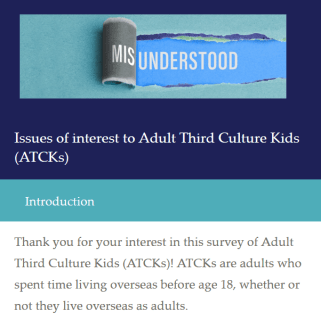
survey-imgI spent the last month or so creating and testing different versions of this survey (thank you to the 30 people who helped me test the drafts!) and last week I posted the final version online.

Most of the survey asks for reactions to different issues that twenty-something TCKs I’ve talked to and interviewed over the past few years have struggled with. The goal is to see which are the most widespread and deeply felt. There are also some optional open-ended questions, to catch what ATCKs feel is missing, and hear their advice for others. I’ve been blown away by some of the thoughtful and insightful comments that have already been left! Most comments reflect items already in my breakdown of themes and issues to covers, and have served as confirmation and additional layers on those. Some have raised additional issues I can see should also be included.

A few people have expressed concern that the list seems quite negative. I thought this was worth addressing publicly. The goal of the book is not to say that being a TCK is bad and ruins your life. I absolutely do not believe that! But I do recognise that life is rarely all good or all bad. There are huge positives to international life, but there are also difficulties. A big focus of my work in general is recognising those difficulties and providing support for working through them effectively so that TCKs can more freely enjoy the benefits of their experiences. I strongly believe that ignoring or covering over negative feelings/experiences is a mistake with long-term repercussions. A large focus of the book I’m working toward will be acknowledging that certain struggles exist, talking about how to face them and overcome them, and assuring ATCKs that they can (and will!) find a way through, and create lives they enjoy.

As I said, I have now received over 100 completed responses, and more than half of those have indicated a willingness to be interviewed individually for the book. I’m so encouraged by this level of support! My goal is to get responses from 300 ATCKs in their 20s, 200 in their 30s, and 100 in their 40s. I’m well on the way to that, although so far I have fewer responses from 30-somethings and from men generally, and I have a higher number of responses from the mission world. Hopefully as word continues to spread those demographics will even out a bit more.

And, because I’m a bit of a nerd, I’m going to finish this post with a little stastitics fun. Looking at the demographics of the completed responses, I can see that:

  • 27% currently have citizenship/PR in more than one country
  • 13% lived in 4 or more countries before age 18
  • 47% spent 10 or more years overseas before age 18
  • Combined, they have lived in 53 different countries before age 18
  • Combined, they span 26 passport countries, from all 6 passport-issuing continents:
    • Argentina, Australia, Bangladesh, Belgium, Bolivia, Canada, Chile, PR China, France, Germany, India, Indonesia, Japan, Kenya, Rep of Korea, Malaysia, Netherlands, New Zealand, Philippines, Singapore, Slovenia, Sri Lanka, Taiwan, Tanzania, UK, USA.

Will be fun to see how this changes and expands as more data comes in!

Update: click here for more recent (though still preliminary) results from the survey!

If you know anyone who spent at least a year living overseas before age 18, please pass this along to them! I would love to reach a wide range of people, from different parts of the world, with different international experiences.

You can take the survey (or just read the introduction to it) by clicking here.

Or scan this QR code to go straight there:

IMG_20180906_100210.JPG

TCKs in the 21st Century

I recently had a guest post up on China Source, talking about TCKs in the 21st Century. I am often asked why my research (and book) focus on young TCKs. One angle is that of older TCKs, wondering why the new crowd get so many resoures while there is little available for older TCKs. Another question is about why there needs to be a focus on the 21st century specifically. Is there really any difference? In short – yes, there really is.

Here’s a summary of why I think it’s important to differentiate the experiences of 21st century TCKs from those of earlier generations:

“In researching the experience of living overseas as a child, I looked specifically at the experiences of TCKs born after 1985. These young people grew up under the influence of the internet and all the changes that have come with that. These younger TCKs were twice as likely to identify as having lived in an “expat bubble”, more likely to have attended an international school, and far less likely to have attended boarding school (10% as opposed to 50%). More importantly, changes to travel and communication over time have changed the emotional experience of TCKs.”

There are both pros and cons that come with improved communication and travel. I don’t know that the experience of TCKs in the 21st century is measurably better or worse than the experiences of those in years past. But I do think their experiences are measurably different.

For more on the topic, including a little of what I think those pros and cons are, see the full article on China Source: TCKs in the 21st Century

**

An updated version of the TCKs in the 21st Century post has been published on tanyacrossman.com

Unrequited love of place

In a recent recommending reading post I linked to Mariam’s “break up letter” to Dubai, the city her family just moved on from. There were some things she wrote at the end of her letter that I found particularly poignant and worth some further reflection:

Dear Dubai, my bags are packed, my goodbyes are done. My memories are now strewn all over your glittering skyline. Your streets will forever feel like home, your parks and beaches are the background of my kid’s childhood photos. How many times over the past four years have I posted pictures of you and me together on Instagram and used the popular hashtag “#mydubai”? But then wondered, are you really mine? Can you ever truly be mine?

Today I wonder, why does it hurt so much to leave a city that was never mine to begin with?

Falling in love with you Dubai, is like falling in love with someone who says “I’m not looking for any commitment. Nothing serious, please.” Once an expat in Dubai, always an expat in Dubai, because there is no path to long-term citizenship in the UAE.

This is why I have to break up with you Dubai. Trust me, it’s for the best. I need to move on. Some relationships are short like yours and mine, but it doesn’t make them any less meaningful. Better to do this sooner rather than later, when it will hurt even more.

This captures beautifully the tension felt by many expatriates, and especially by many TCKs. Relationships are not unilateral. There is a two-way street. Can a place ever be truly mine unless it embraces me, too?

An immigrant is a person who has this two-way relationship with a country. They have chosen the country, and the country has chosen them. There is acceptance in both directions.

Expatriates do not have this.

An expatriate is someone without a long-term commitment. For some, it is because they do not want a long-term commitment. They want to go back ‘home’ after their time is done. For others, the country they live in does not want a long-term commitment. There is no path to citizenship, no way to legally become a local. This is where the “unrequited love” of the post title comes from. There are many expatriates around the world who have fallen in love with a country that will never fully embrace them.

That’s my situation, in China. I love this place, I really do. But I can never become Chinese. Not legally, and not in the eyes of Chinese people. I must live with the uncertainty of a constantly changing visa situation, and never having permission to remain more than one year at a time.

Many TCKs live with this. The place of childhood becomes inaccessible. There is no legal rights to belong. There is no recognition of their connection. The place they love, and were raised in, does not acknowledge them.

Perhaps a better relational analogy for the TCK experience is foster care. Temporary guardians, not permanent family. Some foster situations are joyful and warm, others are difficult and even traumatic. Some can lead to permanent adoptive situations; I’ve interviewed a number of TCKs who were able to gain citizenship in the country they grew up in as expatriates. But for many, that is not an option – even for those who wish it was.

There is a particular pain that goes with unrequited love of place. To feel at home in, identify with, love, a particular place – but have no security there. A place that says, as Mariam put it: “I’m not looking for any commitment. Nothing serious, please.”

Amy Medina wrote about this feeling in a post I included in a different recommended reading list. She called it “forbidden roots” – creating those connections in a place you know won’t be forever. She also used relational terminology to describe it, writing: “It’s like coming to the realization that I’ve fallen in love with something that I can’t keep.

It’s hard to keep giving yourself to a place that won’t ever love you back, so to speak. To invest in a place that won’t invest in you. Mariam wrote of the choice to leave, before it hurts too much. Amy wrote of the choice to invest, knowing it will hurt much.

But here’s the crunch for TCKs, again – the lack of choice. This unrequited love of place is the result of choices made on their behalf. But as with anyone, in any life situation, all we can do is choose how we respond to what life has brought us. We can choose where to invest ourselves, our lives, our love – in this moment, and from now on.

Click here to read my Lightning Session on our relationships with places, which expands on this idea.

erlizhuang.JPG

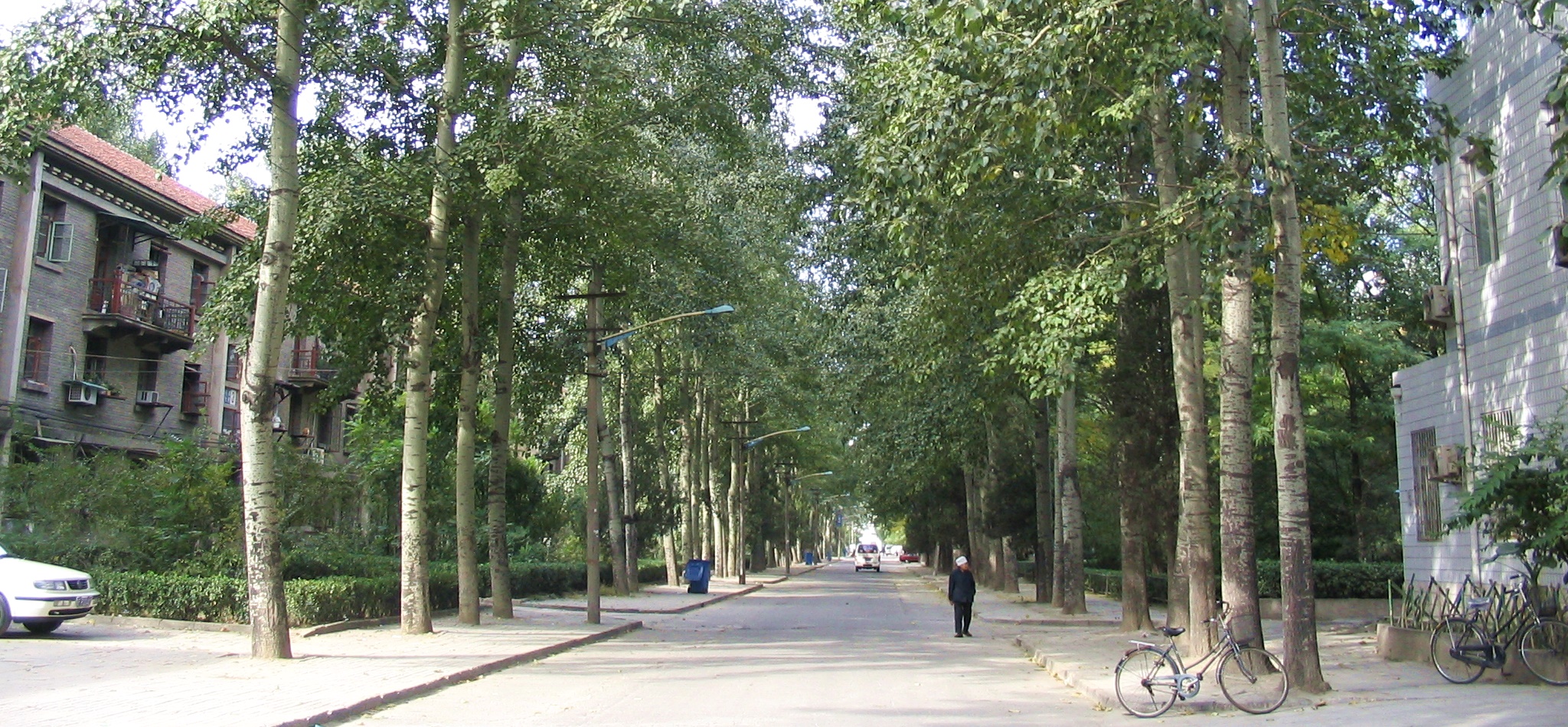
This quiet back road was part of my regular commute during my first year in Beijing (back in 2004).

The Three Cultures of a TCK

Last week I wrote a guest post for China Source, explaining the Three Cultures of a Third Culture Kid. I give a brief rundown of this in my general intro to TCKs, but my post for China Source expands on this, and includes a few quotes from Misunderstood.

I explain not only what the Three Cultures are, but why they matter – in particular, the separation of where I live, and where I am legally recognised.

The experience of growing up in places where I do not have legal recognition has an emotional impact. The country I legally belong to doesn’t completely feel like home, but I am not accepted by the country that does feel like home.

These relationships to countries are why the Third Culture matters.

“The third culture is the “childhood home” of TCKs. It is located not in geography, but in relationships. While the first and second cultures are primarily about place, the third culture is about experience: the experience of growing up between first and second cultures that do not perfectly align.”

I believe in the benefit of talking about Third Culture as a category of experience. There are hundreds of thousands of TCKs around the world, unique individuals who cannot be neatly described by a list of common characteristics. But they do share a particular type of experience, which impacts the way they see the world.

“Childhood for TCKs is rooted in communities that move on, in a mixture of cultures and places that is difficult to replicate. The constant transition of international life (whether I leave, or others leave me) has an impact, and there are unique experiences that go with expatriate living. These are the backdrop of an international childhood. These shared experiences of childhood are what the third culture is all about.”

Read the full post on China Source: The Three Cultures of a Third Culture Kid

Recommended reading: July 30th, 2018

Last week’s recommended reading had a TCK perspective theme – a collection of posts written by TCKs reflecting on their experiences. I’m continuing that theme this week, although this week I’m also including some posts about TCKs, written by those who care about them.

On Welcoming the Third Culture Kid
A Life Overseas
Fabulous post by the always wonderful Marilyn, offering lists of DOs and DON’Ts for how to support Third Culture Kids walking through repatriation. There is so much gold here! For example,
DO: “Let them talk about their past. They have left so much, let them talk about what they have left.”
DON’T: “Put a time limit on their adjustment and their grieving. We are all different. We grow and adjust at different rates. So don’t put time limits on the TCK. Allow them room even as you continue to love and challenge them.”

Third Culture Kid Diaries: Connecting with Locals and Making Friends
Restless Feet Adventures
This is a great post by a Taiwanese TCK sharing four tips for how to build relationships. Her reflections come two years into repatriation, and includes that perennial TCK problem – why is it so much harder to make friends at ‘home’ when I did it just fine elsewhere? Now – back to her four ways to connect with others, anywhere: shared experiences, similar interests, pop culture, and mutual friends.
“I realized I let my focus on the fact that I didn’t grow up in Taiwan overshadow all the other ways I made friends in the past…Sometimes I have to remind myself to go out and socialize with people because I’m so comfortable and enjoy doing things alone. But building and maintaining relationships is important to me so I just have to keep reminding myself to go out and do it!

A high-school reunion, international style
Monday Morning Emails
In this post Terry reflects on the reunion of six high school friends – living in different countries, holding different citizenships – including her son. It’s a great piece! Here’s a taste:
As I listened to a conversation that straddled countries as easily as ‘hopping on that plane’, it confirmed that despite the obvious challenges of a global life, it fosters engaged global citizens. We can be proud of this. As parents we often question this overseas life and the impact that it has on our children.

Finding common ground in Minnesota
TCK Town
One TCK shares about her friendship with another TCK. For me, this piece is about showing grace in the face of racism. By that I don’t mean staying silent – not at all! – but I mean not letting those negative experiences steal the possibility of good experiences. Being the best version of yourself, even when treated unjustly. Taking the first step to build connections with others, even when they wouldn’t do that for you.
“I’m so thankful for this friendship and all it has taught me. Without Samiya I would not know how amazing Somali tea is, I would not know the traditions of Ramadan or that Syria has some of the nicest people you will ever meet. There is joy in loving people who are different than you. If we can learn to love those who are different than us, we could see how rich and flavorful our lives can be.”

Continental Drift
Expitterpattica
A very sweet poem from an expat mum to her TCK children, as they approach a(nother) international move. It is a beautiful piece, and I’ll share a few lines from it with you here:
You don’t want to change, you don’t want to go,
you want to stay put, I know, my love, I know,
It’s OKAY to feel worried or nervous or fearful,
I feel all those things too and saying goodbye still makes me tearful,
But we have to let go, step into the unknown,
I promise Life will unfold and you’ll never be alone,

It’s that time of the year again… ‘Moving Season’
Little Miss Expat
One TCK interviews a good friend who moved a year ago. Some lovely responses here reflecting on both the positives and negatives of moving to a new international location. What I most appreciate, however, is the way she encourages “stayers” like herself to both recognise the difficult of the leaving season for themselves, but also to aim to support “leavers” well.
“Overall, I think it’s just super important to remember that life is what you make of it, you can’t control everything that happens to you, but you can control the way that you deal with it and what you make of the situation. People moving away is one of those situations which is sad, but also exciting as it’s the start of a new adventure for the person moving. And as the friend staying behind, you also have to support your friend with this new chapter in their life. Don’t view moving as something bad, shift your focus, and see it as the start of something exciting and different.”

Itchy feet
Third Culture Queer
I really appreciate this perspective, from a queer TCK who looks at the intersection of those two identities. This short post considers the “ichy feet” syndrome familiar to many internationals, but with the extra layer of difficulty that comes with a queer identity. I especially appreciate the conclusion, which holds truth for us all – both going and staying are choices, and both hold some sort of risk:
Being gay is illegal in many countries, and only a handful of places are vaguely okay on the whole trans and non-binary thing. Do I want to live somewhere I would not be able to be myself, where I would have to hide? . . .Whatever I decide, it is a risk. A risk I will have to censor myself. A risk I stay here stuck in a rut. A risk I don’t take control of my own life. But each risk has its payoffs, and I need to decide which I want to go for.”

Recommended reading: July 23rd, 2018

This week’s recommended reading has a special theme: TCK perspectives. All the posts I’m recommending this week were written by TCKs reflecting on their experiences – as missionary kids, military kids, diplomatic kids, from and in various countries. I haven’t written much by way of  “summaries” of each piece. Instead I strongly recommend you go and read them. Most are short, and the power of first-person narratives is worth the extra clicks – I promise.

Growing Up Behind a Brick Wall
Global Nomads World
Alexa writes about living in a diplomatic compound in Russia. She paints a vivid picture of childhood experiences that draws you into her world there. She concludes by describing the strange experience of returning later:
…the true essence of the place is never-changing. . .And yet not a single thing is the same – except for that essence. No one recognizes you. It’s like coming back home after college but instead of all your family friends saying, “it’s nice to see you!” they say “it’s nice to meet you.”

Little Soldier
TCK Town
In this poignant piece, “Military Brat” Shannon reflects on her understanding of and relationship to her mother’s profession as a soldier. She also says something I’ve heard from lots of different TCKs, not just military kids: “I had to be on my best behavior for my parents’ sake. This kind of responsibility makes every member of the community feel like part of a team.

A Third Culture Kid’s Soul
This is Katha: thoughts of a traveling mind
Katha writes about the tension of wanting to go-explore-encounter, but also to stay and be rooted at home.
“Two souls rage inside of me. Telling me to go. Begging me to return and stay. . .I leave pieces of myself behind whenever I have to say goodbye. And then I travel to find them again.”

Free Verse: human mess
Embassy Kid
This is a lovely short poem about a mix of cultures in a single life and the tension that creates.

What is Going Home?
My Island Journeys
This post starting with a prompt about “going home”. What follows is a lovely set of memories around an IKEA, and learning to hold onto and let go of “home” in different places.
For me, going home was permission. Permission to concretely remember a place, and therefore to concretely admit that I’d left it. Permission to grow up, now that I had clear memories of the place that I’d left in a fog of grown-up-too-soon grief.

Life as a ‘Third Culture Kid’
The Gryphon
This is an older piece, but valuable for including short perspectives from four young women, each with (different) European passports. One of many standout quotes:
I feel obliged to identify as a Belgian, given my nationality. However, having just lived in Belgium for a year and a half, I don’t feel that’s completely accurate.”

A TCK’s Struggle with Depression
TCK Training
Aneurin talks about his struggle with depression, and how this struggle has interacted with his TCK experiences. Of particular note is the way he describes swinging from feeling his TCK experience was all good, to all bad. It’s much harder to exist in the shades of grey between extremes, but such an important skill to learn for long term emotional health.
I now know that mental illnesses are common like a cold. I also know that TCK’s are more prone than monocultural people to suffer from them. These illnesses are often our body’s response to traumatic events. . .I think being a TCK is amazing, but it needs to be done well. There are many challenges that need to be navigated, things like the challenges of transition or unresolved grief. We are a remarkably resilient people group, but we always need to get help from others, particularly when it comes to mental illnesses.

Home and Rootlessness – TCK Art Gallery
Noggy Bloggy
Finally, this post is from Aneurin’s regular blog, and introduces a TCK Art Gallery. The post showcases three pieces picked out by Michele Phoenix as particular favourites of hers. The gallery itself features a wide range of visual art, photography, and also poetry. Lots of beautiful work worthy of time and reflection.

A new project for twenty-something TCKs

I have a new project to announce – one I’m both excited about and quite intimidated by! I am beginning initial research into what I hope will become (in a few years) a new book: a guide to help twenty-something TCKs navigate through identity, decisions, and commitments.

It all started when I attended FIGT 2017 in The Hague, the Netherlands. I attended the Millennial Forum where I met some really great people and listened to young adult TCKs talk about different issues they encountered as they launched into adult life. On several occasions, as someone shared a particular situation, I was able to tell them that I’d heard similar thoughts and feelings from a number of TCKs I interviewed for Misunderstood. Toward the end of the evening someone said “there’s no literature for us, it stops at university”. And I thought to myself, someone should do something about that.

Slowly, it became a thought that wouldn’t let go. I kept thinking about the things that came up in interviews for Misunderstood, things that seemed illustrative of wider patterns, but which didn’t fit the book or I hadn’t researched in enough depth. I kept reflecting on questions that twenty-something TCKs had asked me during interviews. And that same thought kept returning: someone should really do something about this.

I’ve been mentoring and supporting young adult TCKs long distance for over a decade now. Sometimes it’s a conversation over messenger, sometimes a voice or video chat. There are some young people I’ve connected with semi-regularly for years. Some pop up from time to time seeking a little extra support during a rough spot. Others connect regularly for a few months when going through a difficult season. And at least once every other month, a twenty-something TCK will seek me out to talk through a particular question – something they’re struggling with or confused about, and think is related to their international upbringing. Often they express a sense that no one seems to understand what they’re feeling or why. They come to me with hope that I can shed some light, offer some understanding. Even when they have a loving community around them, there’s a felt need for something more: they seek information and understanding. I get to let them know they’re going through something really normal, something lots of young adult TCKs wrestle with. I get to see and hear relief from these twenty-something TCKs as their feelings are validated and their struggles understood.

I’m now convinced of the need for a book that does this. A book to offer that hope, validation, and understanding. A book to trace some of the paths that many ATCKs have walked through their twenties. A book that adds some signposts to the path, to say: “you are here”. You’re not lost, you’re not off on your own. You’re in a familiar and recognisable place. What you’re feeling and experiencing is normal, rational, understandable. People have been here before you, and there’s a way through.

My life has been somewhat full in the past year! But now that things have calmed down and I have some more headspace, I’m starting to move forward with this project. I have a general outline of the material I anticipate the book covering, and I’m working on putting together a survey. But as a first step, I want to talk to some twenty-something TCKs about what they want in a book like this. Sort of pre-interviews before I start, to give some shape to where I go from here.

So, if you’re a twenty-something TCK, and you have ideas of what you’d want in a book like this, let me know! If you know twenty-something TCKs, please tell them about this! If you have a few comments, feel free to add them to this post. And if you’re interested in talking further, let me know – I’d love to hear from you!

youngadultTCKs

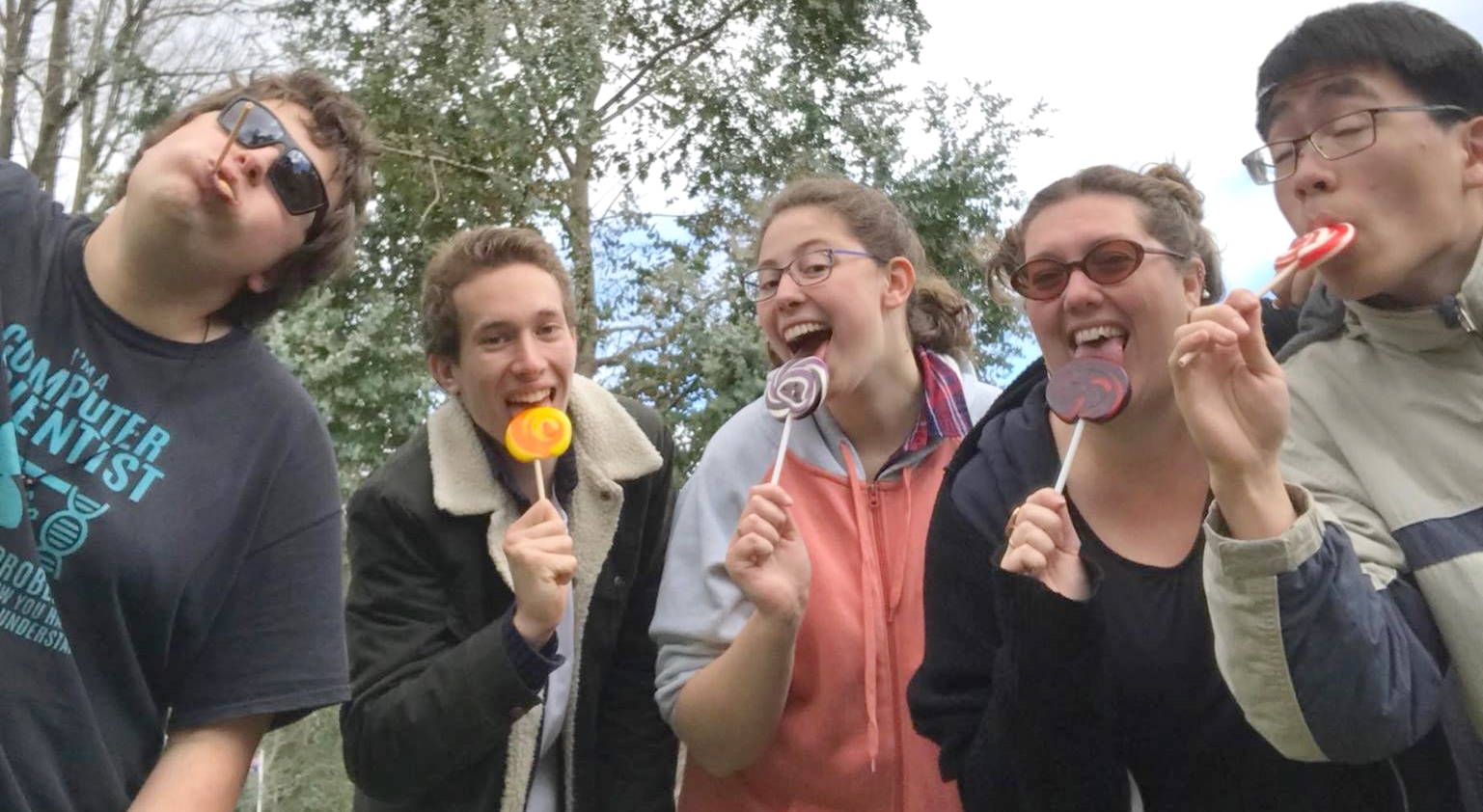
Hanging out with some awesome young adult TCKs last year. Matching lollipops because why not?

Citizenship in heaven for TCKs

Misunderstood is over 300 pages long and yet it is still missing a LOT of stories. I did nearly 300 interviews with TCKs as part of the research that went into it, and a few sentences from probably a third of those interviews were included as quotes in the finished book. That’s a lot of untold stories! There are lots of trails I was interested in following but which either didn’t fit the overall flow/narrative of the book, or weren’t well developed enough to include.

Last year I was able to follow one of those trails with new research. The end result was short (10,000 word) thesis titled “A place to call home: citizenship in heaven for Third Culture Kids” – the final project in a Master of Divinity degree I spent three years working on.

Several Christian TCKs I interviewed for Misunderstood mentioned a specific piece of Christian theology as being very helpful to them through transitions and processing their international childhoods: citizenship in heaven. For my thesis I interviewed 9 TCKs from diverse backgrounds but who were all aged 19-26 and all identified as Christians. I also ran a survey of nearly 100 Christian young adult TCKs. Then there was a LOT of reading – looking at theology, exegesis, homiletics, missiology, sociology, and pastoral care. The end result was an examination of what this theology means, what it means to TCKs, and how it can be a comfort and encouragement for Christian TCKs.

This week mission blog A Life Overseas published a two-part series I wrote for them in which I briefly outline the two major findings of my thesis, complete with quotes from my interviews and statistics from my research.

In the first post I talk about the concept of a heavenly kingdom, described in the New Testament as a culturally inclusive community. 80% of TCKs found the idea of citizenship in heaven comforting, and in this post I explain why that is.

“Home is something that can be lost. A community disperses, and so does the sense of home. A family moves on, and suddenly a place that was home is no longer accessible… Citizenship in heaven answers a deep felt need in TCKs for something that does not exist for them on earth: a singular, comprehensive source of home.”

In the second post I talk about TCKs’ concepts of (earthly) citizenship, and how this affects the way they understand what it means to be citizens of heaven. Their perspective has something important to speak to Christians generally, and also makes the theology of citizenship of heaven a powerful tool to help TCKs think through other aspects of Christian theology.

“During interviews every TCK used ideas from their description of earthly citizenship to illustrate what they believed heavenly citizenship was… Citizenship is an image that resonates for immigrants and expatriates and especially TCKs. New Testament writers used this imagery precisely because it connects with so many earthly experiences. We can do the same, and in the process speak both comfort and challenge to TCKs and others who live cross-cultural lives.”

Click on the links below to read the full posts on A Life Overseas:

Citizens of Heaven: Third Culture Kids and the Longing for Home

Citizens of Heaven: Third Culture Kids and Kingdom Living

Recommended Reading: July 2nd, 2018

Welcome to this week’s edition of Recommended Reading! This week I’ve collected a few recent posts on the theme of leaving the expat life. It seems fitting for this time of year, and after collecting this list I realised that my recent posts on transition and how to do it well are a good accompaniment to the rest of the list, not to mention my reflection on high school graduation for TCKs.

Some of the posts on this list are about TCKs repatriating, either after finishing high school or with a family. Others are about expats generally. Some are about decision making, some offer practical advice, and some reflect on the emotion of it all. I’m so glad there are so many different voices out there for us all to listen to and learn from – we need all these perspectives!

When “Home” isn’t a Place– The Challenges of Repatriation for Expat Kids
Expat Kids Club
This piece provides a great foundation for considering the emotional impact of repatriation on TCKs. Kate reflects on six aspects: identity, role, change, culture, grief, and benefits. It’s hard to pick a single quote to share – it’s all good, solid stuff!

Arriving “Home”: an Expat Paradox
Taking Route
I love this thoughtful piece on all the little things that contribute to the beautiful mess that is returning “home” after time away.
The first few days are a firehose of new information, new places, new smells, new tastes — and varied emotion. It’s crying over things that broke in the suitcase and fretting over stuff you’re sure you packed somewhere. It’s being thrilled with a restaurant just down the street and being disappointed when something should taste familiar and doesn’t.

Leaving well when leaving well is not possible
The Culture Blend
I really appreciate this post. There is a lot of talk in the expat/TCK world about how to leave well. It’s something I write and talk about myself. But in this piece Jerry stops to reflect on a painful reality – sometimes leaving well is simply outside our control. This whole post is worth taking time to slowly read and reflect on. Here’s a couple of little gems:
Sometimes leaving is a mess, not a choice. . .Plans get made — sometimes they work. When they don’t, here are some things to consider. . .Leaving is a process — not a moment. . .PLANE RIDES DON’T end relationships. Soak in that for a moment.

Third Culture Kids, College, and Culture Shock
A Life Overseas
Rachel reflects on college visits with her twin TCKs who are now preparing to repatriate and begin their university studies. She talks through some culture shock moments – such as vocabulary, wardrobe choices, and what is considered interesting and important. The aspect I most appreciate about this post is the way Rachel points out that the misunderstandings and judging go both ways – and gently warns TCKs to watch out for their own attitudes.
Yes, some people think Kenya is a city near Africa. Even college-bound people. And correct, no one knows what a Djibouti is. Again, sorry. And again, try not to judge. Remember how you didn’t know what broomball was? . . .Everyone has a lot to learn and that’s a huge part of what college is for.

15 Things I Want Tell My Graduating Third Culture Kid Seniors
Djibouti Jones
And another post by Rachel, this time with thoughts and advice for her kids as she sends them off into new lives. Lots of good stuff in here, with thoughtfulness that shows an understanding of some of the difficult aspects – as well as the opportunities – of repatriating for university. For example:
Don’t be afraid to ask questions or to ask for help. People might think it is strange that you don’t know something they think is normal American life, but most of the time, they will also enjoy helping you and you never know what friendship might come of it. Be humble.

Culture shock in the same country
Bonnyville Nouvelle
This is a sweet little post about how transition stress goes with any big change – even moving to a new place within the same country! Author Robynne was an international orientation leader while at university, so she understood about culture shock etc. But she was surprised to find these lessons apply to HER as she processes a recent domestic move.
“I originally didn’t think the move would be that big of a deal for me, if I’m being completely honest. Unlike the international students at UOIT, I wasn’t leaving the country, I was just going over a couple of provinces, and driving through a couple of time zones. No big deal, right? Wrong. . .I realized that there was going to be an orientation period for me once I got out here, but I had no idea how much I would doubt myself during this transition.”

How To Welcome Her Back for the First Time
Velvet Ashes
Amy reflects on her first time visiting her family in her passport country after living abroad. Then she offers advice on welcoming well. There is a gentleness about this – the suggestions of leaving space, expecting change, accepting where the person is at. While this is a blog for missionaries, this post was full of helpful reflections for expats generally, as well as their passport country friends and family.
You all have changed. You all are changing. And you all are still the same because you are friends and family. This, of the first visit back, is rich with paradox.

The Last Week – A Graduation Story for the TCK
Communicating Across Boundaries
In this lovely vignette Marilyn reflects on her own high school graduation as a TCK. She introduces the piece with these poignant words:
We [Third Culture Kids] are not only leaving a school – we are leaving a home, a community, and a country. While most kids can go back home without a reason, the third culture kid cannot. The third culture kid does not only say goodbye to a school, they say goodbye to a life. Graduation for the TCK is a type of deportation.

Seven things expats should consider before moving back home
Expat.com
This is a simple but helpful piece with a list of things to consider when thinking about repatriation. There are no easy answers, but a solid guide to some of the things that may affect your life after repatriation, and how to take these into account when considering a move “home”.

Should you raise your kids overseas?

I was recently interviewed by Education Rickshaw for an article called “Should you raise your kids overseas?”

Education Rickshaw is a blog aimed at international teachers, with lots of information about teaching (and learning) overseas. I met one of the authors when I was speaking in Khartoum, Sudan, back in April. We had a great conversation and he raised some thoughtful questions from his own perspective as a teacher of TCKs and a not-yet-parent thinking about what it might mean to raise kids overseas. We continued the conversation after my return to Beijing through an interview on the subject.

The resulting blog post includes extensive quotes from that interview. A lot of what I shared is applicable to all families, not just educators. There is information for families already raising kids abroad, and also for those weighing their options.

Toward the end is a section specific to international educators. There is a sub-section of Misunderstood that addresses the experience of children of international school teachers, and I quote one of the TCKs I interviewed for the book.

Now {spoiler alert} here is my conclusion on the titular question: should you raise your kids overseas?

Now for the big question. Do the advantages outweigh the disadvantages of being raise overseas? According to Tanya, “there are many advantages to the experience of growing up overseas, and I think it’s overall a positive experience. Most TCKs agree. I surveyed 750 TCKs for my book; over 80% said they were glad to be TCKs, and 90% said they were thankful for their international experiences. Yes, there are challenges to being an international family, but with awareness these challenged can be addressed and managed. I definitely think the journey is worth it, especially where parents are committed to providing their children with emotional resources and tools – not just material ones.”

Read the full article at Education Rickshaw