The Three Cultures of a TCK

Last week I wrote a guest post for China Source, explaining the Three Cultures of a Third Culture Kid. I give a brief rundown of this in my general intro to TCKs, but my post for China Source expands on this, and includes a few quotes from Misunderstood.

I explain not only what the Three Cultures are, but why they matter – in particular, the separation of where I live, and where I am legally recognised.

The experience of growing up in places where I do not have legal recognition has an emotional impact. The country I legally belong to doesn’t completely feel like home, but I am not accepted by the country that does feel like home.

These relationships to countries are why the Third Culture matters.

“The third culture is the “childhood home” of TCKs. It is located not in geography, but in relationships. While the first and second cultures are primarily about place, the third culture is about experience: the experience of growing up between first and second cultures that do not perfectly align.”

I believe in the benefit of talking about Third Culture as a category of experience. There are hundreds of thousands of TCKs around the world, unique individuals who cannot be neatly described by a list of common characteristics. But they do share a particular type of experience, which impacts the way they see the world.

“Childhood for TCKs is rooted in communities that move on, in a mixture of cultures and places that is difficult to replicate. The constant transition of international life (whether I leave, or others leave me) has an impact, and there are unique experiences that go with expatriate living. These are the backdrop of an international childhood. These shared experiences of childhood are what the third culture is all about.”

Read the full post on China Source: The Three Cultures of a Third Culture Kid

Recommended reading: July 30th, 2018

Last week’s recommended reading had a TCK perspective theme – a collection of posts written by TCKs reflecting on their experiences. I’m continuing that theme this week, although this week I’m also including some posts about TCKs, written by those who care about them.

On Welcoming the Third Culture Kid
A Life Overseas
Fabulous post by the always wonderful Marilyn, offering lists of DOs and DON’Ts for how to support Third Culture Kids walking through repatriation. There is so much gold here! For example,
DO: “Let them talk about their past. They have left so much, let them talk about what they have left.”
DON’T: “Put a time limit on their adjustment and their grieving. We are all different. We grow and adjust at different rates. So don’t put time limits on the TCK. Allow them room even as you continue to love and challenge them.”

Third Culture Kid Diaries: Connecting with Locals and Making Friends
Restless Feet Adventures
This is a great post by a Taiwanese TCK sharing four tips for how to build relationships. Her reflections come two years into repatriation, and includes that perennial TCK problem – why is it so much harder to make friends at ‘home’ when I did it just fine elsewhere? Now – back to her four ways to connect with others, anywhere: shared experiences, similar interests, pop culture, and mutual friends.
“I realized I let my focus on the fact that I didn’t grow up in Taiwan overshadow all the other ways I made friends in the past…Sometimes I have to remind myself to go out and socialize with people because I’m so comfortable and enjoy doing things alone. But building and maintaining relationships is important to me so I just have to keep reminding myself to go out and do it!

A high-school reunion, international style
Monday Morning Emails
In this post Terry reflects on the reunion of six high school friends – living in different countries, holding different citizenships – including her son. It’s a great piece! Here’s a taste:
As I listened to a conversation that straddled countries as easily as ‘hopping on that plane’, it confirmed that despite the obvious challenges of a global life, it fosters engaged global citizens. We can be proud of this. As parents we often question this overseas life and the impact that it has on our children.

Finding common ground in Minnesota
TCK Town
One TCK shares about her friendship with another TCK. For me, this piece is about showing grace in the face of racism. By that I don’t mean staying silent – not at all! – but I mean not letting those negative experiences steal the possibility of good experiences. Being the best version of yourself, even when treated unjustly. Taking the first step to build connections with others, even when they wouldn’t do that for you.
“I’m so thankful for this friendship and all it has taught me. Without Samiya I would not know how amazing Somali tea is, I would not know the traditions of Ramadan or that Syria has some of the nicest people you will ever meet. There is joy in loving people who are different than you. If we can learn to love those who are different than us, we could see how rich and flavorful our lives can be.”

Continental Drift
Expitterpattica
A very sweet poem from an expat mum to her TCK children, as they approach a(nother) international move. It is a beautiful piece, and I’ll share a few lines from it with you here:
You don’t want to change, you don’t want to go,
you want to stay put, I know, my love, I know,
It’s OKAY to feel worried or nervous or fearful,
I feel all those things too and saying goodbye still makes me tearful,
But we have to let go, step into the unknown,
I promise Life will unfold and you’ll never be alone,

It’s that time of the year again… ‘Moving Season’
Little Miss Expat
One TCK interviews a good friend who moved a year ago. Some lovely responses here reflecting on both the positives and negatives of moving to a new international location. What I most appreciate, however, is the way she encourages “stayers” like herself to both recognise the difficult of the leaving season for themselves, but also to aim to support “leavers” well.
“Overall, I think it’s just super important to remember that life is what you make of it, you can’t control everything that happens to you, but you can control the way that you deal with it and what you make of the situation. People moving away is one of those situations which is sad, but also exciting as it’s the start of a new adventure for the person moving. And as the friend staying behind, you also have to support your friend with this new chapter in their life. Don’t view moving as something bad, shift your focus, and see it as the start of something exciting and different.”

Itchy feet
Third Culture Queer
I really appreciate this perspective, from a queer TCK who looks at the intersection of those two identities. This short post considers the “ichy feet” syndrome familiar to many internationals, but with the extra layer of difficulty that comes with a queer identity. I especially appreciate the conclusion, which holds truth for us all – both going and staying are choices, and both hold some sort of risk:
Being gay is illegal in many countries, and only a handful of places are vaguely okay on the whole trans and non-binary thing. Do I want to live somewhere I would not be able to be myself, where I would have to hide? . . .Whatever I decide, it is a risk. A risk I will have to censor myself. A risk I stay here stuck in a rut. A risk I don’t take control of my own life. But each risk has its payoffs, and I need to decide which I want to go for.”

FIGT is coming to Thailand in April 2019!

Families In Global Transition (FIGT) is a great organisation connecting international individuals and families around the world. I attended their annual conference in the Netherlands in 2017. I had an amazing time! Given the craziness of my 2018 it’s unsurprising I couldn’t make the trip there this year, but I am super crazy excited that the 2019 conference will be in Bangkok, Thailand!!!

If you are an international anywhere in the world, the FIGT conference is hugely valuable. If you live in Asia or Australia, however, this is an amazing opportunity! Previously the conference has been held in North America or Europe. The fact that it will be happening on this side of the globe is incredibly exciting! I highly recommend it, and I would love to see lots of my international connections in Australia and Asia make the trip to attend their first FIGT conference!

Who should go?

  • Anyone who has moved around the world
  • Anyone raising their children outside their passport countries (TCKs)
  • Anyone working in an international school
  • Anyone teaching or working to support TCKs
  • Anyone supporting international families (counsellors, for example)
  • Anyone working in HR for companies that move workers (and families) internationally

Why should you go?

  • Fantastic resources – great speakers, great books in the bookstore, and lots of great brains to pick.
  • Solid research – there are always researchers presenting fascinating recent work on expatriates and Third Culture Kids.
  • Relational opportunities – there are so many wonderful people at FIGT. It is one of the warmest groups I have ever walked into. It’s so intimidating to walk into a conference knowing no one, but FIGT makes it so much easier!! There are big sessions and very small sessions, so there are ample opportunities to meet different people throughout the three days.
  • Real answers – if you have a question about global mobility and international life, how it affects you, your family, your organisation – this is the place to come.
  • Inspiration – when a group of people like this gets together, there is a sense of energy and momentum, lots of new ideas and new projects sparked. (This was very true for me in 2017!)

So, am I getting paid to say all this??

Hahaha the short answer is definitely not! I am someone who went to the conference and was blown away by how great it was. I know that taking the conference to Asia is a risk for the organisers and I really want to see a huge response from all the international families on this side of the world. I know there are a lot of people who have felt the lack of resources for international families here, especially those working for (and moved around by) multinational companies.

I’m hoping to be a bit more involved myself this time around, and I’ll be sure to update you with more information, especially when registration opens.

Recommended reading: July 23rd, 2018

This week’s recommended reading has a special theme: TCK perspectives. All the posts I’m recommending this week were written by TCKs reflecting on their experiences – as missionary kids, military kids, diplomatic kids, from and in various countries. I haven’t written much by way of  “summaries” of each piece. Instead I strongly recommend you go and read them. Most are short, and the power of first-person narratives is worth the extra clicks – I promise.

Growing Up Behind a Brick Wall
Global Nomads World
Alexa writes about living in a diplomatic compound in Russia. She paints a vivid picture of childhood experiences that draws you into her world there. She concludes by describing the strange experience of returning later:
…the true essence of the place is never-changing. . .And yet not a single thing is the same – except for that essence. No one recognizes you. It’s like coming back home after college but instead of all your family friends saying, “it’s nice to see you!” they say “it’s nice to meet you.”

Little Soldier
TCK Town
In this poignant piece, “Military Brat” Shannon reflects on her understanding of and relationship to her mother’s profession as a soldier. She also says something I’ve heard from lots of different TCKs, not just military kids: “I had to be on my best behavior for my parents’ sake. This kind of responsibility makes every member of the community feel like part of a team.

A Third Culture Kid’s Soul
This is Katha: thoughts of a traveling mind
Katha writes about the tension of wanting to go-explore-encounter, but also to stay and be rooted at home.
“Two souls rage inside of me. Telling me to go. Begging me to return and stay. . .I leave pieces of myself behind whenever I have to say goodbye. And then I travel to find them again.”

Free Verse: human mess
Embassy Kid
This is a lovely short poem about a mix of cultures in a single life and the tension that creates.

What is Going Home?
My Island Journeys
This post starting with a prompt about “going home”. What follows is a lovely set of memories around an IKEA, and learning to hold onto and let go of “home” in different places.
For me, going home was permission. Permission to concretely remember a place, and therefore to concretely admit that I’d left it. Permission to grow up, now that I had clear memories of the place that I’d left in a fog of grown-up-too-soon grief.

Life as a ‘Third Culture Kid’
The Gryphon
This is an older piece, but valuable for including short perspectives from four young women, each with (different) European passports. One of many standout quotes:
I feel obliged to identify as a Belgian, given my nationality. However, having just lived in Belgium for a year and a half, I don’t feel that’s completely accurate.”

A TCK’s Struggle with Depression
TCK Training
Aneurin talks about his struggle with depression, and how this struggle has interacted with his TCK experiences. Of particular note is the way he describes swinging from feeling his TCK experience was all good, to all bad. It’s much harder to exist in the shades of grey between extremes, but such an important skill to learn for long term emotional health.
I now know that mental illnesses are common like a cold. I also know that TCK’s are more prone than monocultural people to suffer from them. These illnesses are often our body’s response to traumatic events. . .I think being a TCK is amazing, but it needs to be done well. There are many challenges that need to be navigated, things like the challenges of transition or unresolved grief. We are a remarkably resilient people group, but we always need to get help from others, particularly when it comes to mental illnesses.

Home and Rootlessness – TCK Art Gallery
Noggy Bloggy
Finally, this post is from Aneurin’s regular blog, and introduces a TCK Art Gallery. The post showcases three pieces picked out by Michele Phoenix as particular favourites of hers. The gallery itself features a wide range of visual art, photography, and also poetry. Lots of beautiful work worthy of time and reflection.

My difficult experiences of going home

There are two countries I’ve returned home to, twice each. The country of my childhood, and the country of my adulthood.

I grew up in my passport country, Australia. But I spent two years of high school living in Connecticut, in the US. Then I went home.

Ar 21 I moved out of my parents house straight to China, where a study year turned into 11 years abroad. Then I went home.

Two very different repatriation experiences. Both difficult, in different ways. The first time I was desperate to go home and be normal and fit in, and was desperately discouraged to find those two years had changed me – that I no longer fit in, that I still stood out. The second time I knew what to expect. I knew all the theory, I knew it wouldn’t be easy, that I wouldn’t feel totally at home. It was still more difficult than theory alone could express.

I thought that season of my life was over – but I was wrong. I made two very different visits to China during my three year stint in Australia, and then moved back here (to Beijing). In a way, it was going home. But it wasn’t what I expected.

It’s those more unusual homecomings I am pondering today.

My first return trip to Beijing was unexpected, mostly unplanned, and rather last minute. There was a sale on plane tickets and I moaned to a friend back in Beijing about how tempting it was. I really couldn’t afford a ticket, even a cheap one, even if I could justify the expense for one week (the longest time I had free between commitments). Then that friend bought me a ticket. Again, I knew a lot of theory, and I thought I knew what to expect. It had been two years. I had changed. Beijing had changed. It wouldn’t feel the same. I thought that perhaps this would be a helpful goodbye trip for me, a chance to farewell this place that was such a part of who I am, that I still missed. Looking at my life logically, at where I thought I was heading, it didn’t seem at all likely to me that I would live in China again. I hoped I would visit, but it was only a theoretical hope.

Instead, as I moved around Beijing the feeling of HOME hit me so hard that I felt it almost viscerally. I felt a deep sadness that it was no longer my place – it FELT like my place; every fibre of my being wanted to be there. I thought that since so much of my community wasn’t there any more that it wouldn’t feel the same. I discovered instead that I felt connected to the PLACE itself, not just the people with whom I had shared it. The sights, the sounds, the colours, the smells. I feared that had I not had a close friend’s wedding to attend in Australia I would have struggled to get on that plane and leave again.

I had grieved leaving Beijing two years earlier. So I thought. In hindsight, I think I did a good job of grieving the people I was leaving, and the life I was leaving, but I didn’t grieve the PLACE in the same way. Upon my return, all those connections to place were still there, waiting to come to life, to shower me in grief – the recognition that I had left the place that felt like mine.

A year later, I made another trip to Beijing. This time, everything was different. I had started dating someone who lived in Beijing. A few months earlier I had decided I would move to Beijing at the end of the year, when I graduated. And now I was coming to visit the man who was about to become my fiancé. A very, very different trip!

This time, Beijing felt very different. It did NOT feel like home. It felt familiar, but also foreign. In the year since my first trip, I’d finally settled into life in Australia, started to feel at ease there. I’d connected to THAT place – and now felt disconnected from THIS place. The connections I’d recognised and grieved a year earlier weren’t there anymore. There was nostalgia, and enjoyment of place, but none of that visceral sense of deep connection.

It didn’t help that I was staying in a very different part of the city. It was where my partner lived, but it was a place I didn’t know, a place that had never been mine. During the whole trip I felt very disconcerted. I was going to move there in six months – and suddenly I felt really apprehensive about that move. I wasn’t going to be coming home after all. I was going to have to start again in a place that used to be home.

Having that realisation 2.5 years after repatriating, only a few months after finally starting to feel at ease in my passport country, was devastating. I was going to have to start that same process all over again. At least this time I’d only been gone 3 years, not 11 – maybe that would help. At least this time I would be recognised as a foreigner – maybe that would help. I would be with my partner, but he wouldn’t be experiencing the same transition with me. It left me dreading the turmoil I could suddenly see coming my way.

Now, people ask me how long I’ve been back in Beijing and I find it hard to answer. 6 months? But I’ve travelled in and out a lot, and lived in three different apartments. 3 months in this apartment – but I was gone for most of the first month. It’s only in the last month or so I’ve started to feel able to begin the process of settling into a new life and routine here.

Right now the best I can manage most days is just getting by. Take small steps toward building a life here. Celebrate tiny achievements. Look for little moments that encourage me, that tell me it’s going to work out and one day I’m going to find my feet here, in this new life. Transition is hard. It’s exhausting. But it’s also worth it.


(This post was inspired by a prompt on Communicating Across Boundaries, in which Marilyn wrote about “Going Home”.)

Recommended Reading: July 16th, 2018

Welcome to this week’s edition of Recommended Reading! I don’t have a particular theme for this week. Instead, here’s a collection of posts I’ve read recently that I feel have something of value to offer expat and TCK communities around the world.

A Letter to the Stayers
Aylssa Cowell
I love this! We absolutely need to recognise the impact of STAYING in transient communities. Whenever I do transition seminars with students in international schools I ask how many times people have moved, how many schools they’ve attended – but I also ask how many close friends they’ve watched move away. Every time I ask that questions there are students who refuse to answer – too many to count. It’s a real and deeply difficult experience, and one that is often overlooked.
We don’t really talk about the emotional hardship, of the loss felt by those who stay. We know it is hard for those who leave. But for those who stay some of you will have lost 4, 5, 6, 7… countless people who were close to you. The school is the same but it’s not really the same. . .Look out for each other out there – if you are lucky enough to have your friends stay – look out for those who don’t. Invite them to sit with you. Say hello in the corridors. Ask them if they are okay. Our words are powerful and you should never underestimate the impact of a small gesture.

I Think It Is Okay to be an Alien
Velvet Ashes
What happens when you stand out in every situation, everywhere you’ve lived, your whole life? What happens when they places you consider home consider you an alien? Erika writes about making peace with her alien status. But I think what I appreciated most was how she so adroitly summed up the “misunderstood” feeling that undergirds much of my book:
As a third culture kid, I tried on many identities. Like most of my MK friends, I went through a “proud Canadian” phase, through a phase of “I’m from all of North America” and a “nothing but Mexican” phase. None of them worked. I found I could relate to people from all of these places, but none of them — not even family — could relate to all of me. And that made me alien.

My top tip for parenting through transition
Meet Jesus at uni
I was so touched by this piece! One mother articulates the guilt and struggle of seeing her young children wrestling to find a way through transition – again. “I do things to help them through transitions…Those things help, but they do not fix anything.” But then she remembers – “the normal initial adjustment period for humans after trauma or significant change is 6-8 weeks“. The best thing she can do is keep remembering that it’s going to get better – to relax and be patient and kind to herself and her kids as they adjust yet again. (Sounds like something I said recently!)
“This happens every time we do a transition. Between 4 and 6 weeks, things come to a head and I panic as I hurt for my little boys and the mama guilt overwhelms me. I wonder if the crisis versions of my sons are simply who they are now. But if I can remember that 8 weeks is our usual adjustment time, and if I can tolerate it until then, my little ones start to know themselves again. I just have to hang in there with them. And be ready to do it all again in the not-too-distant future.”

How Having A Name That No One Can Pronounce Taught Me Who I Really Am
Huffington Post
In last week’s recommended reading I included a piece in which the author reflected on wrestling with identity through her name – how it defined and separated her, especially when peers could not pronounce it. This piece shares a similar story: “I’ve always felt like a part of me was lost in translation. My name, so beautiful in my parents’ native Tamil, doesn’t quite fit my flattened American accent.” I really appreciate the telling of how her frustration shifted from one object to another over time. She ends by acknowledging the stress while embracing the different influences that make her who she is – name and all:
“Today, I still get a little shy before I introduce my name. I still stress out about the logistics.. But now, I️ understand that I’m not Indian or American, but both. I might be a product of my ancestors, but I am also the speaker of my own name“.

The New 11 Commandments of Relocating Overseas
International School Community
Good piece with solid advice for those who will be relocating abroad. There’s a lot of overlap with things I suggest in my Six Tips for a Good Transition. One piece of advice from this post I particularly appreciated was the suggestion of combining old and new – mixing new experiences with familiar comforts. What a great approach! “try to combine an appreciation of new cuisine and dishes with some of your old dietary staples.” My summary of these “11 commandments” is as follows: Be positive, be flexible, be teachable, be lighthearted, be understanding. Expect the adjustment to take a long time. Look for encouragement and comfort – both here and there. Lean on supports.

Forbidden Roots
A Life Overseas
I was deeply touched by this piece which boldly faces the problem that comes with putting down roots in an adopted home: one day, I will have to leave the place I have made my home.
I am not a citizen, or even an immigrant. My passport is still American blue; Tanzania is not my country…Yet the thought of leaving someday fills me with an intense grief, knowing that it will tear away part of my being. Not just a loss of place, but a loss of who I am. The experience has become real life. Which is a good thing, of course. It’s what every expat should want to attain. But it’s also a tragic thing. It’s like coming to the realization that I’ve fallen in love with something that I can’t keep.

Dig Deep and Shine On
I Am A Triangle
A hopeful and encouraging post about the ongoing need to build relationships when you live a life full of transition.
Eighteen months into my repatriation and new home, new perspective washes over me…I’m in a new place, making new friends (some are international friends) and loving new experiences. AND, it’s taken eighteen months! Over these past months to learn, grow and dig deep, I’ve made friends, added life experiences, and taken several trips. . .One of my people secrets is say “hello” to anyone within three feet of me. Some will return the “hello” and some may not. My personally coined mantra: people are faces until they’re your friends.

Sri Lankan expat enchanted by Ramadan in UAE
Gulf News
And finally, a little piece I appreciated, in which a Sri Lankan expat reflects on his first Ramadan in the UAE. Going from a muslim minority culture to a muslim majority culture made it a very different experience for him: “It gives a sense of togetherness as everyone becomes part of our fasting, iftar and suhour.

A new project for twenty-something TCKs

I have a new project to announce – one I’m both excited about and quite intimidated by! I am beginning initial research into what I hope will become (in a few years) a new book: a guide to help twenty-something TCKs navigate through identity, decisions, and commitments.

It all started when I attended FIGT 2017 in The Hague, the Netherlands. I attended the Millennial Forum where I met some really great people and listened to young adult TCKs talk about different issues they encountered as they launched into adult life. On several occasions, as someone shared a particular situation, I was able to tell them that I’d heard similar thoughts and feelings from a number of TCKs I interviewed for Misunderstood. Toward the end of the evening someone said “there’s no literature for us, it stops at university”. And I thought to myself, someone should do something about that.

Slowly, it became a thought that wouldn’t let go. I kept thinking about the things that came up in interviews for Misunderstood, things that seemed illustrative of wider patterns, but which didn’t fit the book or I hadn’t researched in enough depth. I kept reflecting on questions that twenty-something TCKs had asked me during interviews. And that same thought kept returning: someone should really do something about this.

I’ve been mentoring and supporting young adult TCKs long distance for over a decade now. Sometimes it’s a conversation over messenger, sometimes a voice or video chat. There are some young people I’ve connected with semi-regularly for years. Some pop up from time to time seeking a little extra support during a rough spot. Others connect regularly for a few months when going through a difficult season. And at least once every other month, a twenty-something TCK will seek me out to talk through a particular question – something they’re struggling with or confused about, and think is related to their international upbringing. Often they express a sense that no one seems to understand what they’re feeling or why. They come to me with hope that I can shed some light, offer some understanding. Even when they have a loving community around them, there’s a felt need for something more: they seek information and understanding. I get to let them know they’re going through something really normal, something lots of young adult TCKs wrestle with. I get to see and hear relief from these twenty-something TCKs as their feelings are validated and their struggles understood.

I’m now convinced of the need for a book that does this. A book to offer that hope, validation, and understanding. A book to trace some of the paths that many ATCKs have walked through their twenties. A book that adds some signposts to the path, to say: “you are here”. You’re not lost, you’re not off on your own. You’re in a familiar and recognisable place. What you’re feeling and experiencing is normal, rational, understandable. People have been here before you, and there’s a way through.

My life has been somewhat full in the past year! But now that things have calmed down and I have some more headspace, I’m starting to move forward with this project. I have a general outline of the material I anticipate the book covering, and I’m working on putting together a survey. But as a first step, I want to talk to some twenty-something TCKs about what they want in a book like this. Sort of pre-interviews before I start, to give some shape to where I go from here.

So, if you’re a twenty-something TCK, and you have ideas of what you’d want in a book like this, let me know! If you know twenty-something TCKs, please tell them about this! If you have a few comments, feel free to add them to this post. And if you’re interested in talking further, let me know – I’d love to hear from you!

youngadultTCKs

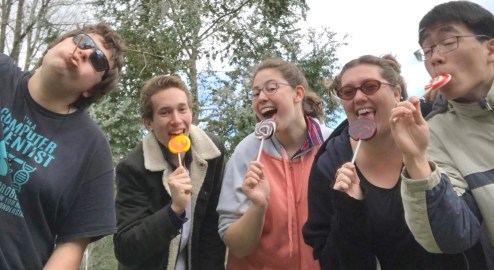
Hanging out with some awesome young adult TCKs last year. Matching lollipops because why not?

Recommended Reading: July 9th, 2018

Welcome to this week’s edition of Recommended Reading! I don’t have a particular theme for this week. Instead, here’s a collection of posts I’ve read recently that I feel have something of value to offer expat and TCK communities around the world.

10 Alternatives to ‘Where are you from?’
Multicultural Kid Blogs
I love this!! “Where are you from?” is one of those questions that just roll of our tongues when we meet people. It’s not an easy question, for a lot of expats, and especially for TCKs. Yet it still takes effort to rewire our brains (and mouths!) to ask different questions. Also, I’ve found when I take the initiative to ask different questions, I get asked those sorts of questions in return. And I find them much easier to answer myself! I’ll add my own favourite to this list: “Where were you living before this?” It has a concrete answers, rather than a subjective one, while still offering an invitation to share some of their story.

But What’s So Different about Being an Expat Family, Anyway?
Velvet Ashes
Yet another helpful reflection from Rachel as her TCKs prepare to leave for university in their passport country. Her daughter wonders aloud how her life is different to that of peers in her passport country. What I love most is that while Rachel expresses some of the differences she sees, she also knows she can’t answer this question for her kids. She rests on the values their family holds close, and trusts that her kids will work it out as they live and grow.
I can’t explain to my twins how their childhood has affected them. They’ll need to discover the answer to that question on their own. I couldn’t begin to articulate one. I have ideas, but sometimes the only way to answer our deep questions is to experience a contrast, to set our question and our experience against something new, opposing, different.

Expat Homesickness – 3 Ways to Deal with it and Heal from it
Talaera Thoughts
This is a great post in which Stephanie reflects openly on her experience of culture shock, homesickness, and resulting depression. (And reminded me a little of my own post on expat homesickness.) She gives some great advice. I was particularly touched by the gentleness of her first point – to be your own parent. By this she means to speak kind and comforting words over yourself. This is so important!
My mom would never tell me to just “suck it up”! She would give me permission to feel sad and depressed. This is a crucial step because I need to allow myself the feeling before I ever stand a chance of extracting myself from the pain. . .If your mom was mean, be a kind and gentle version of your mom because she is what you need right now.

See, Say, Spell, Repeat
Mudroom
What do you do when you feel caught between cultures, and your name reflects one of those cultures strongly? Prasanta discusses her journey of identity and what’s in a name.
I was raised in the U.S., but you aren’t sure of that by looking at me. . . since we think and speak alike, I wondered if it would help to have a name that does sound like you. I thought it would be taking down a barrier — a big one — between us. I couldn’t change my skin color, which was Big Barrier #1. But, I could change this. Maybe it would make a difference. Maybe it would make it easier for you to talk to me. And admittedly, I wanted to make it easier for myself as well.

Territory and Third Culture Kids – Building our Safe Places
Life Story
Rachel was advised to keep her cat inside for a month after moving before letting her outside in order to help her with the transition. Rachel expands this concept to wonder how taking the time to fix ourselves in a place might give TCKs (and other global nomads) a sense of security so many seem to lack. Such a fascinating idea!
It is only because Jack knew her own home so well, that she was able to return to it safely at the end of the day. It was only because she’d spent so much time in it that she was able to feel it as her safe place. . .having home to run to is precisely what made out there safe to explore. . .Safe places are shelters. Shelters are, by nature, boundaried in some way. There is an out there and an in here. We use them to retreat from the elements, and their borders give us rest.

Expat reunions are a thing of wonder
The Expat Partner’s Survival Guide
A lovely post on the unique beauty (and deep emotion) of expat reunions. When you have the opportunity to spend time with someone who lived that part of your life with you, who knows those places and people, who you don’t have to explain those things to – wow. What a blessing!
Saying goodbye is hard because you really have no idea when, or if, you will see them again. But when you do – and I do believe the ones that are really important to you will pop up again sooner or later – you instantly connect again over the experiences that only you shared. . .As we move on with our lives, the memories of our expat days fade. But friendships will often out-last those memories and when we get together the years fall away and we are back living together in those distant lands.

Travel Is No Cure for the Mind
Medium
This post is a modern adaptation of Seneca’s letter to Lucilius about travel. The main point is that novelty gives way to routine no matter where we are; the solution is not a new place, but a new mindset. I found it helpful in a few ways. When people ask about your “exciting” or “exotic” life, it can help to explain that actually, you live an ordinary routine just like them, only in a different place. Also, the mindset advice is so key to enjoying life abroad – especially for those who weren’t too keen on making a particular move. Gratitude and curiosity are powerful tools!

Citizenship in heaven for TCKs

Misunderstood is over 300 pages long and yet it is still missing a LOT of stories. I did nearly 300 interviews with TCKs as part of the research that went into it, and a few sentences from probably a third of those interviews were included as quotes in the finished book. That’s a lot of untold stories! There are lots of trails I was interested in following but which either didn’t fit the overall flow/narrative of the book, or weren’t well developed enough to include.

Last year I was able to follow one of those trails with new research. The end result was short (10,000 word) thesis titled “A place to call home: citizenship in heaven for Third Culture Kids” – the final project in a Master of Divinity degree I spent three years working on.

Several Christian TCKs I interviewed for Misunderstood mentioned a specific piece of Christian theology as being very helpful to them through transitions and processing their international childhoods: citizenship in heaven. For my thesis I interviewed 9 TCKs from diverse backgrounds but who were all aged 19-26 and all identified as Christians. I also ran a survey of nearly 100 Christian young adult TCKs. Then there was a LOT of reading – looking at theology, exegesis, homiletics, missiology, sociology, and pastoral care. The end result was an examination of what this theology means, what it means to TCKs, and how it can be a comfort and encouragement for Christian TCKs.

This week mission blog A Life Overseas published a two-part series I wrote for them in which I briefly outline the two major findings of my thesis, complete with quotes from my interviews and statistics from my research.

In the first post I talk about the concept of a heavenly kingdom, described in the New Testament as a culturally inclusive community. 80% of TCKs found the idea of citizenship in heaven comforting, and in this post I explain why that is.

“Home is something that can be lost. A community disperses, and so does the sense of home. A family moves on, and suddenly a place that was home is no longer accessible… Citizenship in heaven answers a deep felt need in TCKs for something that does not exist for them on earth: a singular, comprehensive source of home.”

In the second post I talk about TCKs’ concepts of (earthly) citizenship, and how this affects the way they understand what it means to be citizens of heaven. Their perspective has something important to speak to Christians generally, and also makes the theology of citizenship of heaven a powerful tool to help TCKs think through other aspects of Christian theology.

“During interviews every TCK used ideas from their description of earthly citizenship to illustrate what they believed heavenly citizenship was… Citizenship is an image that resonates for immigrants and expatriates and especially TCKs. New Testament writers used this imagery precisely because it connects with so many earthly experiences. We can do the same, and in the process speak both comfort and challenge to TCKs and others who live cross-cultural lives.”

Click on the links below to read the full posts on A Life Overseas:

Citizens of Heaven: Third Culture Kids and the Longing for Home

Citizens of Heaven: Third Culture Kids and Kingdom Living

Recommended Reading: July 2nd, 2018

Welcome to this week’s edition of Recommended Reading! This week I’ve collected a few recent posts on the theme of leaving the expat life. It seems fitting for this time of year, and after collecting this list I realised that my recent posts on transition and how to do it well are a good accompaniment to the rest of the list, not to mention my reflection on high school graduation for TCKs.

Some of the posts on this list are about TCKs repatriating, either after finishing high school or with a family. Others are about expats generally. Some are about decision making, some offer practical advice, and some reflect on the emotion of it all. I’m so glad there are so many different voices out there for us all to listen to and learn from – we need all these perspectives!

When “Home” isn’t a Place– The Challenges of Repatriation for Expat Kids
Expat Kids Club
This piece provides a great foundation for considering the emotional impact of repatriation on TCKs. Kate reflects on six aspects: identity, role, change, culture, grief, and benefits. It’s hard to pick a single quote to share – it’s all good, solid stuff!

Arriving “Home”: an Expat Paradox
Taking Route
I love this thoughtful piece on all the little things that contribute to the beautiful mess that is returning “home” after time away.
The first few days are a firehose of new information, new places, new smells, new tastes — and varied emotion. It’s crying over things that broke in the suitcase and fretting over stuff you’re sure you packed somewhere. It’s being thrilled with a restaurant just down the street and being disappointed when something should taste familiar and doesn’t.

Leaving well when leaving well is not possible
The Culture Blend
I really appreciate this post. There is a lot of talk in the expat/TCK world about how to leave well. It’s something I write and talk about myself. But in this piece Jerry stops to reflect on a painful reality – sometimes leaving well is simply outside our control. This whole post is worth taking time to slowly read and reflect on. Here’s a couple of little gems:
Sometimes leaving is a mess, not a choice. . .Plans get made — sometimes they work. When they don’t, here are some things to consider. . .Leaving is a process — not a moment. . .PLANE RIDES DON’T end relationships. Soak in that for a moment.

Third Culture Kids, College, and Culture Shock
A Life Overseas
Rachel reflects on college visits with her twin TCKs who are now preparing to repatriate and begin their university studies. She talks through some culture shock moments – such as vocabulary, wardrobe choices, and what is considered interesting and important. The aspect I most appreciate about this post is the way Rachel points out that the misunderstandings and judging go both ways – and gently warns TCKs to watch out for their own attitudes.
Yes, some people think Kenya is a city near Africa. Even college-bound people. And correct, no one knows what a Djibouti is. Again, sorry. And again, try not to judge. Remember how you didn’t know what broomball was? . . .Everyone has a lot to learn and that’s a huge part of what college is for.

15 Things I Want Tell My Graduating Third Culture Kid Seniors
Djibouti Jones
And another post by Rachel, this time with thoughts and advice for her kids as she sends them off into new lives. Lots of good stuff in here, with thoughtfulness that shows an understanding of some of the difficult aspects – as well as the opportunities – of repatriating for university. For example:
Don’t be afraid to ask questions or to ask for help. People might think it is strange that you don’t know something they think is normal American life, but most of the time, they will also enjoy helping you and you never know what friendship might come of it. Be humble.

Culture shock in the same country
Bonnyville Nouvelle
This is a sweet little post about how transition stress goes with any big change – even moving to a new place within the same country! Author Robynne was an international orientation leader while at university, so she understood about culture shock etc. But she was surprised to find these lessons apply to HER as she processes a recent domestic move.
“I originally didn’t think the move would be that big of a deal for me, if I’m being completely honest. Unlike the international students at UOIT, I wasn’t leaving the country, I was just going over a couple of provinces, and driving through a couple of time zones. No big deal, right? Wrong. . .I realized that there was going to be an orientation period for me once I got out here, but I had no idea how much I would doubt myself during this transition.”

How To Welcome Her Back for the First Time
Velvet Ashes
Amy reflects on her first time visiting her family in her passport country after living abroad. Then she offers advice on welcoming well. There is a gentleness about this – the suggestions of leaving space, expecting change, accepting where the person is at. While this is a blog for missionaries, this post was full of helpful reflections for expats generally, as well as their passport country friends and family.
You all have changed. You all are changing. And you all are still the same because you are friends and family. This, of the first visit back, is rich with paradox.

The Last Week – A Graduation Story for the TCK
Communicating Across Boundaries
In this lovely vignette Marilyn reflects on her own high school graduation as a TCK. She introduces the piece with these poignant words:
We [Third Culture Kids] are not only leaving a school – we are leaving a home, a community, and a country. While most kids can go back home without a reason, the third culture kid cannot. The third culture kid does not only say goodbye to a school, they say goodbye to a life. Graduation for the TCK is a type of deportation.

Seven things expats should consider before moving back home
Expat.com
This is a simple but helpful piece with a list of things to consider when thinking about repatriation. There are no easy answers, but a solid guide to some of the things that may affect your life after repatriation, and how to take these into account when considering a move “home”.